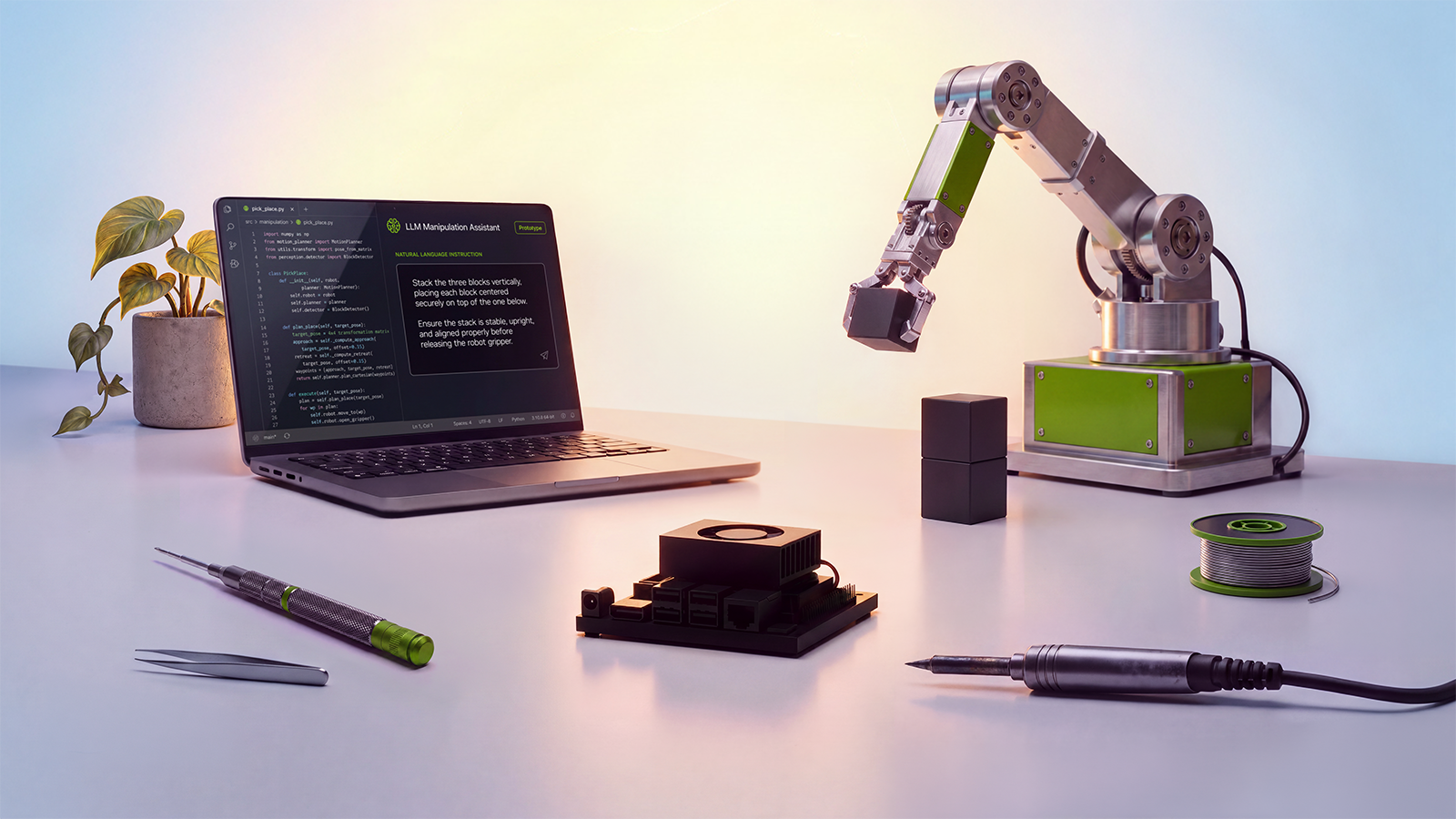
Nvidia doubles compute for entry-level edge robotics with Jetson Orin Nano 2
Nvidia Corp. today announced the release of Jetson Orin Nano 2, a robotics computer “brain” for running artificial intelligence and frontier-level models at the edge.
In the past months, foundational AI models have grown smaller and more efficient, adding numerous capabilities alongside language understanding, computer vision and audio processing. As more AI models compress in size, they can run on smaller, more efficient hardware. Nvidia said it’s iterating on that hardware to run more efficiently at the edge to incorporate these smaller, faster, denser models.
“Today’s small and medium frontier models have reached the accuracy of last year’s largest frontier models, unlocking real-time intelligence for edge devices,” said Deepu Talla, vice president of robotics and edge AI.
The Orin Nano 2 represents a leap in entry-level robotics hardware, doubling compute capacity over the previous generation. It features 78 trillion operations per second of AI compute, 8 gigabytes of memory and an eight-core central processing unit. This allows it to deliver strong performance in a small form factor while consuming 40% less power than its predecessor in 15-watt power mode.
Deepu added that the significance of the form factor, efficiency and processing power increase puts it right in the trifecta needed to make the Orin Nano 2 fit for projects such as drones and other lightweight robotics. It can run vision systems in real time, off significant compute that would otherwise need to run over wireless to the cloud, allowing robots to react in the moment without waiting for information to be relayed back over radio.
Partners including Cognex Corp., Doosan Bobcat Inc., Matic Robotics Inc. and Wing Aviation LLC are already working to build Nano Orin 2 into smart robotics.
Wing in particular is exploring the Orin Nano as part of its aerial drone delivery fleet. The company said it plans to explore the “brain” and software stack to advance real-time AI perception for autonomous navigation, avoidance and other reasoning capabilities. It will provide faster, safer delivery from local businesses to local residences.
“Drone delivery depends on AI that can enable fast, reliable understanding of the real world,” said Dinuka Abeywardena, head of perception at Wing. “[Orin Nano 2 will] give us a path to more responsive, energy-efficient drones that can help make deliveries quicker and more dependable for customers.”
Nvidia said the new device will be generally available as a module and developer kit starting in the first half of 2027.
Image: Nvidia
Support our mission to keep content open and free by engaging with theCUBE community. Join theCUBE’s Alumni Trust Network, where technology leaders connect, share intelligence and create opportunities.
15M+ viewers of theCUBE videos, powering conversations across AI, cloud, cybersecurity and more** 11.4k+ theCUBE alumni**— Connect with more than 11,400 tech and business leaders shaping the future through a unique trusted-based network
Are you an AWS customer? Support SiliconANGLE financially by buying your AWS services from our Marketplace portal page and links: https://siliconangle.com/aws-marketplace/
About SiliconANGLE Media
theCUBE AIand theCUBE SuperStudios — with flagship locations in Silicon Valley and the New York Stock Exchange — SiliconANGLE Media operates at the intersection of media, technology and AI.
Founded by tech visionaries John Furrier and Dave Vellante, SiliconANGLE Media has built a dynamic ecosystem of industry-leading digital media brands that reach 15+ million elite tech professionals. Our new proprietary theCUBE AI Video Cloud is breaking ground in audience interaction, leveraging theCUBEai.com neural network to help technology companies make data-driven decisions and stay at the forefront of industry conversations.