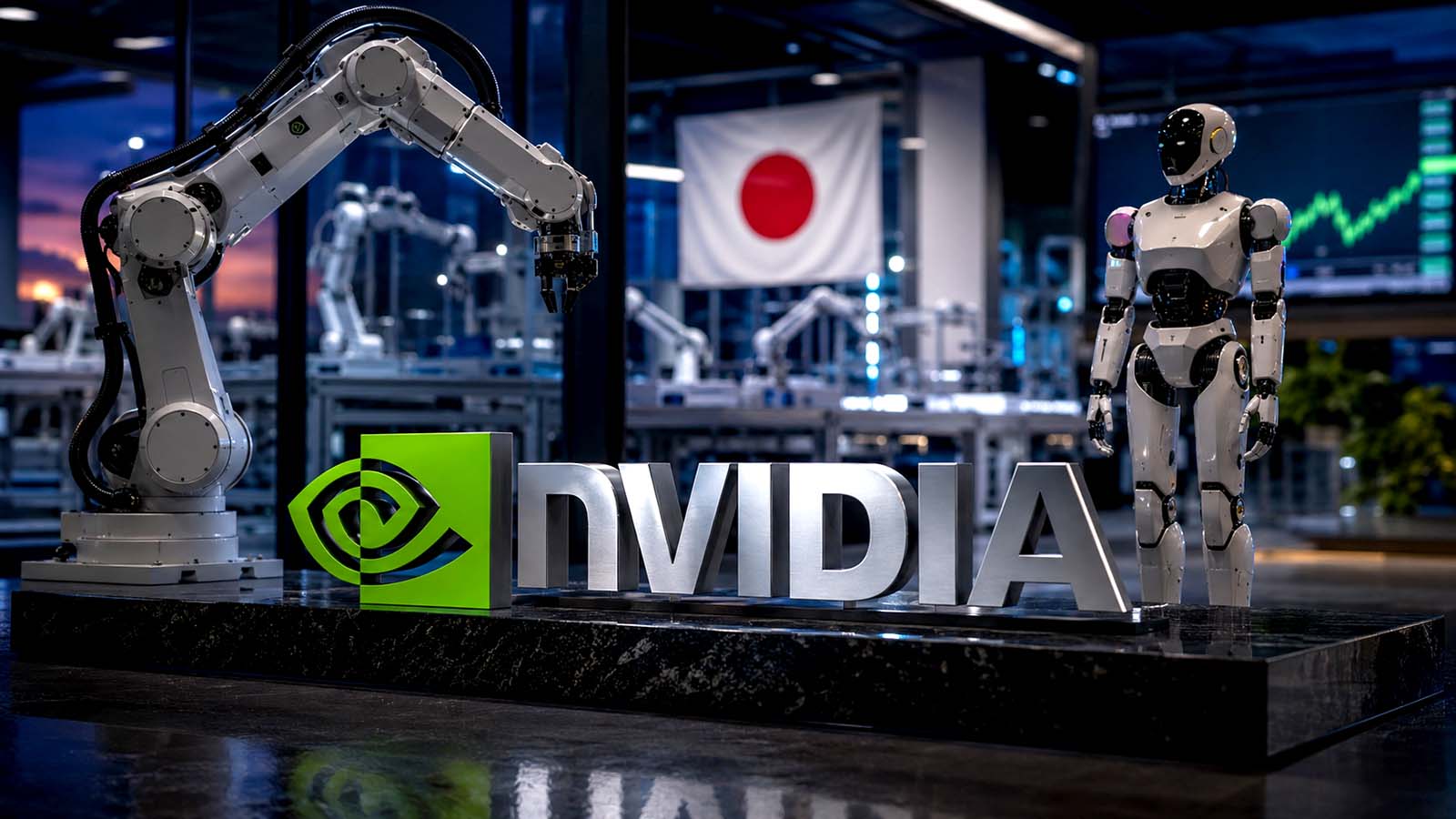
Nvidia and Fujitsu have unveiled a physical-AI initiative with Fanuc, Yaskawa Electric and Kawasaki Heavy Industries aimed at developing a common control platform for robots across manufacturing, logistics and healthcare, even as shares of the three Japanese manufacturers fell sharply in Tokyo on Friday.
Nvidia said Japan’s robotics and manufacturing companies are building on its Cosmos, Isaac, Metropolis and Jetson platforms to accelerate the deployment of intelligent machines.
Fanuc, Fujitsu, Kawasaki Heavy Industries, Yaskawa Electric and other Japanese companies also intend to join the Nvidia Cosmos Coalition, which is focused on developing open world models for physical AI.
Fujitsu said separately that it had begun exploring business opportunities with the three robotics companies, with discussions expected to produce a roadmap for technology development and commercial expansion.
Nvidia expands Japan physical-AI push with Cosmos 3 Edge
Nvidia also introduced Cosmos 3 Edge, a four-billion-parameter model designed to help robots and vision-AI systems understand their surroundings, reason in real time and generate actions locally on Nvidia-powered edge computers.
The company said developers can adapt the model for specific robots, vehicles, sensors and operating environments, while the broader Cosmos platform will allow Japanese companies to test and optimize physical-AI systems before deploying them in factories, logistics networks, farms, hospitals and other settings.
The planned coalition members will be able to contribute to and build on Nvidia’s open models, datasets, frameworks and data-curation tools.
Partners combine AI, simulation and robotics systems
Fujitsu will lead discussions on a collaborative control platform connecting business software and digital systems with robots and other physical equipment.
The platform is expected to use Nvidia’s Cosmos world models, Omniverse libraries, Isaac robotics platform and Newton physics engine for AI development, digital twins, robot training, simulation and testing before real-world deployment.
Fujitsu said the companies will initially explore factory automation, materials handling in retail and logistics, and healthcare applications such as transporting medicines and specimens inside hospitals.
The group also plans to work toward an open and standardized platform that can support equipment from participating companies and research institutions.
Robotics shares fall despite Nvidia-backed AI initiative
Fanuc shares opened sharply below Thursday’s 7,020-yen close at 6,690 yen, briefly reached 6,706 yen and then fell to 6,577 yen before trading near the session low at 6,604 yen.
The decline pushed the stock below its recent lows around 6,700 yen and to the weakest level shown on the one-month chart.
Yaskawa extended an already established downtrend after spending the previous sessions consolidating around 5,400 yen to 5,500 yen.
The shares opened at 5,273 yen, failed to hold above 5,300 yen and dropped to 5,121 yen before trading at 5,131 yen, leaving the stock near its intraday low and marking a fresh low on the chart.
Kawasaki Heavy Industries also dipped lower, opening at 2,670.5 yen compared with the previous close of 2,737.5 yen.
After reaching 2,690.5 yen, the shares broke below the recent 2,650-yen area and fell to 2,612.5 yen before trading at 2,618.5 yen. The move extended the pattern of lower highs and lower lows visible since early July.
All three stocks were trading sharply lower after the Nvidia-backed initiative was announced, though the price action alone does not indicate that the announcement influenced the trend. The figures are intraday and may change before Tokyo trading closes.