The outage wave, GPT-6.2 Astra, sparks of RSI, and Nvidia post-Jensen.
Wednesday. Today we're taking on a host of topics, moving past the Nvidia saga that has consumed our pages in recent days. Our coverage of the Big Numbers from Nvidia's earnings report is here, and we cover its earnings call (and the company's board's notes on Jensen Huang's possible return) at the end of today's newsletter. But first: The cyber crisis, Anthropic's IPO, GPT-6.2 Astra, the latest RSI sparks, and more. To work! Your friend, Alex**.**
- 📈 Trending Up: Rocket prices ... following Cautious Optimism on X ... friends, enemies, frenemies ... Chinese AI progress ... Anthropic's IPO? ... media strikes ... no shit ... robots in ur house ... AI diplomacy ...
- 📉 Trending Down: Chinese AI models at home ... cybersecurity ... balance sheet recording ... sanity ... America-Holland relations ...
Maybe we're our own worst (cyber) enemies
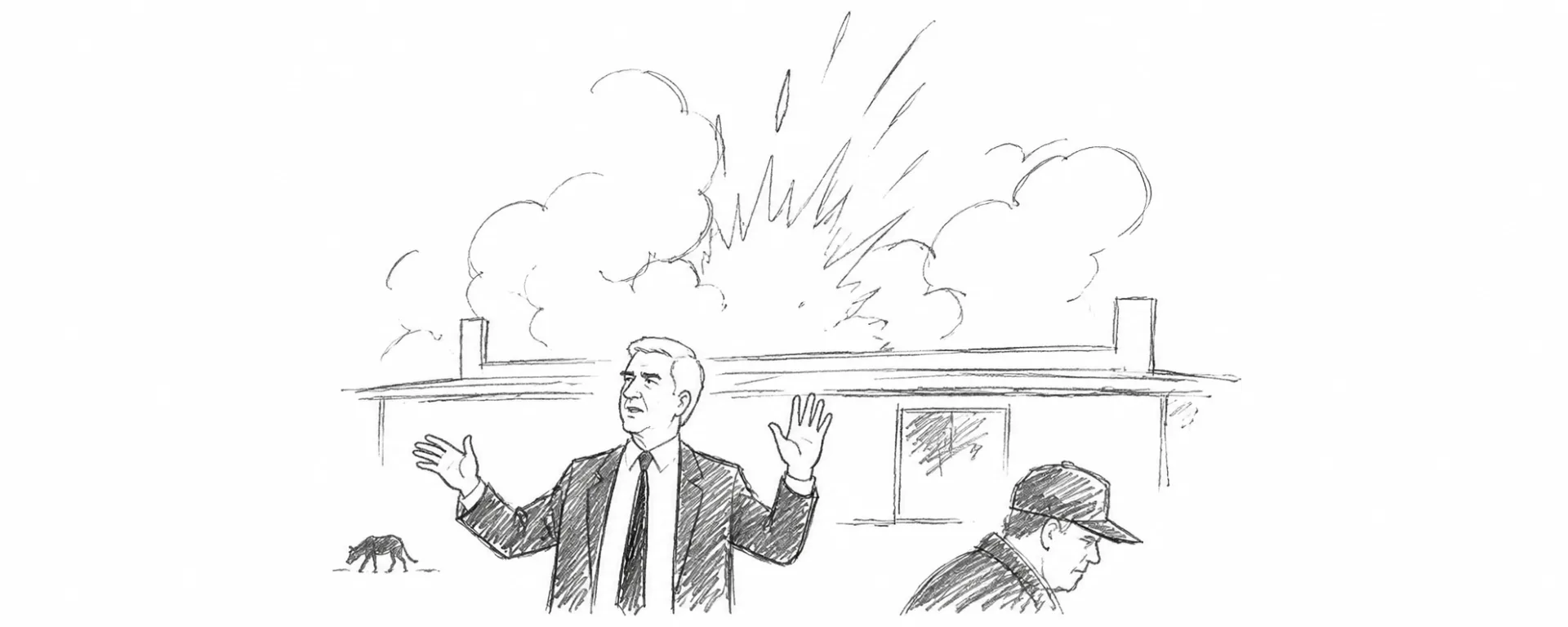
A wave of digital emergencies is impacting, variously, Microsoft, the FAA, banking, the NSA, enterprise software, Apple, and even startups like Fireworks AI. Downtime is becoming embarrassingly normal as companies deal with intrusions and other cybersecurity-related issues.
As with any polycrisis, its causes are multifactorial. While some of the recent cyber issues stem from attacks, others are reported to be self-inflicted. Here's a reporting composite:
- "An internal network the National Security Agency uses to communicate classified information was offline Tuesday after what the agency described as 'routine maintenance.' [...]'Many of our systems are back up and running after an internal update caused some outages this morning,' an Apple spokesperson had told NBC News early in the afternoon [...]Microsoft had said server issues were behind the incident that also affected its Copilot AI assistant, and that it was not aware of any malicious activity, ruling out AI ....
It would be simple to dismiss the above as mere bad luck, but I'd hazard that we're seeing a blizzard of patching in response to, or in preparation for, an increasingly dangerous cybersecurity threat landscape (Senator Warner agrees, as does Wall Street). Google wrote recently that as "threat actors increasingly move beyond basic prompting to deploying autonomous multi-agent frameworks," the "adversarial AI landscape has reached a critical inflection point."
If you move quickly to patch, you might make mistakes. But moving slowly also seems like a non-starter. For example, the FBI sent out a bulletin on the 13th warning that "threat actors have weaponized [open-source pen testing tool ARTEX] to automate multiple phases of cyber intrusions at machine speed, from reconnaissance through data exfiltration." Not good! Palo Alto Networks CEO Nikesh Arora made it clear that the FBI's concerns shouldn't be dismissed. The feared future of AI-empowered hacking attempts multiplying is upon us:
So, expect more companies to break themselves preparing, and others to break under attack. Fun times. If you sell cybersecurity tools. (Wiz is looking pretty cheap, yeah?)
New AI models from OpenAI and Microsoft
After what felt like a lengthy , OpenAI released new flagship AI models yesterday. GPT-6.2 Astra and Sol (its frontier and large offerings, respectively) were instantly controversial after release. Panned by some commentators and adored by others, they continued the trend we've seen in recent months: American, closed-source AI models setting new intelligence high-water marks on certain benchmarks while open models from global providers struggle to catch up.
- I have only used GPT-6.2 Astra a little; for my purposes, it's aces, but the little factory automation game I am building with it is akin to asking a Fields Medalist for help with your arithmetic.
OpenAI was not alone in dropping new AI models yesterday. At its Ignite event, Microsoft detailed a host of new offerings, including new coding models MAI Code 2 and MAI Code 2 Flash, which it compares with GPT-6.1 Sol and GPT-6 Luna-class models, respectively; a new cyber model; a new decision model; and more. Microsoft also detailed a new 'Licensed Weights' product that allows customers to "deploy and customize Microsoft AI models in their own Azure environments." In short, Microsoft's AI efforts are now firing across multiple cylinders, and the company is miles from being content to provide compute sans intelligence; it wants to sell you both.
Hey, look, recursive self-improvement
While GPT-6.2 Astra is potentially tricky to use, it did come with some very welcome news:
Subscribe to keep reading #
Everything below is for paid subscribers