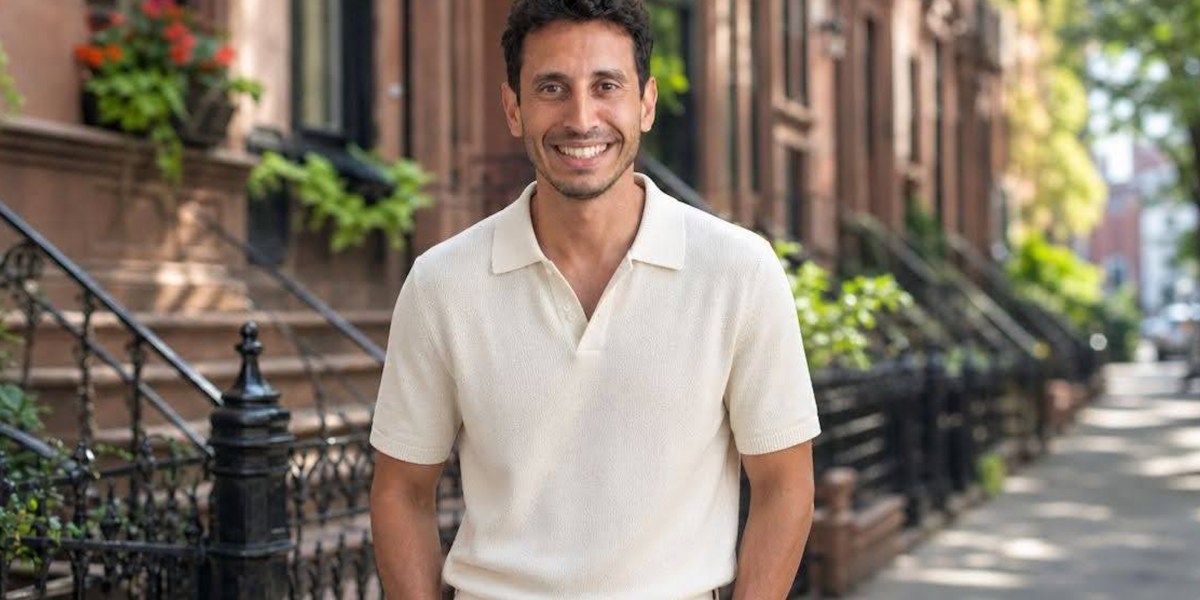
Noa Khamallah grew up without a microwave or a car, dropped out of school, and did time in prison before he ever wrote a check to a startup. When he wanted access to Yann LeCun, the researcher widely credited as the godfather of modern AI, he skipped the warm intro and cold-emailed him instead, subject line: “former convict, street kid, turned IPO, turned VC.” LeCun replied within hours: “You are a statistical anomaly. Welcome in.” He used the same tactic cold-writing to rapper Fetty Wap, who later became a supporter of his fund alongside former NFL player Penny Hart.
That anomaly is now a $10 million fund with real numbers behind it. Khamallah’s Don’t Quit Ventures announced the second close of Fund I, Fortune learned exclusively, marking the fund at 2.5 times what investors put in. Three of its 17 investments are now valued above $1 billion, with nearly one in five of his bets becoming unicorns, versus roughly one in seventy for the industry at large.
Sources familiar with the fund told me its cap table also includes a stake in Mira Murati’s Thinking Machine Lab, alongside disclosed positions in AMI Labs and Replit. The fund already returned cash to LPs through an early sale of part of its stake in one company, just 14 months after its first close, at 1.5 times what it paid.
DQV represents a market that keeps rewarding small over big. Carta’s Q4 2025 data shows funds under $10 million are still beating funds over $100 million at returning cash to investors and growing their paper value. According to iCapital’s research, smaller funds (sub-$275 million) returned 36%, versus 24% for bigger ones. Basically, a $10 million bet that grows tenfold barely moves the needle inside a $1 billion fund, while inside a $10 million fund, it changes everything.
At the same time, brand-new funds have all but stopped launching. Only 101 first-time funds got off the ground in 2025, the fewest in 14 years. Meanwhile, the ten biggest funds now scoop up a third of all the money raised, more than double their share five years ago.
Michael Ströck, whose firm Allocator One anchored DQV’s first close, told me his firm reviews more than 800 funds a year and picks fewer than 1 percent. What sold him on Khamallah wasn’t the pitch deck, it was the combination of dealmaking instinct and operating scars. “The quality of relationship building and being extremely relationship-driven and extremely commercial at the same time is very hard,” he said.
Ströck also pushed back on the instinct to see solo-run funds as riskier than ones with co-founders, arguing that the insurance math simply doesn’t support it. A single manager becoming incapacitated mid-fund is statistically rare, while multi-partner splits are common. “I never understood the concern with solo GPs,” he said. “It makes no sense.”
The catch is durability. Smaller funds also swing harder between huge wins and total busts, so if Khamallah raises a bigger Fund II, the math that makes this work gets harder to repeat.
See you tomorrow,Lily Mae LazarusX:
@LilyMaeLazarus Email:
lily.lazarus@fortune.com Submit a deal for the Term Sheet newsletter
here. Joey Abrams curated the deals section of today’s newsletter. Subscribe here.
VENTURE DEALS
- Decade, a São Paolo, Brazil-based AI-native wealth advisory company, raised $85 million in seed funding from Greenoaks,
Benchmark, and
Diffusion.
- Ore Energy, an Amsterdam and Delft, The Netherlands-based developer of iron-air batteries, raised $43 million in Series A funding.
Plural and
HV led the round.
- Ambrook, a San Francisco and Denver, Colo.-based accounting and payments software company, raised $30 million in funding.
Lachy
Groom led the round and was joined by
Thomson
Reuters
Ventures,
Thrive
Capital,
Field
Ventures, and
Cameron
Ventures.
- Buzz Solutions, a Palo Alto, Calif.-based developer of AI software designed for energy infrastructure, raised $20 million in Series A funding.
S3
Ventures led the round and was joined by
GoPoint
Ventures and existing investors.
- Endeavor Optical Networks, a Culver City, Calif.-based developer of space-based laser communications systems, raised $10.8 million in seed funding.
General
Catalyst and
a16z led the round and were joined by
Main
Object,
XYZ, and
UpFront.
- Rivo, a San Francisco-based consumer fintech company building autonomous cash management on top of existing bank accounts, raised $2.7 million in seed funding from
South
Park Commons,
Wisdom
Ventures,
Script
Capital, and others.
PRIVATE EQUITY
-
Fishbowl Inventory, backed by Diversis, acquired Repfabric, a Tampa, Fla.-based AI-enabled CRM, commission-tracking, and sales-data-management platform for manufacturers’ representatives. Financial terms were not disclosed.
-
Ridgemont Equity Partners acquired ENTACT, a Chicago, Ill.-based provider of environmental remediation and geotechnical services. Financial terms were not disclosed.
-
Sheridan Capital Partners acquired a majority stake in Carolina Components Group, a Durham, N.C.-based provider of bioprocessing assemblies and components used in biopharmaceutical manufacturing. Financial terms were not disclosed.
-
Veritas agreed to acquire Steampunk, a McLean, Va.-based provider of digital services and technology consulting to U.S. federal agencies. Financial terms were not disclosed.
EXITS
- Francisco Partners acquired a majority stake in Command Alkon, a Hilliard, Ohio-based provider of construction software, from
Thoma
Bravo. Financial terms were not disclosed.
PEOPLE
- Paceline Equity Partners, a Dallas, Texas-based private equity manager, promoted Jonathan
Rosen to partner.
Sign upfor free.