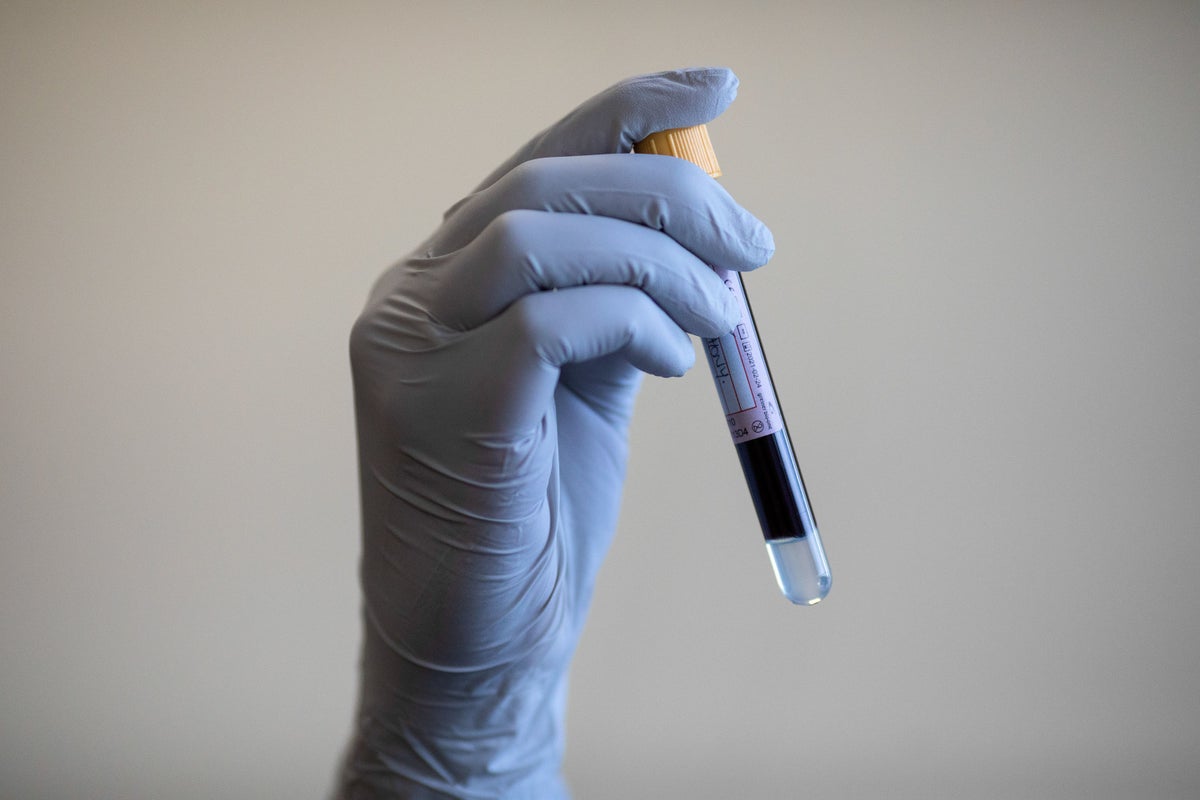
The test costs around £30 and can tell women whether they are at risk of cancer
- Bookmark
- CommentsGo to comments
A new cancer blood test could significantly reduce the need for invasive examinations in women suspected of gynaecological cancer, researchers say.
The PinPoint test employs artificial intelligence (AI) to analyse 30 markers in the blood, predicting a patient’s risk as low, elevated, or high.
Experts suggest this innovative blood test, costing around £30, could spare thousands from intrusive diagnostic procedures, as a simple blood test could deem their cancer risk low.
Currently, around 90,000 patients are referred each year for post-menopausal bleeding, yet only about one in 10 of these cases will have cancer.
That means that if rolled out across GP surgeries, the new test could save tens of thousands from undergoing invasive procedures to rule out cancer.
Dr Richard Savage, PinPoint chief scientist, said: “It gives you a score, and if the score is low, then you’re going to be at low risk, and if you’ve got higher score, you’re going to be at higher risk.
“The clinician knows what that means, it’s well defined, and that means that the clinician can make clinical judgments.
“Gynae is a good example, if the score is very low, you’re at low risk, and actually probably the last thing the patient wants is a load of invasive tests – it is going to be unpleasant, it is a very stressful experience being checked for cancer, because, of course, your brain is going straight to: ‘Oh my god, I might have cancer.’
“If somebody’s very low risk, the clinician can monitor them, manage them, make sure they’re OK.
“If you’re high risk, of course, you want to know about that immediately, and you can act.
“It just gives it more information to work with in the whole existing triage and clinical process.”
Asked about when the test could be rolled out for wide use, Dr Savage said: “I think we’re quite a long way down that road already in terms of actually getting it to the point where it’s actually helping people regularly.”
He said the test “also sees the late stage stuff”, when asked about another separate cancer blood test which failed to detect later-stage cancers.
Dr Savage described the test as a “multi-cancer” test and said that it performs particularly well for gynaecological cancers as well as lung and upper gastrointestinal cancers. It was also indicated for use in head and neck and lower gastrointestinal cancers.
The test was assessed in five NHS trusts in Yorkshire on 16,481 cancer referrals, including 2,953 with suspected gynaecological cancer.
Overall 2,839 women did not have cancer and 114 were diagnosed with cancer.
A PinPoint spokesperson said that the test correctly identified 99.1 per cent of cancers as elevated or high risk and delivered a negative predictive value of 99.8 per cent for women in the lowest risk group.
PinPoint’s chief medical officer, Professor Sean Duffy, said: “PinPoint’s strong, clinically meaningful evidence shows that a single, affordable blood test can support clinician’s decision making – helping clinicians prioritise patients by biological urgency rather than the typical first come, first served appointment systems.
“Nowhere is this more compelling than in gynaecology.
“The accuracy we have seen in this pathway in identifying more than 99 per cent of endometrial cancers is remarkable by any clinical standard.
“But equally its value lies in safely ruling out very low risk women.
“This has the potential to spare thousands of patients from painful, invasive procedures they do not need.
“For too long, women have had to undergo uncomfortable diagnostics as a first step; this technology offers a practical, scalable alternative that protects both their experience and their safety.”
Join our commenting forum #
Join thought-provoking conversations, follow other Independent readers and see their replies
Comments