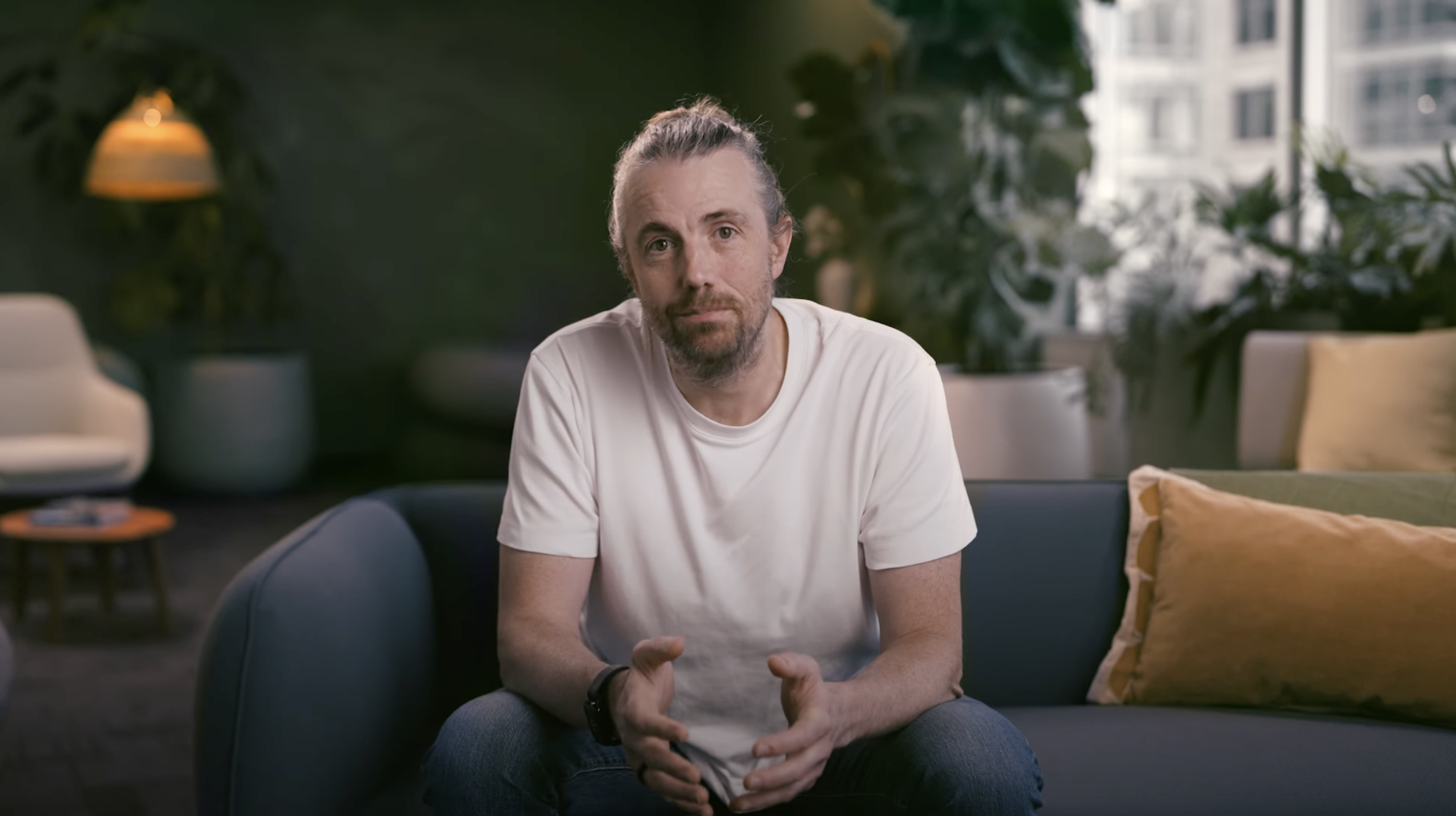
As Canva struggles with rising AI bills, Atlassian told investors that Rovo AI usage will impact margins for FY27. But CEO Mike Cannon-Brookes maintains AI is the “best thing” to happen to Atlassian.
Mike Cannon-Brookes rejects concerns that rising AI costs will eat into Atlassian’s margins, an emerging threat facing global software companies, after the company on Friday reported a return to profit and surging revenue.
Atlassian’s Rovo AI platform is increasingly central to the company’s future, with customers who use Rovo growing their spend at more than twice the rate of those who don’t. Cannon-Brookes told Forbes Australia Atlassian has tamed the cost of its AI despite usage growing significantly.
“We talked about Rovo-assisted actions being up 50 per cent quarter-on-quarter, doing that with nary a blip in margins and costs is a non-trivial engineering challenge,” Cannon-Brookes said. “I think we’re doing a really good job at managing that in terms of a margin profile while delivering ever-increasing AI value to customers without them having to count every penny.”
Yet if keeping costs down is non-trivial, those costs are still not zero. That much was flagged in Cannon-Brookes’ letter to shareholders, in which he wrote that Atlassian’s margins will fall from 85 per cent last financial year to 84.5 per cent in the current one due in part to customers’ usage of Rovo.
“This guidance considers the negative impacts of growing Rovo usage and hosting costs as a greater proportion of our business shifts to the cloud,” the letter reads. On Atlassian’s expected US$7.4 billion of annual revenue, each percentage point of margin represents a roughly US$74 million swing in gross profit. The company’s margin for the three months ending June 30 was 87 per cent.
“I don’t think people should read too much into if that goes up or down one point. It’s all about us delivering a great product for customers and being able to apply the latest AI technologies and models that have been developed.”
The exploding cost of AI has been a hot topic within the corporate world over the past year. Uber’s CTO revealed the company burned through its annual AI allowance in four months. Meanwhile Canva reportedly told investors that its revenue will grow 20 per cent this financial year, a downgrade from earlier expectations of 30 per cent, after it had to delay recently announced AI products due to their unexpectedly high running costs.
Unlike other tech companies, Atlassian says it never encouraged its employees to use as much AI as possible. Rovo is also likely not as compute-intensive as AI applications that generate images and videos, with its use revolving around querying company information and coordinating agents.
When asked if Rovo was costing Atlassian more than customers pay, Cannon-Brookes rejected the premise and said Rovo’s economics should be viewed across Atlassian’s whole product suite. He pointed to Teamwork Collection, a bundle of Atlassian’s products that comes with 10-times the AI credits that customers would get if they subscribed to each product separately, which has helped drive the company’s 31 per cent year-on-year cloud growth.
SaaSpocalypse shrug off
Friday’s earnings revived faith among many investors, with the stock’s price jumping as high as 35 per cent in after-hours trading. Included in the results was a firm return to the black, with Atlassian recording US$139 million in profit for the quarter – a turnaround from a US$24 million loss in the same quarter last year.
Atlassian maintained its after-hours trading price the following day, closing at US$149 as the Nasdaq closed Friday US time. It is the highest price the company has reached since January before the so-called SaaSpocalypse. New capabilities Anthropic unveiled for Claude in February raised fears that AI agents could replace the software companies currently pay to use, leading investors to sell off stocks like Atlassian, Xero and Salesforce.
“Mike and I built Atlassian with the long-term in mind, which remains as true today as it ever was,” Atlassian co-founder and former co-CEO Scott Farquhar said in a statement. “These results are testament to both Atlassian’s durability and the huge runway ahead with AI.”
Inverting the SaaSpocalypse narrative, Cannon-Brookes told investors that AI is “the best thing” to ever happen to Atlassian.
Speaking to Forbes Australia, he said it takes three years to build impactful technology – a year to build the product, a year to customise it based on customer feedback, and a year to build the appropriate economic and scaling models. Cannon-Brookes says the power of AI, which the market has interpreted as a risk for Atlassian, is an opportunity that the company is still in the early stages of exploiting.
“This is not a case where we’re limping over a finish line exhausted,” he said. “It’s a case where we’re like, man, we had an outstanding quarter, and we honestly believe what is ahead of us is even better.”
*Want to see more Forbes articles on your feed? *Tap here to make Forbes Australia a preferred source on Google.
Look back on the week that was with hand-picked articles from Australia and around the world. Sign up to the Forbes Australia newsletter here or become a member here.