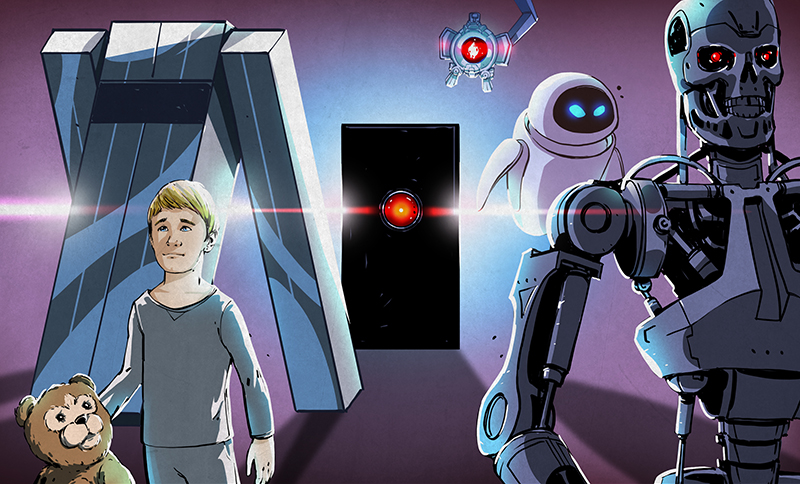
[Irving John Good] was at Trinity College, Oxford back in 1964. His paper, “Speculations Concerning the First Ultraintelligent Machine” could have been a topic for today, as we deal with machines that aren’t really ultraintelligent, but appear smart and think they are even smarter. He starts off with a bold thesis: “The survival of man depends on the early construction of an ultraintelligent machine.”
He also admits that we’ll need to understand more about the human brain and human thought to make a breakthrough. This is still true today. However, we still don’t fully understand how our brains work, but it seems unlikely that we are just super-large LLMs. Not that [Good] anticipated the modern chatbot. Perhaps his comments will apply more to a future AI software that actually thinks like a human, if there will ever be such a thing.
Then again, there are many parallels. One theme in the paper is that a smart machine will design a smarter machine. Unless, of course, it is afraid of being replaced. If a machine were actually sentient, what are the ethics of turning it off and tearing it apart?
It is hard to be a visionary. [Good] remarks that by 1980, progress in human/computer symbiosis will encourage more investment in the field and that by that time, there would be “great advances in microminiaturization” and “frequencies of one billion pulses per second,” might be common in “large computers.”
We love reading what smart people thought the future might be like. What will the world be like in another 60 or 100 years?