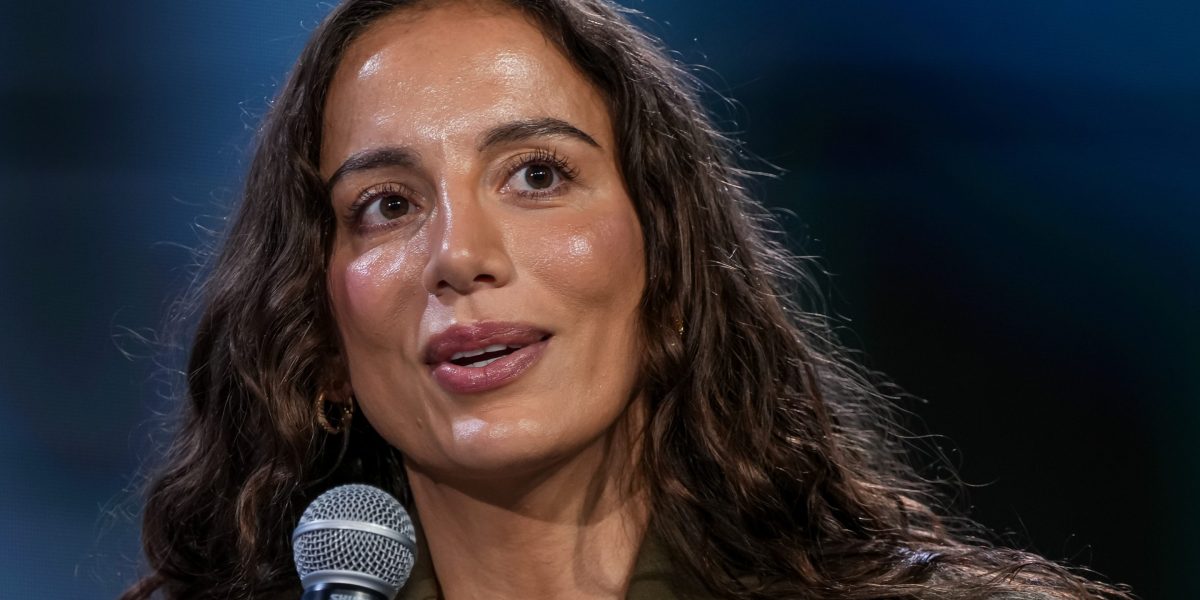
Thinking Machines Lab is releasing its first AI model, more than a year after former OpenAI executive Mira Murati founded the artificial intelligence startup.
The new model, called Inkling, is designed to be versatile and efficient, processing queries across different media while balancing “cost against performance,” the company said on Wednesday. Inkling is also open-weight, meaning developers can download and customize the model without seeing the training data or source code.
Thinking Machines said Inkling performs well on various benchmarks compared to similar open-weight offerings. The company said Inkling** **was trained “for strong performance across the board,” but that “it is not the strongest model available today, closed or open.”
Founded last February by Murati and a cohort of other former OpenAI employees, Thinking Machines is part of a group of so-called AI neolabs attempting to build more advanced artificial intelligence software that can compete with leading labs like OpenAI and Anthropic PBC. Some of these companies, including Thinking Machines, have nabbed substantial sums from investors before releasing any products.
Murati’s startup raised $2 billion at a $12 billion valuation last year, and was said to have been in discussions about a bigger, subsequent round. Several employees have since left her company, joining firms like Meta Platforms Inc. and OpenAI.
Read more: OpenAI, Meta, SpaceXAI Compete for More Cost-Efficient AI Models With its new model, Thinking Machines could be filling a void in the US market, which is thought to be lagging behind Chinese developers in putting out competitive open AI products. Meta, once a leader in open model development, has started to focus more on closed or proprietary models that customers would pay to use. OpenAI, meanwhile, released a pair of open models last year but its product portfolio remains dominated by paid offerings.
As businesses and individuals become more conscious of their surging AI spending, some are turning to freely available models from China for certain tasks, raising national concerns in the US.
Thinking Machines is not aiming to monetize the new model. Currently, the startup generates revenue through its developer tool called Tinker for fine-tuning — or customizing — AI models, which it sells to customers such as hedge fund Bridgewater Associates to improve AI performance on financial tasks.
Inkling is also part of Murati’s bid to build “interaction models” designed to let people collaborate more naturally with AI.
“Our interactions with each other are very rich,” she told Bloomberg last month. “There’s a lot of information in our interactions – when we’re silent, when we’re thinking, when we’re interrupting one another. Interaction models are able to capture all of these nuances.”
Subscribe to Fortune Gulf Brief. Every Tuesday, this new newsletter delivers clear-eyed, authoritative intelligence on the deals, decisions, policies, and power shifts shaping one of the world’s most consequential regions, written for the people who need to act on it.