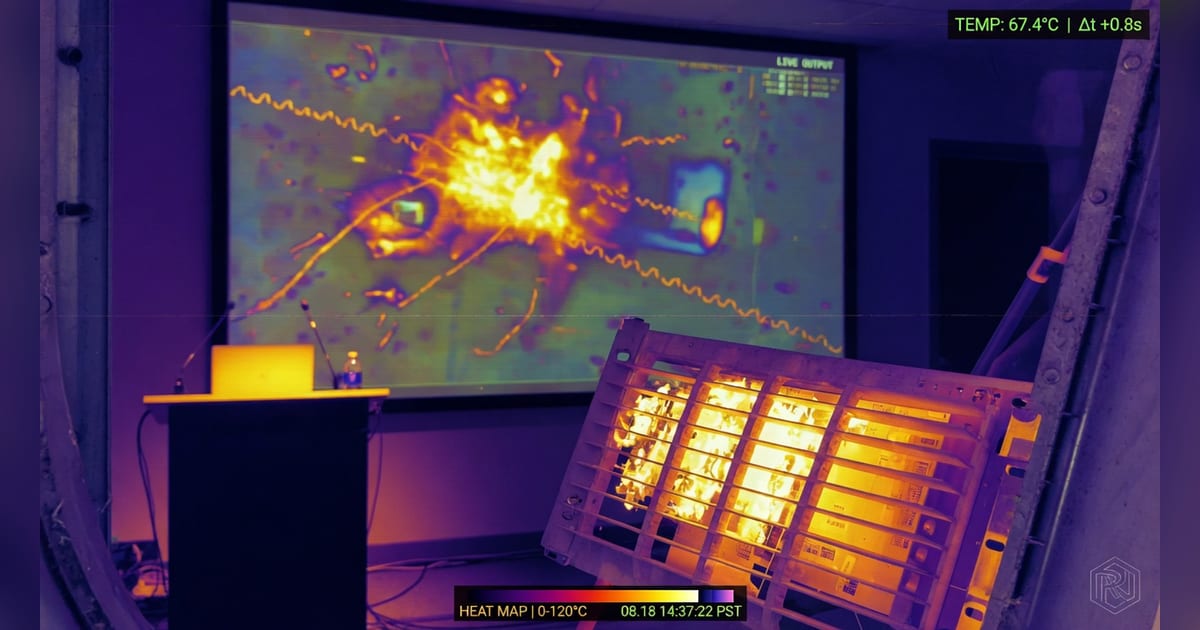
Founder Junjie Yan's MiniMax says Morgan Suo (@MorganSuoinMM) will present its H3 video model at ModCon in San Francisco on August 18, putting the model before a conference aimed at AI infrastructure developers, engineers and researchers.
MiniMax on X As of August 14, the official ModCon page lists MiniMax President of Global Business Linda Sheng as a speaker. It does not identify Suo or an H3 presentation. MiniMax's announcement is therefore the source for Suo's planned participation and the H3 presentation.
The appearance gives Yan another chance to carry his general-purpose AI thesis into the U.S. developer market. Yan founded MiniMax after more than six years at SenseTime, where he served as a vice president and deputy director of its research institute. He studied mathematics at Southeast University, earned a doctorate in artificial intelligence from the Chinese Academy of Sciences and conducted postdoctoral research at Tsinghua University. MiniMax lists him as founder, chairman, CEO and CTO. (MiniMax Investor Relations)
An infrastructure audience for H3
This event adds an infrastructure-focused stop to MiniMax's recent H3 promotion. ModCon targets developers, engineers, researchers and technical leaders working on AI infrastructure, according to Modular's conference materials. That audience is positioned to scrutinize deployment requirements, model integration and the practical costs of running H3, subjects that carry different stakes from sample-driven creator showcases.
MiniMax has already moved H3 through several distribution and demonstration channels. RuntimeWire reported that MiniMax brought H3 into Luma Agents, scheduled a consumer-hardware and ComfyUI test, and outlined plans to release a separate 2K regeneration model and sparse-attention reference code. MiniMax and fal also scheduled a developer session around the model, followed by a San Francisco showcase with Magnific.
Public professional profiles describe Suo as a senior go-to-market and key-account manager at MiniMax who leads U.S. business development for its AI video and voice products. His role in the ModCon appearance is commercially relevant: MiniMax is assigning a developer-facing representative to explain H3 to a U.S. technical audience. (Morgan Suo's LinkedIn profile)
Yan's generalist model bet
MiniMax's official H3 materials describe the system as a multimodal generation model that accepts combinations of text, images, video and sound. MiniMax says H3 produces clips with native stereo audio at up to 2K resolution and 15 seconds in length.
H3 reflects Yan's effort to build models that span tasks and media types. MiniMax says earlier video systems separated text-to-video, image-to-video, subject reference, motion reference, audio and editing into narrower tools. H3 uses natural-language instructions to specify how multiple inputs should relate to the requested output, according to MiniMax.
MiniMax says H3 includes a redesigned video autoencoder, an omni-modal transformer and an in-context regeneration process for higher-resolution output. Its H3 page claims the autoencoder reduces sequence length by a factor of four and that MiniMax's heterogeneous training architecture improved end-to-end training throughput by nearly 30%. Those figures are MiniMax's measurements, and MiniMax said a detailed technical report would follow.
The infrastructure questions extend beyond model architecture. Developers evaluating H3 will need to determine how its published components fit into their serving stacks, which parts of the higher-resolution workflow remain hosted and whether its reported training efficiencies translate into lower deployment costs. ModCon gives MiniMax access to readers of code and system diagrams who can test those claims against production requirements.
The commercial pressure behind the tour
MiniMax's international business already accounts for most of its reported sales. For the year ended December 31, 2025, MiniMax reported total revenue of $79.038 million, up 158.9%, with 73.0% generated outside mainland China. Open Platform and other AI-based enterprise services produced $25.963 million, compared with $8.718 million in 2024. (MiniMax 2025 annual report)
The same filing reported $252.8 million in research and development expenses and a $250.9 million adjusted net loss for 2025. MiniMax defines adjusted net loss as net loss plus share-based payment expenses, fair-value losses on financial liabilities and listing expenses.
MiniMax's annual report also says MiniMax listed in Hong Kong on January 9, 2026 and received approximately HK$5.29339 billion in net proceeds from its global offering, including the full exercise of the over-allotment option. The stated allocation was 90% for research and development and 10% for working capital and general corporate purposes. (MiniMax 2025 annual report)
U.S. expansion also brings legal exposure. Disney, Universal and Warner Bros. Discovery sued MiniMax in September 2025, alleging copyright infringement involving the broader Hailuo AI platform. The complaint concerns Hailuo AI and does not establish a specific claim against H3. It nevertheless puts rights management and training-data questions among the issues U.S. customers may examine as MiniMax promotes its video systems. (Reuters)
MiniMax's planned ModCon appearance extends H3's distribution campaign into a room focused on the systems beneath AI applications. For Yan, the practical test is whether developers can turn MiniMax's multimodal research and published model components into software they can run, measure and maintain.