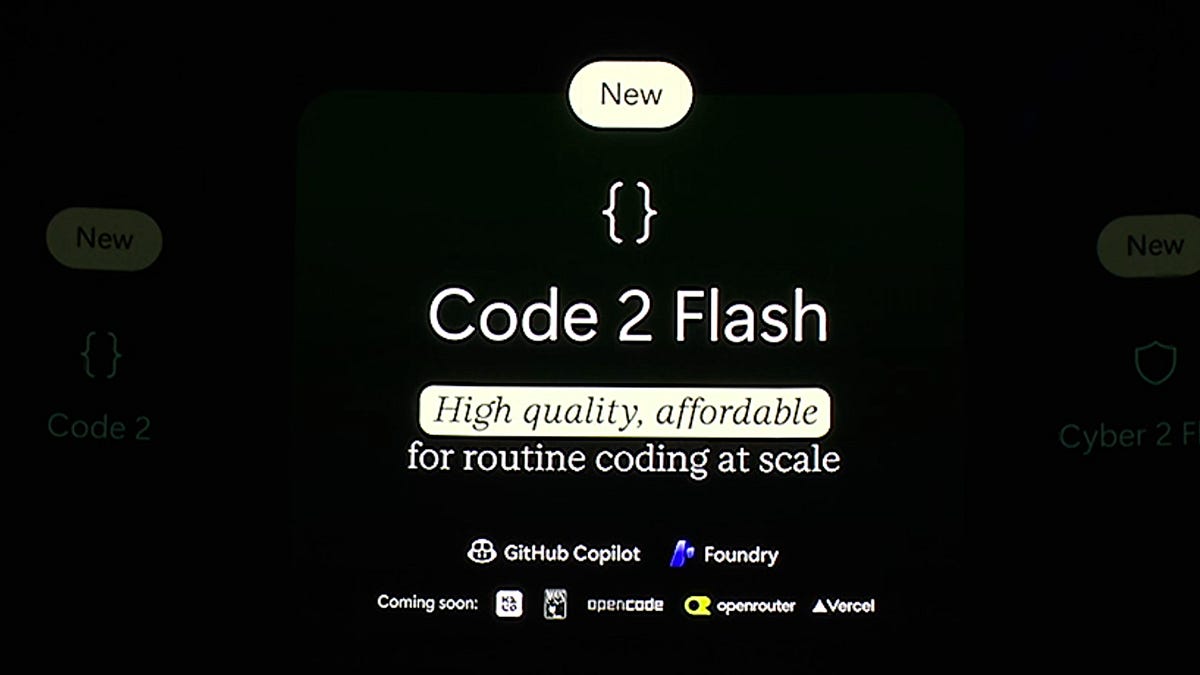
Microsoft just unveiled its new MAI coding models at Microsoft Ignite today, with Kilo announced as a launch partner. MAI Code 2 and MAI Code 2 Flash are coming soon to Kilo.
We’re excited about models built specifically for coders to drive developer productivity. The MAI Code 2 family covers both complex engineering projects and fast, high-volume coding, giving developers more choice in how they plan, code, review, test, and ship.
The Kilo team is partnering with Microsoft to test the models, provide feedback, and help bring them to the large Kilo community.
Meet the Microsoft MAI Code 2 family
The news: Microsoft is introducing two models with different roles in the development workflow:
- MAI Code 2 is designed for complex, long-horizon coding across multiple files or an entire repository, including frontend projects. Think substantial implementations and changes that require reasoning across a codebase.
- MAI Code 2 Flash is designed for simple, fast, high-volume coding tasks, including quick edits, repetitive steps, and sub-agent workloads. It focuses on keeping work moving through frequent iterations and repeated model calls.
Microsoft describes both models as token-efficient and built for scale. We’re looking forward to exploring what that means in practice with Kilo and Kilo for VS Code, from individual coding sessions to workflows with multiple agents. If you are not already using Kilo today, Install your preferred interface now to explore.
For Kilo builders, the interesting question is where each model fits in your workflow. Which tasks benefit from deeper reasoning? Where can a faster model get the job done well? Those are the questions we want to help answer through testing.
Microsoft models, your development workflow
The planned integration brings MAI models to Kilo through Microsoft Foundry, extending the choices available to developers working in the Microsoft ecosystem.
You can already use Kilo on its own or through its Visual Studio Code integration and GitHub resources, with connections to your GitHub repositories. Kilo believes in model choice with over 500 models available today. MAI adds more model options to that workflow, so you can try Microsoft’s coding models while keeping the tools and projects you already use.
That’s central to Kilo’s approach: give developers access to different models and the freedom to choose how they build. As projects grow into team workflows, Kilo also brings shared workspaces, enterprise controls, and cost visibility to help teams manage adoption.
What happens next
MAI Code 2 and MAI Code 2 Flash are coming in private preview. Our team is working with Microsoft on testing and feedback ahead of broader availability.
We’ll share what we learn, along with availability details and instructions for getting started in Kilo. Expect more on how these models handle real coding work as we put them through their paces.
Stay tuned. More coding models are on the way to Kilo.