Microsoft will use AMD’s AI-optimized Helios racks in Azure
Microsoft Corp. will use Advanced Micro Devices Inc.’s upcoming Helios rack design to power some Azure services.
The cloud and operating system giant announced the partnership today alongside three new instance families.
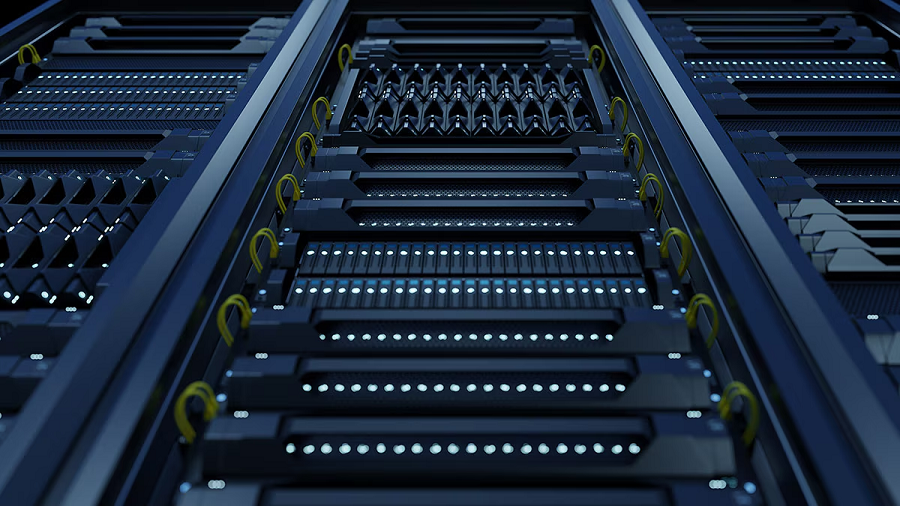
Helios is a reference design, a blueprint that AMD’s manufacturing partners can use to make data center racks. Each system contains 72 of the chipmaker’s upcoming Instinct MI455 graphics processing units. AMD has to date shared only a few details about the GPU. It will feature 432 gigabytes of HBM4 memory, 19.6 terabits per second of bandwidth and a new core architecture called CDNA 5.
Helios’ GPUs are supported by Pensando data processing units and Epyc central processing units.
Pensando chips are optimized for infrastructure management tasks such as coordinating storage equipment and encrypting network traffic. According to AMD, they can run such workloads more efficiently than CPUs. That lowers costs while making more CPU capacity available for customer applications.
The CPUs in Helios are from AMD’s upcoming Venice data center processor series. In May, the company started ramping up production of the chips using Taiwan Semiconductor Manufacturing Co.’s two-nanometer process. The Venice series also uses a second TSMC technology called SoIC that makes it possible to stack chiplets atop one another.
Helios organizes its CPUs, GPUs and DPUs in modules called trays. The trays are wider than a standard rack server to accommodate more hardware. They use liquid cooling to dissipate heat from their chips and exchange data using an open-source network protocol called UALoE.
“AMD and Microsoft have spent years building high-performance infrastructure together, and today we’re extending that partnership across the full stack of AMD AI solutions on Azure,” said AMD Chief Executive Officer Lisa Su.
AMD will start shipping Helios racks to Microsoft and other customers later this year. The tech giant will use the systems to power a new family of Azure instances called the ND MI455X v7 series. According to Microsoft, the virtual machines are optimized for inference workloads such as artificial intelligence agents and search tools.
The company debuted the ND MI455X v7 series alongside two other instance families that will also run on AMD silicon.
The HDv2 series is optimized for tasks that AI applications carry out using CPUs rather than CPUs. That includes the process of preparing datasets for analysis by AI agents. Each instance includes up to 500 Epyc Vulcan cores, four terabytes of memory and 32 terabytes of flash storage.
The third addition to Azure’s virtual machine portfolio is an instance series called HXv2. It’s an improved version of an existing Azure instance series optimized for EDA, or electronic design automation, applications. Those are programs that engineers use to design chip. Microsoft says that HXv2 supports a broader range of workloads including scientific simulations.
Each HXv2 virtual machine features 176 Epyc Vulcan cores with a clock speed exceeding 5GHz. According to Microsoft, each core will feature 50% more cache than previous-generation hardware. Customers can configure their virtual machines with up to four gigabytes of memory.
“The significantly increased per VM and per core performance, and the inclusion of 800 Gb InfiniBand, enable large-scale MPI-based simulations and make HXv2 an ideal fit for a wide variety of HPC customers,” Scott Guthrie, Microsoft’s executive vice president of cloud and AI, wrote in a blog post.
The company’s new collaboration with AMD also extends to a technology called Azure Boost. It offloads the computations involved in running virtualization software from CPUs to more efficient, specialized chips. Microsoft will work with AMD to optimize Azure Boost for the latter company’s products.
Photo: AMD
Support our mission to keep content open and free by engaging with theCUBE community. Join theCUBE’s Alumni Trust Network, where technology leaders connect, share intelligence and create opportunities.
15M+ viewers of theCUBE videos, powering conversations across AI, cloud, cybersecurity and more** 11.4k+ theCUBE alumni**— Connect with more than 11,400 tech and business leaders shaping the future through a unique trusted-based network.
About SiliconANGLE Media
theCUBE AIand theCUBE SuperStudios — with flagship locations in Silicon Valley and the New York Stock Exchange — SiliconANGLE Media operates at the intersection of media, technology and AI.
Founded by tech visionaries John Furrier and Dave Vellante, SiliconANGLE Media has built a dynamic ecosystem of industry-leading digital media brands that reach 15+ million elite tech professionals. Our new proprietary theCUBE AI Video Cloud is breaking ground in audience interaction, leveraging theCUBEai.com neural network to help technology companies make data-driven decisions and stay at the forefront of industry conversations.