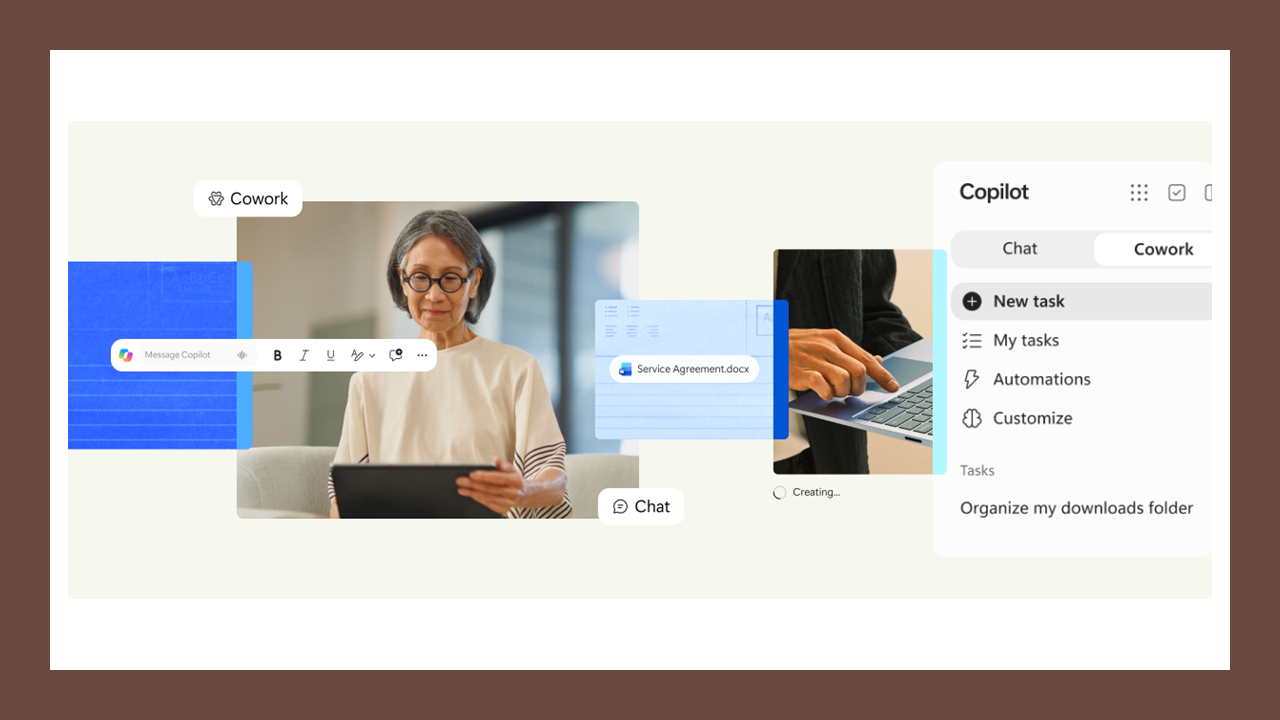
Microsoft today launched Copilot for Legal, offering more than 20 legal-specific skills in Microsoft Copilot, bringing contract review, drafting, obligations tracking and other legal workflows into Word and Cowork, its agentic workspace, along with plugins from more than two dozen legal technology partners.
Microsoft now becomes the fourth major AI company in five months to roll out a dedicated legal offering, following Anthropic’s Claude for Legal in May, Google’s Gemini Enterprise for Legal in August, and OpenAI’s Astra for Law last month.
All four follow essentially the same model, providing a set of legal-specific skills or agents, a roster of connectors into the specialist products lawyers already use, and a promise that lawyers can get more work done without leaving the platform.
What sets Microsoft’s offering apart is the obvious, which is that lawyers already live in Word. Microsoft does not need to get them to switch to a new application, only to use a new capability in the one they are already in.
What Microsoft Announced
The new skills build on Legal Agent, the contract review and redlining tool Microsoft released to its Frontier early-access program in April. Microsoft says those capabilities now come together as legal plugins in Copilot, supporting deeper document work in Word and multi-file, multi-step work in Cowork.
Microsoft says it built the skills alongside legal engineers and describes them as more than prompts layered on a general-purpose model. Each skill, it says, combines legal-specific reasoning with native Microsoft 365 capabilities.
When redlining an agreement, for example, Copilot determines how a clause should change and lets Word apply the edit as a native tracked change that preserves the document’s formatting. When drafting, Copilot can draw on approved precedents stored in SharePoint and use Word content controls to create structured, editable placeholders.
In Cowork, lawyers can delegate broader work across agreements, emails, meetings and files, such as tracking obligations and deadlines across a contract portfolio, comparing key terms across agreements, and building case chronologies.
Microsoft says Work IQ, its intelligence layer, connects Copilot to an organization’s matters, standards and other context, not just the document in front of the user.
Microsoft groups the skills into five areas:
- Draft and prepare faster: Turn approved precedents and templates into new agreements or structured legal memos.
- Review and negotiate with confidence: Review agreements against playbooks, identify terms needing attention, and propose tracked edits.
- Stay on top of obligations: Extract commitments, deadlines and triggers, and trace related agreements to determine which terms remain in force.
- Turn research into guidance: Compare materials and requirements, identify gaps, and develop the analysis into structured guidance.
- Move matters forward: Build case chronologies, surface key dates and open questions, and turn meeting records into formal minutes and resolutions.
Microsoft also said a new Word experience will enter preview later this month for navigating between defined terms and their definitions across a document.
The legal capabilities are generally available today to Microsoft Copilot customers worldwide, Microsoft said. It will demonstrate them in a webinar Oct. 22.
Microsoft offered some data from Legal Agent’s six months in Frontier release. Since April, it said, more than 1,800 users have generated nearly 100,000 edits and kept roughly seven in ten of the suggestions.
Microsoft also cited internal evaluations of the edits, reporting more than 90% fluency, more than 95% conciseness and more than 85% relevance. It did not release results on any independent legal benchmark.
Who Is Using It
Microsoft says its own legal department serves as an early proving ground. “I’m already living in Word when I negotiate an agreement, and now I can use Copilot to help with the first pass and see its proposed redlines right there in the document,” said Aneesh Mehta, senior corporate counsel at Microsoft. He said a review that might initially take him an hour can often take several minutes.
The announcement names one law firm customer, Clyde & Co. Matt Simpkin, the firm’s chief information officer, said the firm has spent the past year embedding Copilot in its lawyers’ daily work and that adoption is now approaching 90%. He said the firm has decided to give every colleague a premium Copilot license, describing Clyde & Co as a “Frontier Firm.”
Microsoft also quoted Gunilla Schütz-Wicher, senior legal counsel at Uniper Global Commodities, who tested Legal Agent through Microsoft’s Compass Programme and said she sees its potential across a range of legal tasks.
Partnering with Legal Tech Companies
Microsoft named legal tech partners in five categories:
- Legal research: Bloomberg Law, Trellis, Descrybe Legal Engine, Legal Data Hunter, Courtroom5 and Lawstronaut.
- Document, matter and transaction management: iManage Work, NetDocuments, Box, Litera, HighQ from Thomson Reuters, LegalZoom and Solve Intelligence.
- Agreements and electronic signature: Docusign, Juro, Adobe Acrobat Sign, LawVu, SignatureAPI, Dropbox Sign and PandaDoc.
- Specialized legal AI: Harvey, Legora and DeepJudge.
- E-discovery and legal intelligence: Everlaw and Relativity.
The partner plugins begin rolling out today through Microsoft’s plugin registry, with more to follow over time, Microsoft said.
Some of these integrations predate today’s launch. Harvey became available inside Microsoft 365 Copilot and Cowork in June, and Microsoft spotlighted Descrybe’s Legal Engine as a Copilot legal offering in late August.
Notably missing from the list are Westlaw, CoCounsel and LexisNexis. Thomson Reuters appears on the list only through HighQ, its collaboration platform. LexisNexis does not appear at all.
By contrast, Thomson Reuters connected Claude to CoCounsel Legal, Westlaw and Practical Law in May. Google named both Thomson Reuters and LexisNexis as connector partners, and Thomson Reuters was among OpenAI’s plugin partners.
The Frontier Models Converge
Taken together, the four announcements show the frontier AI companies converging on the legal market in remarkably similar ways, with legal tech vendors lining up to partner with every one of them.
Anthropic fired the starting gun May 12, releasing more than 20 MCP connectors and 12 practice-area plugins for Claude, building on a legal plugin it released for Claude Cowork in February. Thomson Reuters connected CoCounsel Legal, which it has rebuilt on Anthropic’s technology, along with Westlaw and Practical Law. Freshfields, Quinn Emanuel, Holland & Knight and Crosby were among the firms Anthropic said were using Claude on live matters. Anthropic also partnered with access-to-justice organizations, including the Free Law Project, Courtroom5 and Descrybe.
Google followed Aug. 25 with Gemini Enterprise for Legal, launched in preview with Cleary Gottlieb, Freshfields, Weil Gotshal and Williams & Connolly as launch customers. Google emphasized agents it said could handle specialized legal and administrative tasks with limited human oversight, and connectors to Thomson Reuters, LexisNexis, Harvey and Legora.
OpenAI launched Astra for Law Sept. 17, a configuration of its GPT-6 Astra model with a dedicated legal search index covering U.S. case law, statutes, regulations and court rules. OpenAI added 26 vendor plugins, among them Thomson Reuters, Harvey, Legora and iManage, plus nine community plugins and 47 custom skills, and made ChatGPT for Word generally available. But OpenAI limited initial access to selected large firms through a Trusted Access Program, citing co-development work with Sullivan & Cromwell, Ropes & Gray, Cooley and Skadden.
One thing for sure is that the market for legal AI no longer belongs only to legal tech companies. In just five months, the four most powerful AI companies have each decided legal is worth their focus.