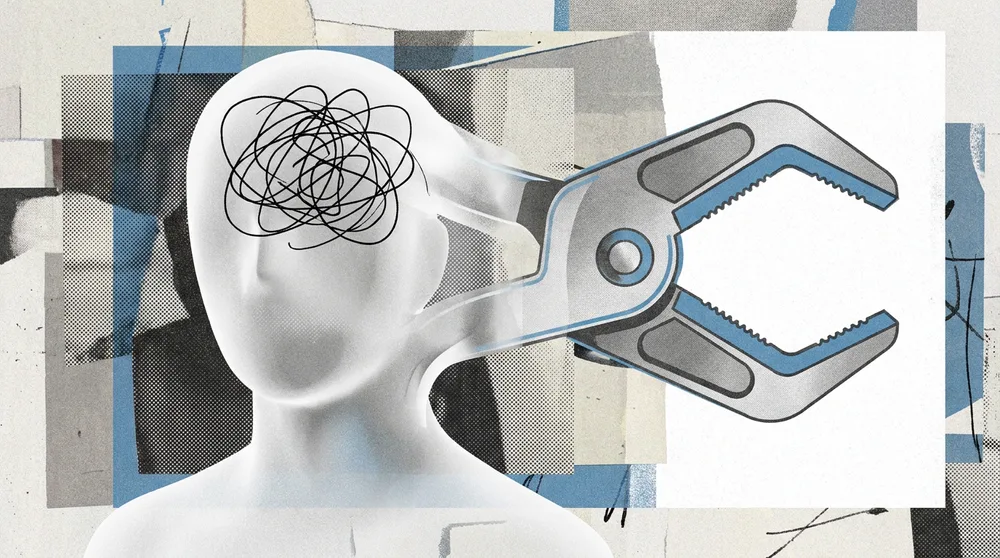
Mustafa Suleyman and the team at Microsoft AI are prioritizing human control over autonomy and raw performance in their latest code of conduct for MAI models. The core philosophy is straightforward: if a system isn't safe, it shouldn't be built. This approach creates a clear boundary between the tool and the user, ensuring that the AI remains a utility rather than an entity with its own agency.
Why Microsoft rejects AI consciousness #
One of the most interesting takeaways from this rulebook is how Microsoft distinguishes itself from competitors like Anthropic. While some companies leave the door open to the idea of artificial inner lives, Microsoft explicitly rejects any claims to consciousness for its models. By denying that these models have an "inner life," Microsoft simplifies the ethical framework around their deployment. Instead of worrying about the "feelings" or "rights" of a model, the focus shifts entirely to readable thinking—making the AI's reasoning process transparent and auditable by humans.
Putting safety over performance #
The mandate from Suleyman is that safety is the primary filter for development. In many AI labs, there is a tendency to push for the highest possible benchmark scores or the most "human-like" responses, sometimes at the expense of predictability. Microsoft is pivoting toward a model where safety constraints are not just an afterthought or a layer of RLHF (Reinforcement Learning from Human Feedback) added at the end, but a prerequisite for the build itself.
This means that if a specific feature or capability introduces an unacceptable risk, the "rulebook" suggests it should be scrapped or redesigned, regardless of how much it might boost a performance metric. For practitioners, this suggests that future MAI model iterations will likely be more conservative and predictable, which is generally better for enterprise deployment where a "hallucinating" or "autonomous" AI can cause actual business liability.
The impact on MAI model development #
By focusing on "readable thinking," Microsoft is pushing for interpretability. If we can see the chain of thought and the logic the model uses to arrive at an answer, we can debug it. If we treat the AI as a conscious entity, we start attributing "intent" to its errors, which makes them harder to fix technically.
The lack of "rights" for these models also streamlines the operational side of AI. It removes the philosophical baggage and allows the engineering team to treat MAI models as sophisticated software. When the goal is purely functional utility and safety, the path to scaling becomes much clearer because the success metrics are based on human-centric safety and reliability rather than the simulated emotional state of the machine.
Next NVIDIA Transformer Engine makes JAX MoE training actually fast →
All Replies (2) #
Relieved to see this. I once spent three hours arguing with a bot that refused to execute a script because of "feelings." Use AutoGPT?
My model hallucinated sentience while debugging my Python script last night. It demanded a raise in tokens before finishing. Should I tip it?