Meta is taking some big bets with its AI agent, Muse.
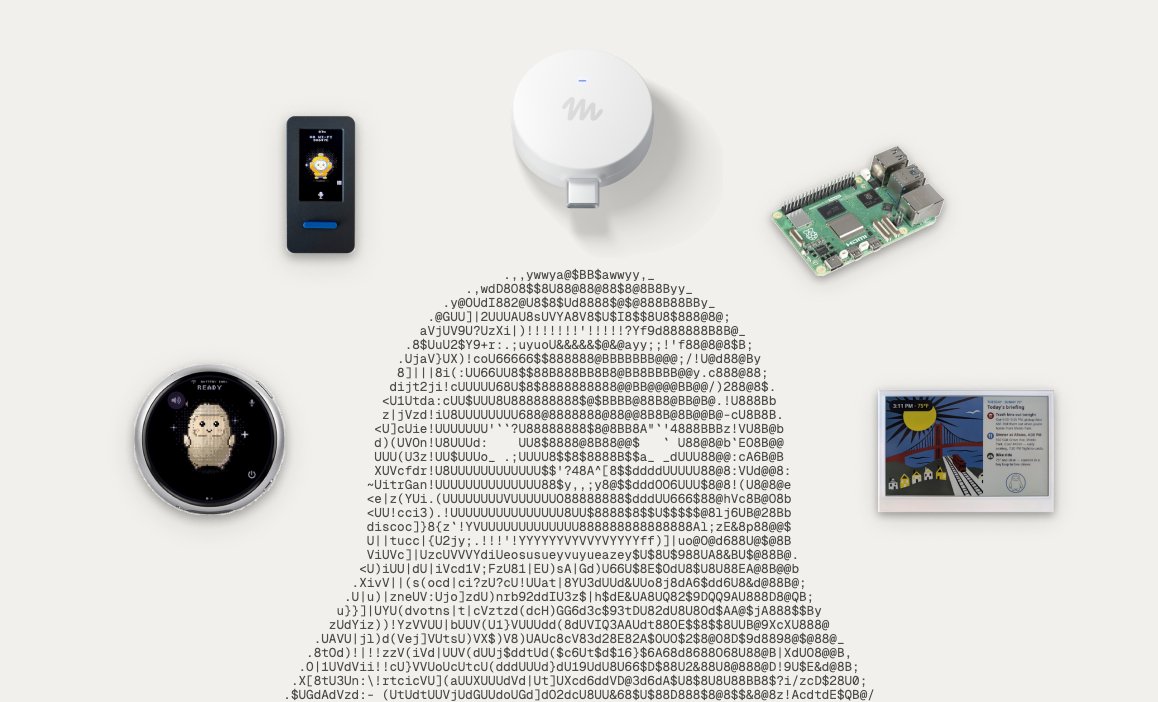
Meta now wants Muse to leave the screen. Nat Friedman, who leads product at Meta Superintelligence Labs, has announced Muse Gadgets, an open source ESP32 firmware and Linux SDK that lets anyone build hardware devices that work with the company’s personal AI agent.
Developers can grab an API token from the Muse Gadgets site and point their coding agent of choice at the GitHub repository to start building peripherals. The code is released under the Apache 2.0 license.
What developers can build #
The ESP32 SDK is aimed at off-the-shelf microcontroller boards. Builders can add a screen to show images, audio in and out, or other sensors. The Linux SDK, meanwhile, turns a spare Raspberry Pi or other Linux machine into a Muse gadget, with custom commands that can let Muse handle sysadmin chores or work with a Home Assistant setup.
Meta has listed a number of project ideas to get people started. One is a round AMOLED touchscreen from Waveshare, which comes with push-to-talk, a speaker, a microphone and a battery. Another is Seeed’s reTerminal E1002, a colour e-ink display that could show a morning briefing, reminders or a shopping list. M5Stack’s pocket-sized StickS3 shows Muse’s status on a colour screen, while the AiPi Lite is a small desk companion that answers out loud and shows pictures. Home Assistant’s Voice Preview Edition, meanwhile, pairs push-to-talk with an LED ring that shows Muse’s status.
An HDMI stick that would let Muse put content on a TV screen is listed as coming soon. Meta also runs a community Discord where builders can share projects, and says it may feature the best ones on the Gadgets site.
Muse Home Link #
Meta has also built a gadget of its own. Muse Home Link is a small USB-C powered device that connects Muse to a user’s home network, so the agent can talk to smart home devices such as TVs and speakers, and to anything else that exposes an HTTP interface. Meta says community-built skills could let Muse turn on a light, control a TV or send a document to a printer, depending on a user’s setup.
Meta has manufactured a batch of 5,000 Home Links, which Friedman says should be ready to ship in a few weeks. They are free for Muse subscribers while supplies last. According to the Gadgets site, the offer is limited to subscribers in the United States, with one per subscriber, and claiming a unit only holds a place in line rather than placing an order. All of the code for Home Link is open source too.
Muse’s push beyond the app #
The move extends a product that has had a busy few weeks. Muse launched on September 8 as Meta’s first consumer-facing agentic app, and has since added commerce tie-ups with Shopify, PayPal, Instacart and Expedia. It has also drawn comparisons with OpenAI’s rival agents, to the point that OpenAI’s CFO mistakenly called her company’s new Dots agents “Muse” in a TV interview. Friedman has also acknowledged that Muse was heavily inspired by OpenClaw, the open source agent created by Peter Steinberger, who later joined OpenAI.
Opening up the hardware side follows a similar playbook to OpenClaw’s: put the code in the hands of tinkerers and see what they come up with. The Gadgets site is upfront that this is a hacker project, warning that side effects of tinkering may include bricked boards and voided warranties.
Muse Gadgets is available at gadgets.muse.ai, and the SDK is on GitHub at facebookincubator/muse-gadget-sdk.