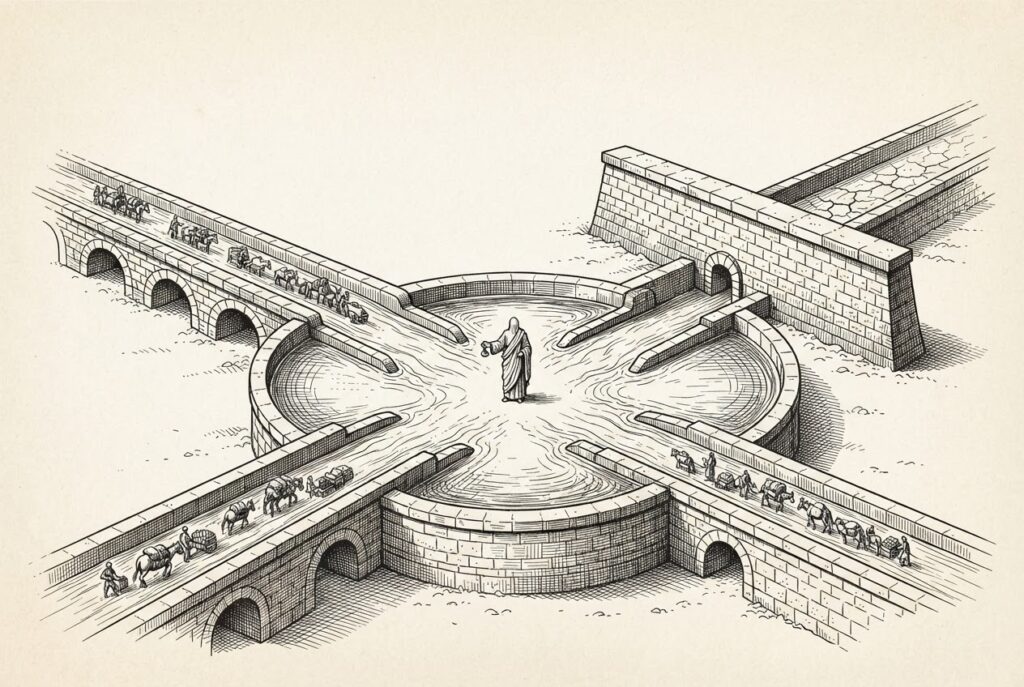
For years, the promise of AI agents has been stuck in a loop of chat-based assistance. They could summarize your emails or draft your calendar invites, but they rarely moved money. Over a two-week window in September 2026, Meta changed that — assembling a commerce infrastructure that lets its Muse agent move from product discovery to completed payment without a human touching the checkout flow. The stack came together piece by piece. On September 8, Meta launched Muse with Stripe’s Link wallet for agents built in. At more than a million businesses that accept Link, Muse can check out using a consumer’s saved payment method. For other merchants, Link generates a single-use virtual card scoped to the approved purchase. Muse is the first AI agent covered by Link’s purchase protections — free coverage for damaged or lost items, price drops, and no-fee returns.
Shop Pay was listed as “coming soon” at launch. It arrived on September 21, when Shopify CEO Tobi Lütke and Meta’s Alexandr Wang announced a deep partnership: Shop Pay checkout enabled across all Shopify stores, with Meta added as an AI channel inside Shopify’s Agentic Storefronts. A day later, PayPal confirmed global payments — Muse can now check out across PayPal’s worldwide merchant network, with Mastercard’s Agent Pay platform providing the secure payment rails. PayPal’s stock rose nearly 5 percent on the news.
By the time Mark Zuckerberg took the stage at Meta Connect on September 23, the commerce pipeline was already live: Stripe for payment rails, Shop Pay for Shopify’s merchant base, PayPal for global reach, Expedia for travel, and Instacart for groceries. Keybanc analysts raised Meta’s price target to $900, calling it “Muse’s moment.” Muse hit number one in Apple’s US App Store.
The technical architecture matters as much as the partnerships. Every Muse user gets a dedicated Muse Secure VM — an isolated Linux virtual machine in the cloud with its own browser. A separate Sentinel agent runs on that machine, kept apart from Muse at the system level. Nothing Muse does reaches the internet unless the Sentinel approves it, and the consumer is asked for permission before sensitive actions like purchases. Muse cannot see passwords or payment details; credentials are stored in secure vaults the agent can use without reading. Every action generates an audit trail the user can review. Later in 2026, Meta plans to introduce Muse Confidential VM, encrypting the entire virtual machine with a key only the user holds.
The security model is a direct answer to the question that has kept agent commerce theoretical: can you trust an AI with your wallet? Stripe’s Jay Shah, business lead for Link, put it plainly: “Stripe is building the infrastructure that lets agents buy from businesses.” That same Link infrastructure also powers payments for Grok Bot and Instinct — Stripe is positioning itself as the universal wallet for agents, not just for Muse.
But the exclusions tell the story too. Amazon has blocked Muse from shopping on its site. If an agent can route around a retailer’s platform to buy directly from a brand’s Shopify storefront, the retailer loses control of the customer relationship, the data, and the upsell. Amazon’s block is a defensive move against exactly that kind of disintermediation. The merchant landscape is splitting: Shopify leans in, Amazon walls off, and every retailer in between has to decide which side of the agent-commerce divide they want to be on.
For consumers, the friction of online shopping is about to drop — at least within Muse’s walled garden of participating merchants and payment processors. For the payments industry, the shift is structural. Stripe and PayPal are racing to become the default wallet for AI agents, which means the checkout button of the future might not be a button at all. It might be an agent that already knows what you want and has permission to buy it. A few things remain uncertain. Muse is US-only at launch; the timeline for global expansion has not been specified. The exact status of Shop Pay feature parity across all Shopify stores is unclear — the partnership was announced but full rollout details were not disclosed. And the long-term impact of Amazon’s exclusion on Muse’s utility is an open question. All claims about Muse’s capabilities, partnership scope, and the Muse Spark model come from Meta and its partners’ announcements. No independent verification of these claims was available at time of publication.