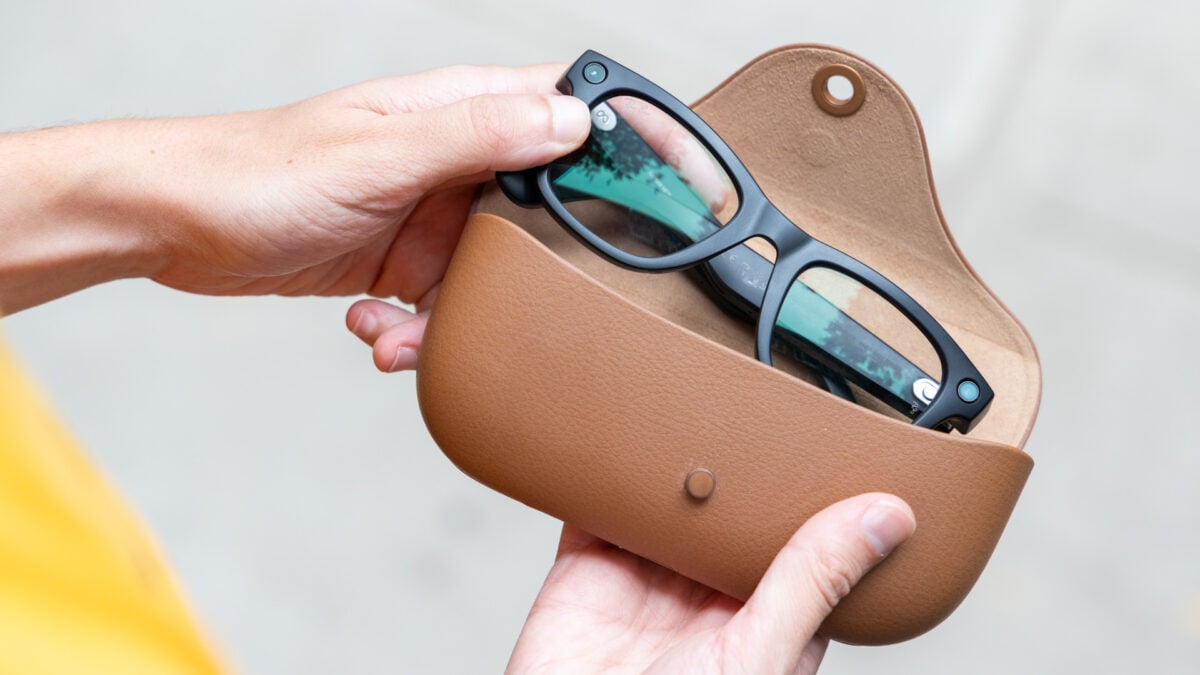
Meta hasn’t even released facial recognition on its smart glasses, but it’s already getting sued for it. Parents and their children in both Illinois and California filed a proposed class action lawsuit over Meta’s leaked “NameTag” feature.
“NameTag” is the reported codename for dormant facial recognition software that Wired previously found inside the Meta AI app. According to Wired’s independent analysis of the code, NameTag is designed to be used on Meta’s smart glasses to create biometric signatures and then compare those signatures against faceprints in a database that would be stored on a user’s phone. That software, to be clear, was present on millions of devices but was never actually activated.
Wired reported at the time that how those faceprints were obtained was unclear, but this new lawsuit alleges that the underlying data could be pulled from Facebook and Instagram. Plaintiffs cite the existence of recently filed patents from Meta, including one titled “User Identity Verification without Sharing Biometric Data With Platforms,” which describes a system where biometric data taken from hardware like smart glasses can be compared against social media data like profile photos, tagged photos, or videos.
In addition to Meta’s experiments with smart glasses, the lawsuit is also singling out recently released AI models from Meta, like Emu, which was trained on Instagram and Facebook data, including pictures and text. That data, plaintiffs say, was illegally obtained from users.
Gizmodo has reached out to Meta and will update this story with any response.
This wouldn’t be the first time Meta has faced legal backlash for its use of facial recognition. In 2020, Facebook eventually agreed to an $650 million settlement after it was found to have wrongly collected the faceprints of a billion users, storing them on a company database. At the time, Meta claimed its terms of service for using Facebook were enough to constitute consent for collection.
That’s all to say that the combination of facial recognition and Meta hasn’t been a particularly welcome one, and multiplying that aversion is the fact that people don’t tend to generally trust smart glasses—and for good reason. But that’s just the way things have been going for Meta and its endeavors to put cameras on everyone’s face. Between public scrutiny, skepticism from lawmakers, and increasingly common bans, class action lawsuits are just another cost of doing business for Meta.