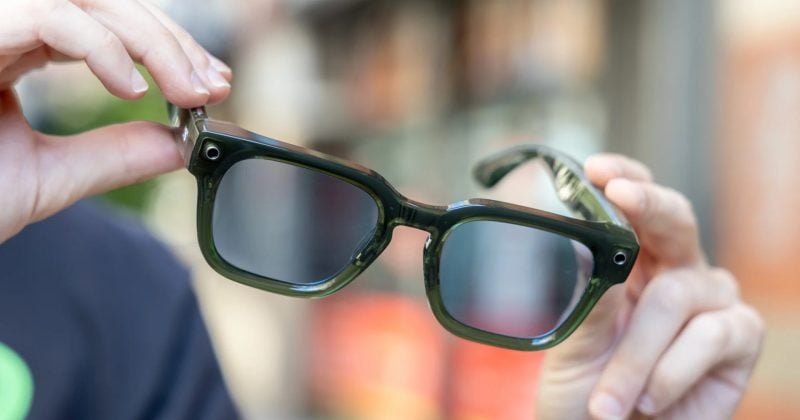
The company has sold millions of AI glasses and plans dozens more models, but privacy concerns are growing just as fast as the sales numbers.
Meta is going all-in on the idea that the next great computing platform won’t sit in your pocket or on your desk. It’ll sit on your face.
The company’s AI-enabled smart glasses, built in partnership with Ray-Ban and Oakley parent EssilorLuxottica, are designed to capture everything users see and hear, processing it in real time through Meta’s AI systems. Three new models launched in 2026, featuring 14 new translated languages and faster AI response speeds. And if internal plans hold, this is just the beginning of a much larger product offensive.
From novelty to mainstream, fast #
The sales trajectory here is genuinely striking. EssilorLuxottica reported sales of over 7 million AI glasses in 2025 alone. For context, the combined total from 2023 to 2024 was roughly 2 million units.
Meta isn’t slowing down on the hardware front either. An internal memo points to multiple additional smart glasses models planned for release, including codenamed projects called Modelo and Luna. The company is reportedly preparing up to 26 different style variants, a move clearly designed to make AI glasses feel less like a tech gadget and more like, well, regular glasses.
The live AI mode on current models can process camera feeds in real time, offering instant translations and visual descriptions. Battery life remains a constraint for continuous use.
Meta also plans to release an AI pendant device following its acquisition of Limitless, signaling that the company views always-on AI capture as a broader product category, not just a glasses play.
The privacy problem nobody wants to talk about #
In early 2026, reports emerged that contractors in Nairobi were reviewing footage captured by smart glasses users. The content they saw was highly personal. Human beings were watching real footage from real users’ lives as part of Meta’s data processing pipeline.
The revelation reignited debates about data handling and consent. The difference now is that the data isn’t just clicks and likes. It’s a continuous visual and audio record of someone’s day, including the people around them who never consented to being recorded at all.
For a company that paid a $5 billion FTC fine in 2019 over privacy violations, the optics of contractors reviewing personal footage from face-mounted cameras are particularly rough.
The competitive landscape is heating up #
Meta isn’t operating in a vacuum. Google is expected to unveil its own AI-enabled glasses later in 2026, which would pit two of the world’s largest AI companies directly against each other in the wearables space.
What this means for investors #
On one hand, Meta is demonstrating genuine consumer demand for AI wearables at a scale that few predicted even two years ago. Moving from 2 million cumulative units to 7 million in a single year suggests the company may have found the form factor that makes augmented AI feel natural rather than awkward.
On the other hand, the privacy risks are structural, not incidental. A device that records everything its wearer sees and hears, then sends that data to servers where human contractors can review it, is a regulatory target waiting to happen. The EU’s AI Act, GDPR enforcement, and potential US federal privacy legislation all represent real headwinds.
Google’s expected entry later this year will also pressure Meta on pricing, features, and ecosystem integration.
Disclosure: This article was edited by Editorial Team. For more information on how we create and review content, see our