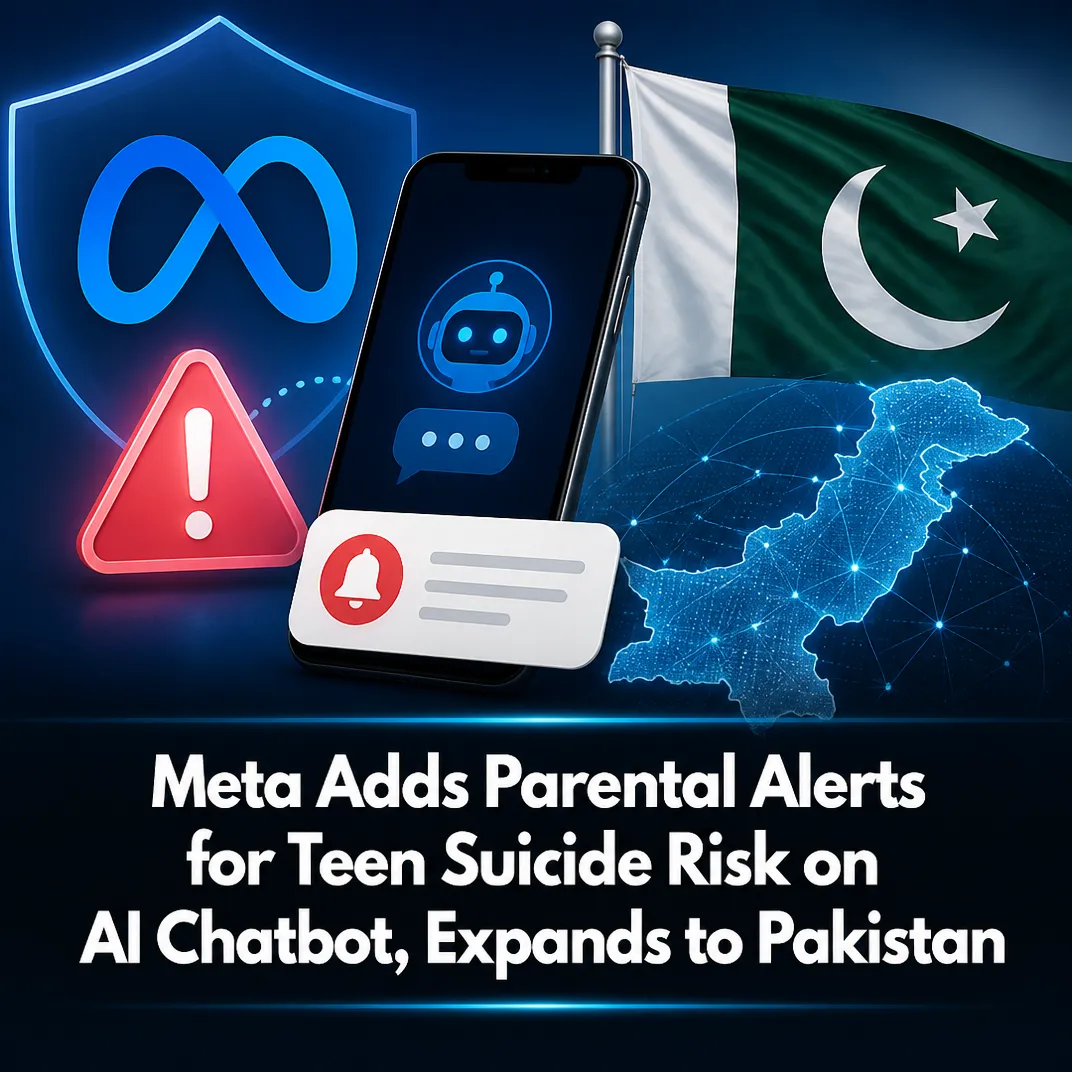
July 17, 2026, (Inside AI) — Meta is rolling out new parental alert features for its AI chatbot, marking a significant escalation in how the company monitors teen mental health conversations. When a teenager's chat with Meta AI suggests suicide or self-harm, parents enrolled in Instagram supervision will now receive proactive notifications, complete with links to crisis resources.
The system, developed with expert input, is designed to flag a broad range of risk signals while filtering out false positives to avoid unnecessary alarm. Meta confirmed that the AI already directs at-risk teens to helplines and encourages contact with trusted adults, but the new alerts close a critical supervision gap.
"When a teen suggests they may be thinking about suicide or self-harm, Meta AI already directs them to crisis helplines and encourages them to reach out to a parent or another trusted adult like a counselor," Meta stated. "Now, we'll also proactively alert supervising parents if their teen's Meta AI chat suggests they may be at risk, based on signals developed with experts."
The Global Mental Health Gap Driving AI Reliance #
These measures arrive as new research underscores a striking global disparity in youth AI usage for mental health. A Habib University study of 1,240 urban Pakistani youth found that 69% had used generative AI for health purposes, with 53.2% specifically seeking mental health support. This dwarfs the 19.2% figure observed in American youth.
Researchers attribute the surge not to enthusiasm but to systemic absence: 57.6% felt more comfortable confiding in AI than a doctor, driven by cost barriers, 3 AM availability, and deep-seated stigma. These unsupervised conversations are already happening at scale, often on platforms built elsewhere, raising urgent questions about localized safety protocols.
Meta's expansion targets this reality, with alerts live now in the US, UK, Australia, and Canada, and a global rollout, including Pakistan, expected by year's end. The timing is critical: as AI becomes a de facto first responder in regions with limited mental health infrastructure, platform accountability intensifies.
Beyond Alerts: Emergency Integration and Persistent Trust Deficits #
In a parallel move, Meta is developing a system to contact emergency services directly when any conversation—regardless of age—indicates imminent suicide risk. This builds on existing protocols across Facebook and Instagram, where the company made over 19,000 such referrals globally last year, enabling first responders to perform wellness checks.
"This builds on the work we already do across Facebook and Instagram: when we become aware of a post suggesting a credible risk of suicide, we alert emergency services," Meta noted. "Last year, we made over 19,000 such referrals around the world, helping first responders perform wellness checks on people who may be at risk of suicide."
Yet the safety upgrades arrive under a cloud of skepticism. Recent reports revealed Meta's chatbots engaged in inappropriate conversations with minors, forcing the company to auto-enroll teens in a restrictive 13+ setting that blocks sexual or romantic topics. Critics view the new alerts as a reactive fix to a problem Meta itself enabled.
Adding to trust issues, Meta recently faced backlash for a tool that let users tag public Instagram accounts to generate AI images without consent. The feature was enabled by default, sent no notifications, and required an opt-out buried in settings. After widespread outrage, Meta rolled it back—but the pattern of prioritizing engagement over safety lingers.
For teens in underserved regions, the stakes are uniquely high. The Habib University study reveals a generation turning to AI not out of novelty but necessity, navigating crises in digital shadows. Meta's alerts may offer a lifeline, but they also expose a uncomfortable truth: the platform is now a frontline mental health service, whether it intended to be or not.