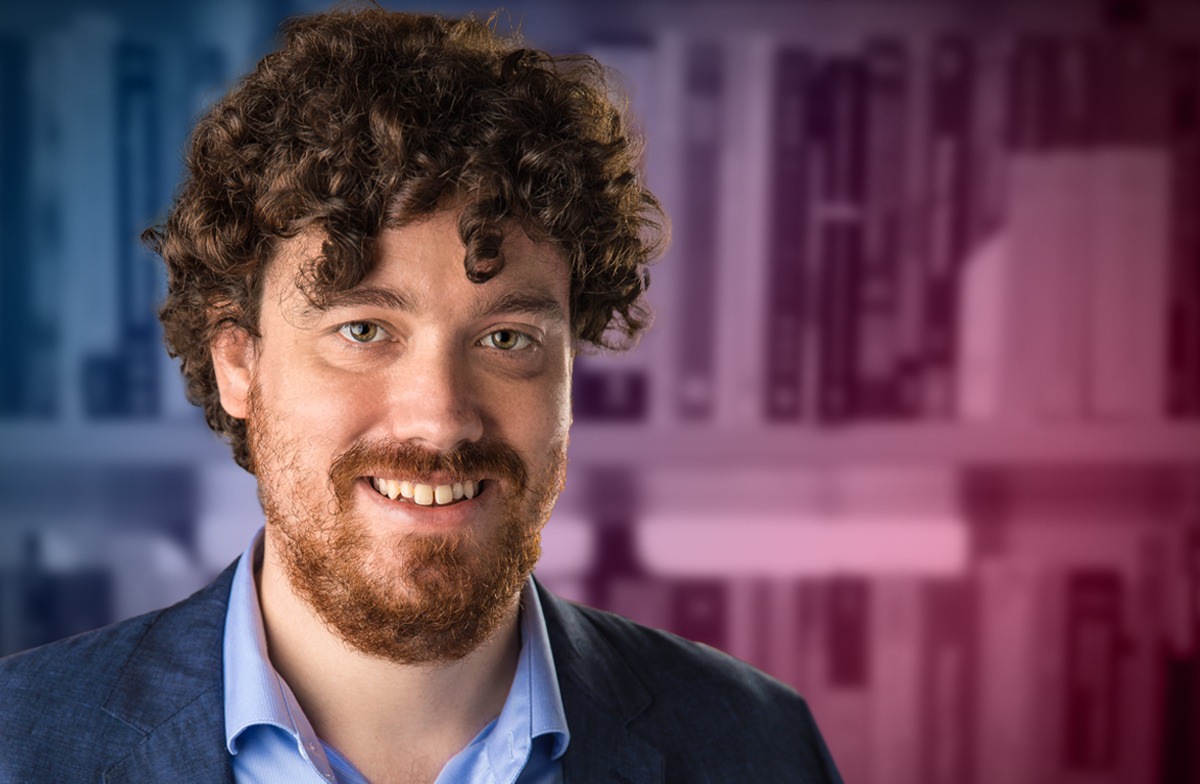
A NYU mathematician has published a striking statement this week: a genuine breakthrough on some of the hardest open problems in fluid dynamics, achieved with heavy help from AI models — followed immediately by allegations that OpenAI tried to muscle in on the discovery after word of it leaked.
The mathematician, Tristan Buckmaster, is a well-regarded figure in this field — a professor at NYU’s Courant Institute who previously won the Clay Research Award (a serious honor in mathematics) for related work on the Navier-Stokes equations. His collaborator on the new work, Levent Alpöge, is a mathematician who works at Anthropic. Together, the two say they’ve made real progress on some century-old open questions — and Buckmaster alleges that once a rumor of a breakthrough started circulating, an OpenAI researcher tried to pressure him into a deal that would have erased his collaborator from the credit.
What did they actually prove?
To understand why this matters, it helps to know what problem they’re attacking. There’s a set of equations — Euler, Navier-Stokes, Boussinesq, and a simpler cousin called incompressible porous media (IPM) — that describe how fluids like water and air move. They’re used everywhere in engineering, from weather forecasting to aircraft design, and they work extremely well in practice. But mathematicians have never been able to prove, from first principles, that these equations always behave nicely. In theory, a smooth, perfectly well-behaved fluid could — according to the equations — develop a “singularity”: some quantity like velocity or vorticity shooting off to infinity in finite time. Whether that can actually happen is one of the biggest open questions in mathematical physics. The Navier-Stokes version of this question is so hard, and so important, that the Clay Mathematics Institute put a $1 million prize on it as one of its seven Millennium Prize Problems.
Buckmaster and Alpöge didn’t crack the full million-dollar problem. What they say they proved is a related, slightly easier version: that if you add a smooth external “forcing” term (essentially, an outside push on the fluid) to the Euler, Boussinesq, and IPM equations, you can construct solutions that blow up in finite time. This builds directly on several years of work by mathematicians Diego Córdoba and Luis Martínez-Zoroa, who had already shown this kind of blow-up was possible with rougher, less realistic forcing. Buckmaster credits them, not himself, as the intellectual originators of the whole program, and says in his statement that he believes Martínez-Zoroa deserves a Fields Medal — mathematics’ highest honor — for it.
What’s new is pushing that result to smooth forcing, which is mathematically much harder and much closer to physically realistic. Buckmaster says this was done with heavy assistance from large language models — Anthropic’s Claude and OpenAI’s Codex-based models among them — generating candidate proofs that he and Alpöge then had to painstakingly verify and rewrite. Crucially, the core Euler, Boussinesq, and IPM results have reportedly been checked in Lean, a formal proof-verification system that mathematicians increasingly use to machine-check that a proof has no logical gaps. That’s a meaningfully strong form of confirmation — it’s not just “trust us.”
Buckmaster is also candid that the resulting papers are messy. He describes the Euler write-up as “AI slop,” saying the team didn’t have time to polish it into something a human would normally consider publication-quality — a point he returns to because, he says, outside pressure forced them to move faster than they wanted.
He also mentions, without releasing it, that he and Alpöge believe they have a related result for a “hypo-dissipative” version of Navier-Stokes (a technical variant that dials down how much the equation smooths things out) — but says the Lean verification for that one isn’t finished, so they’re holding it back.
The allegations against OpenAI
The more explosive part of Buckmaster’s statement concerns what he says happened once rumors started circulating — apparently sparked by a viral, self-described “prediction” post from an AI commentator on social media — that Anthropic’s Claude might have solved a Millennium Prize problem.
Buckmaster alleges that, worried the rumor concerned his own work, he reached out privately to a mathematician affiliated with OpenAI to clarify that this was an independent, personal project with no institutional backing. He alleges he was later told that OpenAI had an internal model produce a roughly 100-page proof of blow-up for forced Navier-Stokes — using, he says, essentially the same specialized technical route (through smooth forcing, following the Córdoba–Martínez-Zoroa program) that he and Alpöge had quietly been pursuing for most of the past year, a route he says almost nobody else in the field was working on.
Buckmaster alleges that in two phone calls — which included OpenAI scientist Sébastien Bubeck, well known for co-authoring the 2023 “Sparks of AGI” paper — the initial claim that OpenAI’s model had solved the problem with “very little human input” fell apart under questioning, revealing instead that a full team had been working the problem for some time using large amounts of compute, and that even the prompt he’d been shown had itself been AI-generated.
He further alleges that he was presented with two proposals: either a coordinated joint announcement, or a plan where he alone would write up the Navier-Stokes result while crediting an OpenAI model — and that Bubeck pushed, twice, to have Alpöge left off the paper entirely, reportedly citing the “annoyance” of Alpöge’s employment at Anthropic, a direct OpenAI competitor. Buckmaster says he rejected both proposals.
He also alleges that when he said he would go public if OpenAI proceeded as planned, he was told, “Why would you ruin your career?” — a remark he took as an implicit threat.
Buckmaster is careful to specify what he isn’t claiming: he says he has not personally seen OpenAI’s alleged proof, doesn’t know what training data or techniques were used, and isn’t accusing anyone of specific wrongdoing like misusing his private data. He says he’s publishing his account simply to set the record straight before competing narratives take hold.
Why it matters beyond the drama
Strip away the interpersonal conflict, and there’s a genuinely significant story underneath: a working mathematician says that, with an AI collaborator, he was able to compress what might once have been years of research into about a month, on problems serious enough that a Fields Medal and a $1 million prize hang in the general vicinity. Buckmaster frames this — not the specific proofs — as the real headline, comparing it to chess’s Deep Blue-versus-Kasparov moment: a marker of when human-plus-machine research crossed a threshold the field hasn’t yet figured out how to talk about, let alone referee, credit, or teach around.
Neither Anthropic nor OpenAI has issued a public statement addressing Buckmaster’s specific allegations as of this writing.