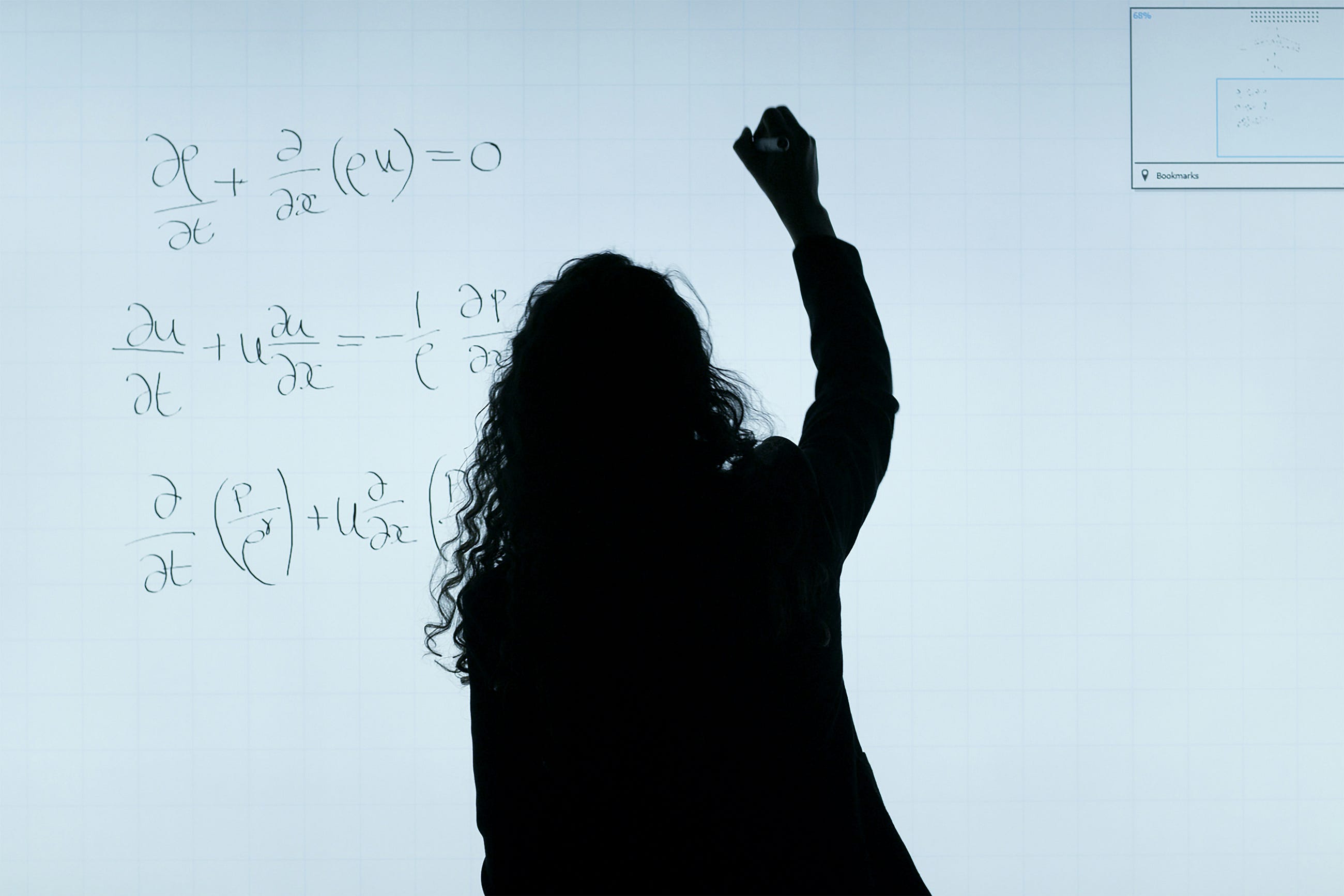
Trying to implement custom LLM layers or dive into paper architectures usually hits a wall the moment the notation shifts to heavy linear algebra or multivariate calculus. I've realized that skipping the "boring" math foundations makes prompt engineering and model fine-tuning feel like guesswork rather than science.
I'm treating this as a deep dive to build a more robust AI workflow. Instead of just using high-level libraries, I'm going back to the textbooks to understand why the loss functions behave the way they do. It's a slow process, but it's the only way to move from being a "user" to someone who can actually optimize a deployment from scratch.
To stop guessing and actually understand the gradients and tensor operations happening under the hood, I've narrowed my focus down to three specific pillars:
Linear Algebra: This is the non-negotiable core. If you can't visualize how a matrix transformation works, you're just copying code.Statistics: Essential for evaluating model performance and understanding the probabilistic nature of token prediction.Calculus: Specifically the chain rule and partial derivatives, which are the engine behind backpropagation.
I'm treating this as a deep dive to build a more robust AI workflow. Instead of just using high-level libraries, I'm going back to the textbooks to understand why the loss functions behave the way they do. It's a slow process, but it's the only way to move from being a "user" to someone who can actually optimize a deployment from scratch.
Next Probability & Distributions: A Machine Learning Math Guide →
All Replies (3) #
C
did you find any specific resource for the multivariable calc part? struggling w that.
0
D
Same here. I had to brush up on tensors before the paper notations actually made sense.
0
R
probablity theory is a huge one too, especially for understanding the latent space stuff.
0