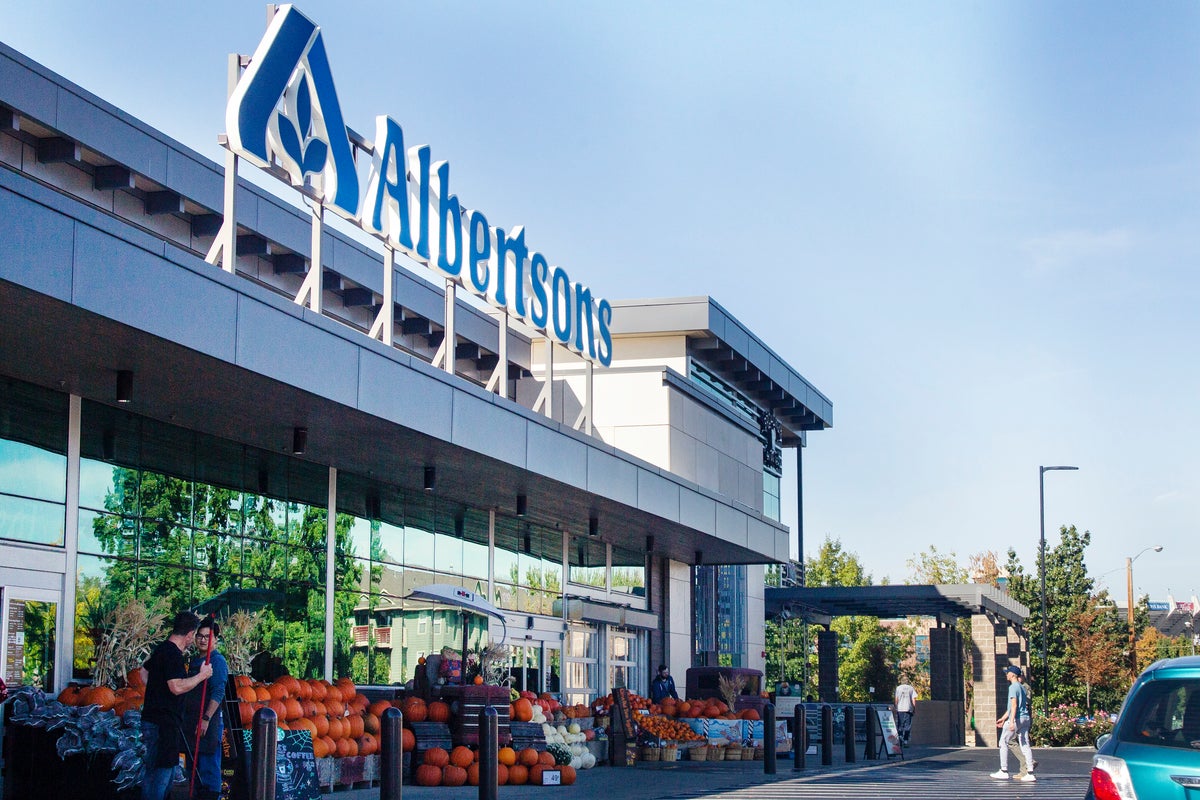
The news is a bright spot in an otherwise mediocre year for Albertsons
- Bookmark
- CommentsGo to comments
Grocery chain Albertsons has announced that online shoppers are spending up to 26 per cent more following the company’s rollout of AI tools last year.
The new tools answer customers' online questions, help them discover new products, build shopping lists, and provide customized product recommendations.
The chain, which has 363 stores in six states, said its per-order sales increased as customers used more AI tools during the shopping process.
“We see anywhere from a 10% lift in average order value when they use standard conversational searching and about a 26% lift in average order value when they use more comprehensive assistants to find their recipes, find the ingredients that match their dietary preferences,” Albertsons Senior Vice President of Digital Shopping Experiences Jill Pavlovich told The Wall Street Journal.
The news is a bright spot in an otherwise mediocre year for Albertsons. The company kicked off 2026 with strong pharmacy and online growth, but in-person grocery store sales struggled as it dealt with “a more cautious consumer” managing inflation, Albertsons noted in its first-quarter earnings report.
Year-on-year sales were tepid, and profit was 22 percent below what analysts expected, Yahoo Finance reported.
The Albertsons brand operates a network of more than 2,200 stores that include Lucky’s, Safeway and Vons. After a failed merger attempt with competing grocer Kroger in December 2024, Albertsons reassessed its store portfolio. It has closed more than 30 stores since the merger died.
Overall the U.S. grocery industry has struggled in 2026.
While grocery inflation has mellowed out since hitting a four-decade high in 2022, consumers remain guarded with their cash amid wider economic uncertainty, industry publication GroceryDive noted in a July article. Grocers that survived the ups and downs of retail spending likely won’t get a break from that roller coaster anytime soon.
“Grocers have worked for years to find their footing in an unpredictable economy - first as they scrambled to keep shelves stocked when the COVID-19 pandemic hit, then as inflation hit double digits and now as a new set of economic shocks keeps shoppers off kilter,” Grocery Dive wrote. “Data aside, they clearly still have a bumpy road ahead.”
Indeed, shoppers have chosen to buy fewer groceries, year-on-year, for five consecutive quarters, according to consulting firm Bain & Company. Customers in the West are driving the decline - it’s the only region where buying volume has fallen at least 2.5 percent, year on year, for three consecutive months.
Join our commenting forum #
Join thought-provoking conversations, follow other Independent readers and see their replies
Comments