I'm supposed to be on a LinkedIn hiatus but I shamefully visited it yesterday to pimp a blog post (a largely pointless exercise, as it turns out). While I was on there, I couldn't help but notice the post from a founder I know well. I'm definitely curious about his new venture, so I decided to read the post despite it being much too long, but after several sentences it seemed obvious that this was AI slop. It didn't feel in any way personal, literally every sentence was load bearing, there were "balanced triads" all over the place ("every team had [X], [Y] and [Z]"). Grim.
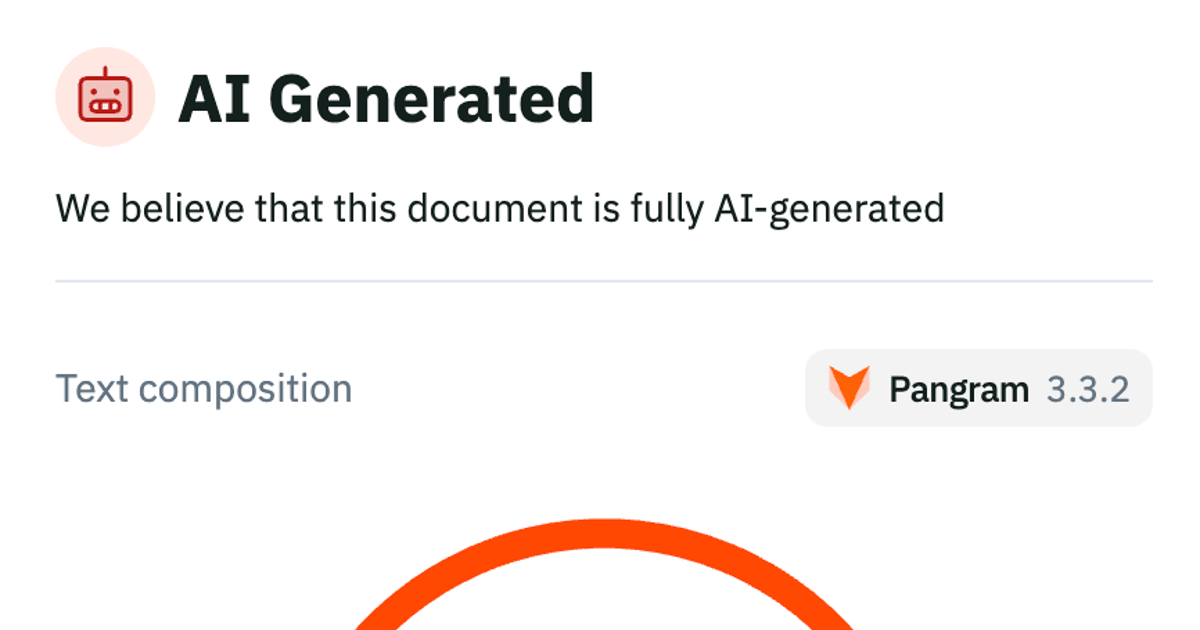
I decided to put it through Pangram to get an educated view, and whaddayaknow?
As a counter-test for Pangram, I put my last blog post through it. I know it was human written because I wrote it in Obsidian on my phone at the kitchen table while I munched my muesli yesterday morning, but I was still a little nervous that my writing would be judged as robotic. I shouldn't have worried:
To be fair, I followed this up by checking a couple more LinkedIn posts and they were both classed as 100% human written, so it's not all doom and gloom just yet!
I imagine that AI will get better at producing more human-sounding writing over time, but I honestly hope it doesn't. I want us to be able to easily spot it, so plagiarism and slop can be auto-detected, allowing apps like Pagecord to refuse to accept it (I can't imagine LinkedIn would ever consider that, but here's hoping).
I don't want to believe in dead internet theory, but without guardrails I fear we're heading in that direction. Either way, I'll continue to fly the flag for 100% human writing and the benefits this brings to both the writer and their readers.
Update [22/07/2026]* Turns out Substack just launched a Pangram integration which allows readers to check if content was AI generated. That's very cool, not gonna lie. There's no way I could afford to offer this right now to Pagecord customers but it gives me hope that those guardrails are appearing already!*