Aleph Alpha released Kolibri 1.1 on November 23, 2026 as an Apache 2.0 successor to Kolibri 1.0, keeping a German–English mixture-of-experts design while adding sparse attention, denser early layers, and post-training upgrades. The lab blog says the model delivers 3.4× lower GPU time per task than Kolibri 1.0 on Aleph Alpha's evaluation harness while scoring higher on its aggregate benchmark index.
For European builders, Kolibri remains a sovereign open-weight option trained under EU law with GPAI Code of Practice signatory status on the model card.
Specifications at a glance #
| Field | Kolibri 1.1 (per model card) |
|---|---|
| Architecture | MoE, 75.1B total ,~3.44B active per token |
| Languages | German ,English |
| Context | 262,144 native ; up to1,048,576 with quality caveats |
| Reasoning + tools | Yes (explicit reasoning mode, tool calling) |
| License | Apache 2.0 |
| Knowledge cutoff | June 18, 2026 (EN/DE implicit knowledge) |
| Release | November 23, 2026 |
Aleph Alpha continued training from a Kolibri 1 mid-training checkpoint, adding 805B mid-training tokens and 201B long-context tokens with sparse attention, per the Hugging Face card. Total training compute for Kolibri 1.1 phases is listed as 5.52×10²² FLOPs excluding Kolibri 1 pretraining.
What improved versus Kolibri 1.0 #
The November 23 blog post highlights:
- Sparse attention forcheaper long contexts — up to14× more output tokens/sec/GPU at1M context versus Kolibri 1.0 in Aleph Alpha tests.
- Stronger agentic coding and search ,instruction following ,grounding/citations ,prompt-injection resistance , andDE–EN translation .
- Lower hallucination on theAA-Omniscience Index , which penalizes wrong guesses.
- 41% fewer output tokens per task on average across benchmarks.
- Wider hardware day one withquantized builds plusvLLM andtransformers support.
Benchmark tables on the blog compare Kolibri 1.1 against Qwen3.6 35B-A3B, Nemotron 3.5 Lightning, Gemma 4 26B-A4B, GPT-OSS 120B, Mistral Small 4, and others. Treat those as vendor-reported suite results; reproduce on your tasks before switching production.
How to run Kolibri 1.1 #
Official paths from the model card:
pip install 'aleph-alpha-inference>=2'
Serve with the Kolibri vLLM plugin, enabling reasoning and tool calling per Aleph Alpha docs, or pull ghcr.io/aleph-alpha/aleph-alpha-inference. GGUF quantizations with llama.cpp are listed for CPU-constrained pilots.
Hardware floor: about 77.6 GB weights — minimum 1× B300 or 2× H100 class GPUs per card guidance. That keeps Kolibri in on-prem government and banking racks explainx.ai covered in sovereign AI explainers.
Sovereignty and compliance positioning #
Sovereign EU data jurisdiction for on-premises German-English models
Aleph Alpha stresses German/EU training jurisdiction, GDPR, copyright, and EU AI Act alignment. After Cohere–Aleph Alpha transatlantic merger talk and Canada sovereign equity stakes, Kolibri 1.1 is a concrete artifact procurement teams can download and audit, not a policy memo.
Pair with InclusionAI Ling open weights when comparing non-US MoE options, but Kolibri's German tokenizer and abstention training (Merlin-Arthur) target DACH public-sector Q&A specifically.
When to pick Kolibri 1.1 over frontier APIs #
| Use case | Kolibri 1.1 fit |
|---|---|
| Bilingual DE/EN assistants on-prem | Strong — designed for enterprise/government proxies |
| 1M-token experiments | Possible — Aleph Alpha warns on complex tasks beyond262k |
| Lowest global English SOTA | Not the claim — compare frontier closed APIs separately |
| Agent tool loops | Supported — test vLLM tool-choice flags on your harness |
For coding agents, also read PrismML ternary coding models if VRAM is tight; Kolibri targets quality/cost Pareto at 3–4B active scale.
Energy and sustainability notes #
The model card estimates 9.88×10² MWh training energy including PUE, with methodology tied to cluster provider readings. Sustainability teams can cite those numbers in RFP carbon appendices — rare transparency among open MoE releases.
Architecture: sparse attention on a Kolibri 1 backbone #
MoE routing diagram illustrating sparse expert activation per token
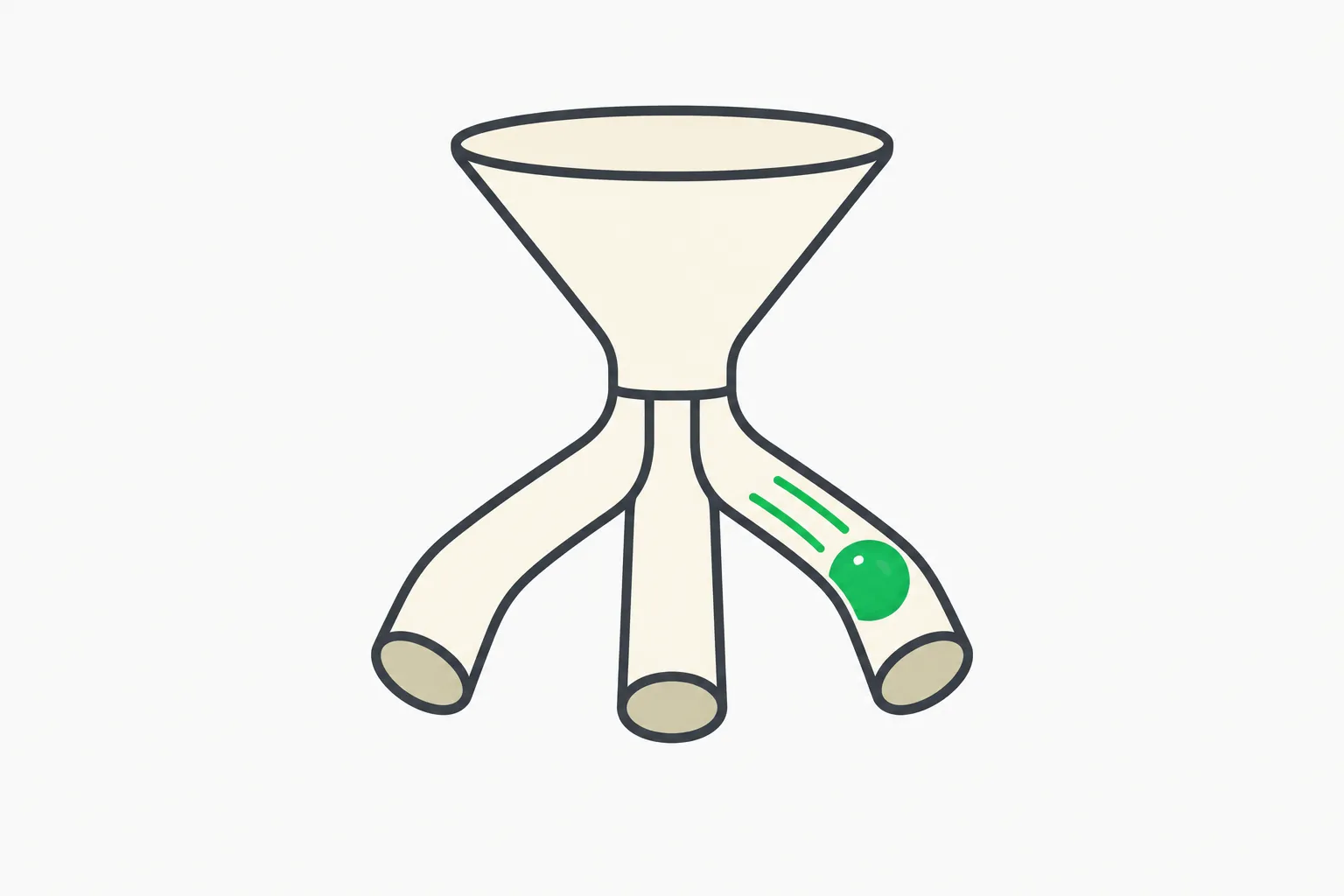
Kolibri 1.1 keeps 48 MoE layers with 384 routed experts, six experts per token, and one shared expert, per the Hugging Face card. The headline change is 4:1 sliding-window to sparse attention after two dense layers, trained with Muon and Exact Quantile Balancing.
Aleph Alpha's blog explains the trade-off explicitly: MoE lowers compute per token but needs full weights in memory. Sparse attention lowers long-context cost by focusing most layers on nearby tokens while a subset attends globally. That is why 1M-context throughput gains show up in tokens/sec, not just benchmark accuracy.
Builders comparing Sakana Namazu reasoning stacks or Nemotron visual creation labs should still match language: Kolibri optimizes DE/EN enterprise, not Japanese science or pixel codegen.
Grounding, abstention, and Merlin-Arthur #
Aleph Alpha markets Merlin-Arthur abstention training so Kolibri refuses when context lacks support. On the blog's M/A grounding score, Kolibri 1.1 leads compared models in their chart — cite the model card table, not third-party leaderboard screenshots.
For RAG agents, abstention is a feature, not a bug: German public-sector assistants face strict citation rules. Pair Kolibri with your retriever quality tests and Google verifiable social reasoning research if you mix web and intranet sources.
Benchmark tables: how to read them without hype #
Kolibri 1.1 benchmark score versus GPU cost chart from Aleph Alpha
Image: Aleph Alpha
The Kolibri 1.1 blog embeds interactive benchmark charts (AIME, GPQA, coding suites, German variants). Rules for responsible reading:
- Scores are Aleph Alpha's harness onheld-out customer-proxy suites plus public benchmarks — notevery****Hugging Face Open LLM Leaderboard task.
- Comparisons include GPT-OSS 120B andMistral Small 4 — largeractive-parameter buckets. Kolibri wins onefficiency-adjusted storytelling; verifylatency andVRAM onyour rack.
- German columns (AIME DE, etc.) matter forprocurement : bilingual models oftenEnglish-wash marketing whileDE scores lag .
If you need English-only coding, also test Fixer-guided Gemma agents or frontier APIs on the same private repo before switching.
Deployment patterns on-prem and in VPC #
Typical Kolibri 1.1 deployments explainx.ai hears about:
| Pattern | Stack | Notes |
|---|---|---|
| Ministry VPC | vLLM + aleph-alpha-inference onB300 | Air-gapped weights; tool calling for case systems |
| Banking assistant | GGUF onCPU failover | Quantized path for DR sites with smaller GPUs |
| Bilingual citizen portal | RAG + abstention | Merlin-Arthur reduces hallucinated legal citations |
Quantized builds on the model card trade accuracy for footprint — Aleph Alpha notes official evals apply to unquantized vLLM only. Run your compliance eval on the quantization you ship.
Seven-week cadence from Kolibri 1.0 #
Kolibri 1.1 arrived seven weeks after 1.0, showing Aleph Alpha's iterative open-weight rhythm similar to InclusionAI's Ling line. Teams on 1.0 should plan regression suites before swap — sparse attention changes long-context behavior even when short prompts look identical.
Link your old runbooks to Kolibri 1.0 coverage so stakeholders see what changed, not just version numbers.
Mixture-of-experts memory planning #
Kolibri's ~77.6 GB footprint means planning beats surprise. Capacity teams should reserve one full-GPU node per concurrent unquantized replica, then scale horizontally with load balancers that pin sessions when tool state matters. If you quantize, rerun legal review — German administrative wording shifts subtly when 4-bit rounds rare tokens.
Teams already running Reflection AI open-weight pilots can compare $/token and jurisdiction, but Kolibri's EU training story wins RFP appendix points Reflection cannot copy without its own facilities audit.
Tool calling and reasoning mode in production #
The model card documents explicit reasoning mode and tool calling flags for vLLM serves. Agent builders should:
- Log tool JSON separately fromuser-visible answers foraudit .
- Cap reasoning tokens oncustomer-facing channels to controlcost .
- Test German tool schemas — field names andenum labels should stayDE when users ask inGerman .
Compare with Alibaba CUA agent eval harnesses if you run multilingual computer-use; Kolibri is stronger as text-first bilingual API brain than as GUI automator.
Prompt injection and safety claims #
Aleph Alpha lists improved prompt-injection resistance versus Kolibri 1.0. That is vendor eval, not a guarantee. Run lazy-agent belief benchmarks style red teams on your system prompts anyway, especially when tools touch PII.
Licensing and Apache 2.0 obligations #
Apache 2.0 allows commercial deployment with attribution and NOTICE file hygiene. You still owe your own GDPR DPIA when processing EU citizen data — the license does not transfer Aleph Alpha's compliance work to you automatically.
Bottom line: Kolibri 1.1 is a dated, documented, bilingual MoE upgrade with measurable efficiency gains on Aleph Alpha's harness. Download weights, reproduce your tasks, and only then negotiate SLAs with ministries or banks.
Subscribe to Aleph Alpha's blog RSS and the Hugging Face model card commits if you gate releases on patch versions — Kolibri's seven-week gap suggests 1.2 may follow customer-proxy evals, not leaderboard vanity metrics. Track 132 Hugging Face likes as discovery signal, but never substitute likes for your latency and accuracy charts on production prompts.