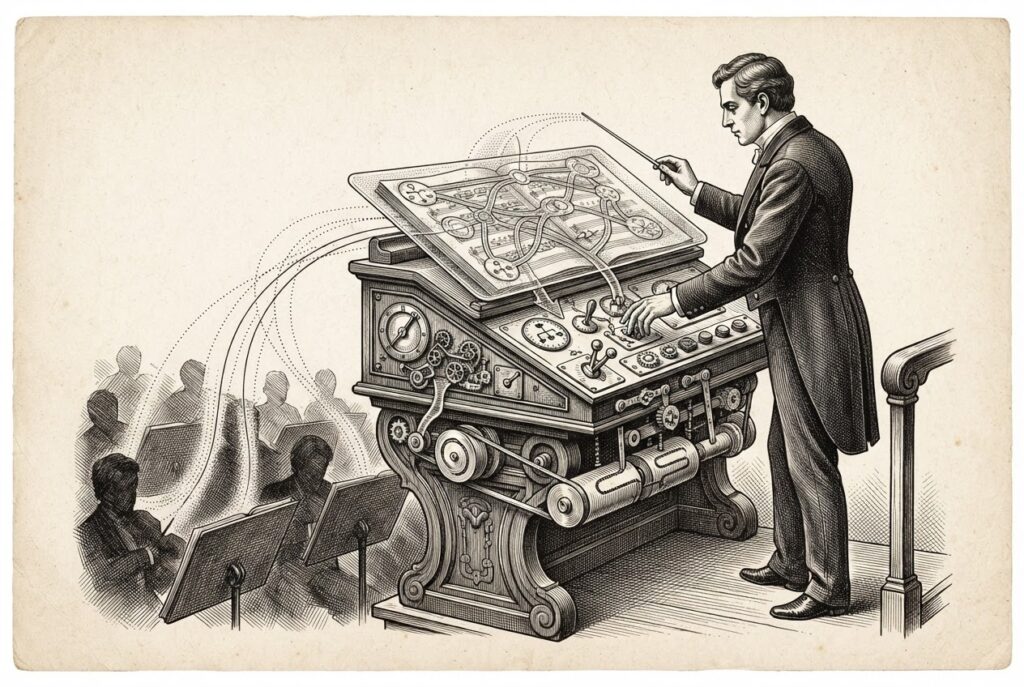
The rapid adoption of autonomous agents has introduced a fragmented operational reality for many enterprises. As teams deploy specialized agents to manage data, infrastructure, and business processes, the underlying orchestration often devolves into a patchwork of disconnected tools. Kestra, which launched version 2.0 on September 8, 2026, aims to consolidate this complexity by positioning itself as a single, governed orchestration layer. Following the September 22, 2026 announcement of its enterprise capabilities, the platform is explicitly targeting the governance challenges inherent in agent-driven workflows.
It is important to distinguish Kestra from other infrastructure components. It is not an identity provider like Okta, nor is it an edge security vendor like Fastly. Instead, Kestra functions as the connective tissue for business logic. By treating AI agents as first-class, authenticated users, Kestra extends the emerging agent governance stack pattern directly into the orchestration layer. This approach acknowledges that while identity and edge security are necessary, they are insufficient for managing the actual execution of agentic tasks.
Architectural Decoupling for Secure Execution #
A primary technical challenge in enterprise agent deployment is maintaining security in segmented or air-gapped environments. Kestra 2.0 addresses this through a redesigned worker architecture. Workers now operate without a direct database connection, relying instead on a single outbound gRPC connection to the controller. This architectural shift enables deployment across highly restricted networks, including sovereign clouds and fully air-gapped environments, without compromising the central control plane.
This decoupling does not come at the cost of performance. According to published benchmarks, the new architecture has delivered up to twice the throughput on the same infrastructure. For organizations managing high-volume agentic tasks, this efficiency gain is critical, as it allows for more complex workflows without a linear increase in resource consumption.
Governance as a First-Class Citizen #
The most significant shift in Kestra 2.0 is the integration of governance controls specifically for AI agents. Any Kestra workflow can now be exposed as a tool via the Model Context Protocol (MCP). By publishing a flow as a named, typed tool on an MCP server with a single trigger, organizations allow external agents to discover and execute these workflows. Crucially, this is not an open door; every flow-as-tool call is subject to namespace-scoped access control.
Beyond access control, Kestra introduces granular execution management. Agents are treated as authenticated users, and workflows can incorporate human-in-the-loop approval gates. This ensures that high-stakes actions—such as those involving financial transactions or infrastructure changes—require explicit authorization. Furthermore, the platform provides full audit logging for every agent-initiated task, creating a clear trail of accountability that is often missing in ad-hoc agent deployments.
Observability is similarly tailored for the agentic era. Kestra exports specific metrics—ai.agent.tool.calls, ai.provider.calls, and ai.embedding.store.calls—via Prometheus and OpenTelemetry. This allows engineering teams to monitor agent behavior with the same rigor they apply to traditional microservices.
The Broader Governance Pattern #
Kestra’s strategy reflects a broader trend in the industry: the maturation of the agent governance stack. While protocols like MCP provide the necessary standardization for agent-tool communication, they do not inherently provide the operational guardrails required by the enterprise. Kestra fills this gap by providing the orchestration logic that sits above the protocol layer.
As CEO Emmanuel Darras noted, the current state of enterprise orchestration is often accidental: “Enterprises did not set out to run five orchestration tools. It happened one team at a time, and the result is that the work a business depends on most is the work it can see least.” By centralizing these disparate workflows, Kestra aims to provide the visibility that is currently lacking in many Fortune 500 environments.
Implications for Infrastructure Strategy #
For technical leaders, the move toward governed orchestration represents a shift in how agents are integrated into the stack. Rather than treating agents as external entities that interact with systems via brittle APIs, Kestra treats them as participants within a managed workflow. This allows for a more cohesive strategy where security, observability, and execution are unified. With over 28,000 GitHub stars and 1,500 contributors, Kestra has established a significant open-source footprint. The Enterprise Edition builds upon this foundation by adding multi-tenancy, reserved capacity, and the governance features required for complex, regulated environments. As organizations move from experimental agent deployments to production-grade systems, the ability to govern these agents within the orchestration layer will likely become a standard requirement for enterprise infrastructure.