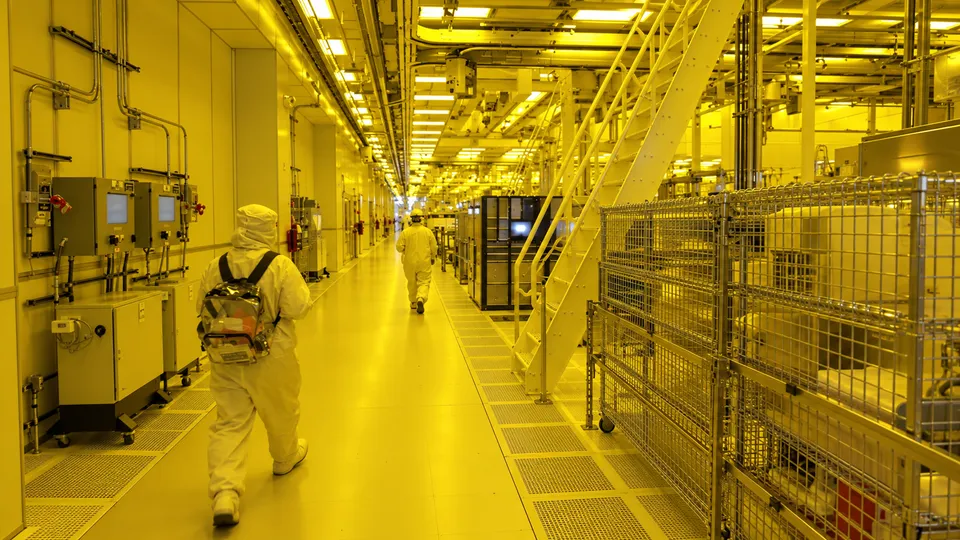
Bureaucracies decree first and define later. When the Federal Communications Commission banned certain foreign-made robots, America’s chip champion read the rule, squinted, and discovered that even it could not say whether the machines trundling through its factories were robots in the eyes of the law. So Intel did what prudent giants do: it asked forgiveness in advance. As Jeremy Hsu reported at Ars Technica, the company requested a waiver “out of an abundance of caution” to be certain it could keep using particular robotic vehicles in its US semiconductor plants.
On October 22, the FCC published its order granting the request — for a period of one year. The machines in question are automated guided vehicles, which travel on “tracks or predefined paths,” often under an operator’s eye, carrying materials and items through warehouses and factory floors. Such vehicles are typically built by Japanese firms like Murata Machinery and Daifuku Co., according to Bloomberg News, though the exact models Intel runs were disclosed only in a “confidential appendix” to its filing — a small mystery the state keeps on the company’s behalf.
The ban itself draws its circle elsewhere: it chiefly covers new models of mobile robots — humanoid robots, robot vacuums — while leaving the door open for previously approved designs, though the rules appear to restrict major modifications to those earlier devices. Into this fog stepped Intel’s lawyers, whose waiver request stated it was “unclear” whether the company’s vehicles even qualify as robots under the ban; they sought relief just in case, and received it, along with approval to “make certain hardware, software, and firmware changes” to keep the machines maintained and running.
There is a parable here about the age in which industry must live. Washington extends its security net across ever stranger categories of machine; the factory, which merely wishes to move its wafers from station to station, cannot be sure whether its cart is a workhorse or a security risk. For a year, the FCC has said: carry on. What a robot will be after that, nobody filing the paperwork appeared quite able to say.