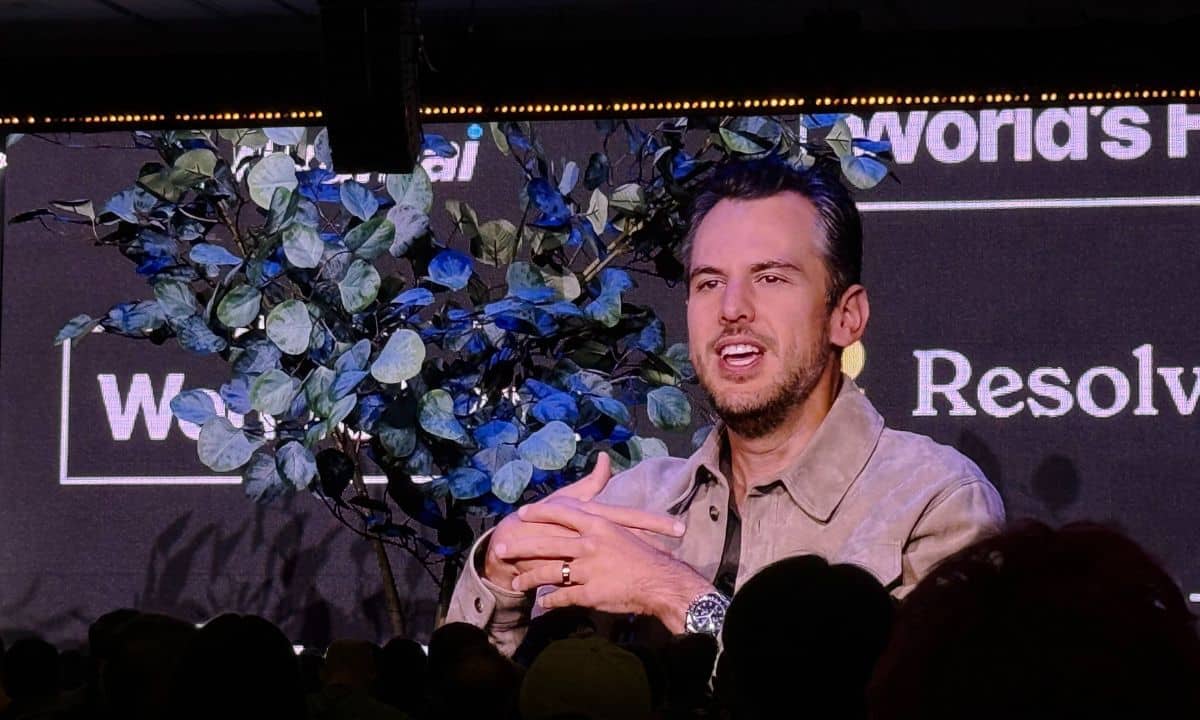
Mike Krieger, Instagram co-founder and Member of Technical Staff at Anthropic, said hand-reviewing every line of code is no longer the best use of a developer’s time.
The job, he argued, is moving toward understanding what AI is trying to do, judging whether its decisions make sense, and checking whether the end result actually solves the user’s problem.
For startups and small teams, that shift could be a major advantage: AI makes it cheaper to experiment, pivot, and learn faster from real feedback.
‘AI will not replace developers’ #
If a founder (or a developer) can test three or four product versions or approaches in the time it used to take to build one, the biggest gain is speed of learning. In Mike’s view, that doesn’t mean AI replaces creativity, ideation, or product instinct, it just helps strong ideas get validated, or rejected, much faster.
The real challenges developers and founders face were never technical to begin with, he argues. Spotting the actual problem, understanding what users need, and finding a product the market will genuinely adopt is far harder than writing the code itself.
AI will not replace developers or threaten the startup ecosystem. It will let small teams build, test, and iterate faster with fewer resources.
That shift will not be easy for everyone, and plenty of teams will struggle, quit, or pivot along the way. But blaming AI for a rough patch in the industry is not fair. Because as Mike says, what was hard before AI is still hard now.
Code review matters less now #
One of the biggest changes Mike sees is not how much code AI can write, but how people assign work to it.
Developers are moving away from planning every step in detail and doing it all by hand. Now they more often* *set the goal, give the AI context, and then review the results, decisions, and trade-offs.
At Anthropic AI is increasingly used less as a simple tool for individual tasks and more like a team member that holds context, tracks specific problems, and proactively suggests solutions.
That is also changing how code gets reviewed. Traditional code review, where someone goes line by line and checks the implementation, matters less than understanding the intent behind a change.
Instead of asking “is every line of this code correct,” the more useful question becomes “is this the right way to solve the problem, and what are the consequences of this decision.”
I don’t review every line of code in a pull request. Instead, I talk to Claude about the code and ask the questions I would normally ask the person who wrote it.
That does not mean people disappear from the process. Human judgment matters more, especially for architectural decisions and complex changes. AI can speed up implementation, but someone still needs to understand the product, the users, and the long-term consequences of a decision.
It is easy to lose perspective in the AI race #
Beyond the changing workflow, Mike also spoke about the pressure in the AI industry. With new models, products, and regulatory shifts coming almost daily, it is easy to feel like you always have to stay one step behind.
He said that by midweek, Anthropic is already reviewing the ”state of AI news,” and the list of updates is often long. His point was that you have to keep perspective, you can’t track or react to every single change.
That pressure, he added, is also what makes burnout such a risk in an industry moving this fast. People often tie their sense of success to daily results, competitors’ launches, or product releases, even though real wins and failures are usually measured over much longer stretches of time.
No job is important enough that you can’t be offline for a few days.
He closed by saying teams need to get used to talking about frustrations and failures, not just celebrating wins. Being open about problems, he argued, helps teams solve them faster and keep a healthy working culture, even as the industry moves at an extraordinary pace.