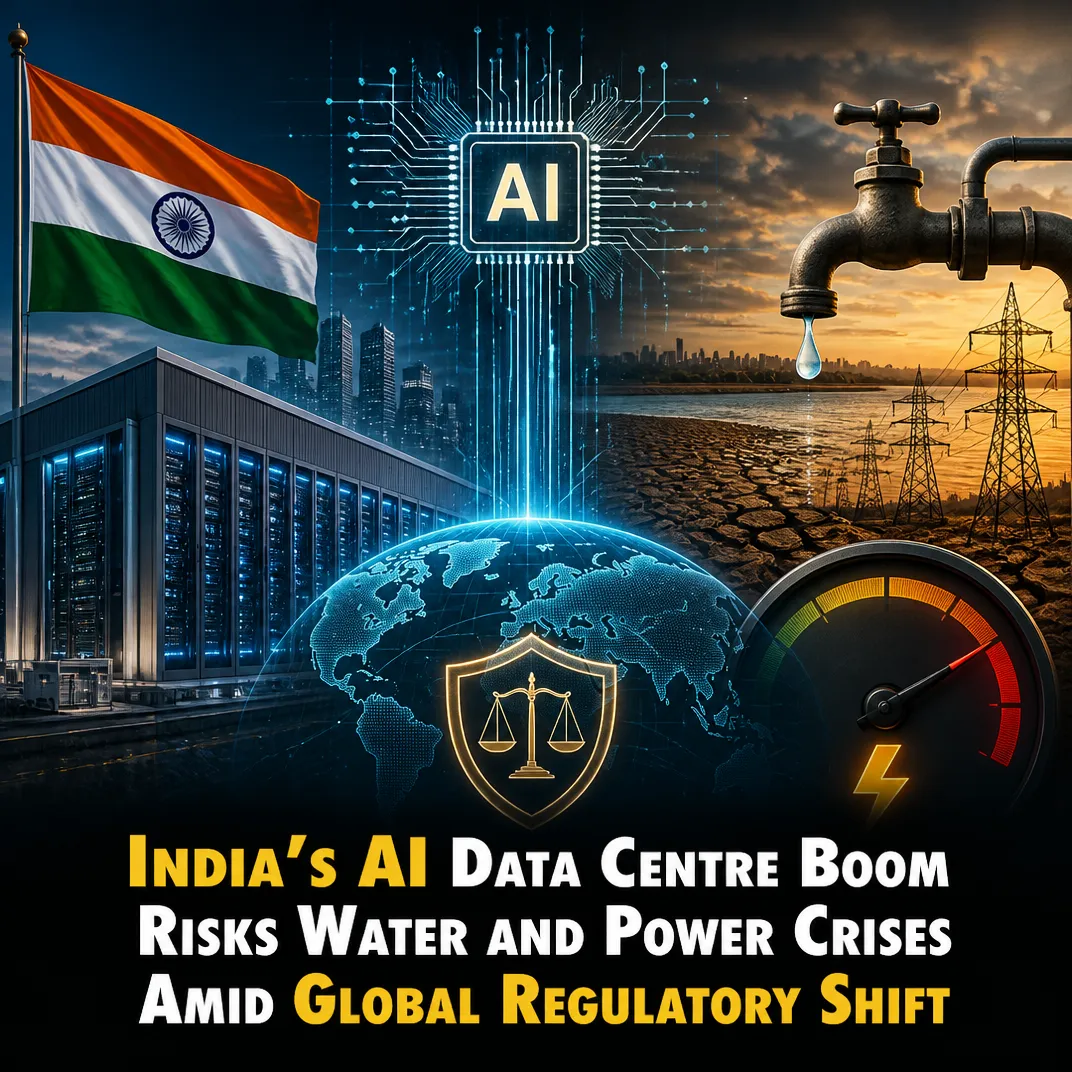
July 23, 2026, (Inside AI) — On July 14, New York became the first U.S. state to impose a one-year moratorium on large new data centre construction, citing rising power costs, water strain, and community burdens. Massachusetts Governor Maura Healey simultaneously d data centre sales tax exemption applications and released a framework for responsible development.
The U.S. moves reflect a global backlash. In Q1 2026, 75 U.S. data centre projects worth $130 billion were blocked or delayed. Amsterdam barred new centres until 2030, while the Netherlands’ 2022 hyperscale ban limits large facilities to two sites. Singapore’s 2019–2022 moratorium gave way to a restrictive quota system, and Ireland’s grid operator blocked new Dublin connections from 2021 until December 2025, now requiring on-site power generation.
India, however, is incentivising rapid expansion. Uttar Pradesh’s Data Centre Policy 2021 offers capital subsidies, 100% stamp duty exemption, and electricity duty waivers. Tamil Nadu provides subsidised land and 100% electricity duty exemption, while Telangana allocates IT corridor land with power subsidies and fast-track approvals. Yet India is the most water-stressed among the top 10 data centre hosts.
A Yotta Data Centre in Uttar Pradesh reportedly caused groundwater tables to drop from 30 metres to 180–250 metres, pushing residents to private water vendors. Data centres also create few permanent jobs—mostly housekeeping or gatekeeping—unlike labour-intensive factories. Any job promises must be weighed against land, power, and water consumption.
India’s AI data centre market, currently at $5.5 billion and 1.6 GW capacity, is projected to reach $90 billion and 12–14 GW by 2035. Major partnerships include Reliance with Meta, Adani Group with Google, and Tata with OpenAI. But as ROI evidence from AI remains inconclusive, short-term costs fall on local communities while profits flow to global corporations.
Water Scarcity and the Hidden Costs of Digital Infrastructure #
India holds 20% of the world’s data but only 3% of its data centres, driving aggressive expansion. Yet a 2021 study in Environmental Research Letters found that data centre water consumption is often underestimated, with some facilities using millions of gallons daily for cooling. In water-scarce regions, this competes directly with agriculture and drinking supplies.
The global pushback mirrors earlier infrastructure debates. Just as communities once questioned whether factories or highways truly delivered local benefits, data centres now face similar scrutiny. The difference is scale: a single hyperscale facility can consume as much electricity as a small city and millions of litres of water daily, with minimal local employment.
Concerns also mount over stranded assets if the AI bubble bursts. Many data centres are debt-funded, and if demand falters, communities could be left with empty shells and degraded resources. India’s policy incentives, while attracting investment, lack binding sustainability requirements seen in other nations.
Lessons from Global Regulatory Pivots #
Singapore’s Green Data Centre Roadmap, detailed in a government factsheet, ties new capacity to energy efficiency and renewable power. Ireland’s grid operator now mandates on-site generation for new connections. These models show that growth and responsibility can coexist, but only with enforceable standards.
India’s current approach—offering subsidies without commensurate environmental safeguards—risks normalising harm. As the assistant professor and assistant dean at Jindal School of Government and Public Policy warns, India can demonstrate global leadership by regulating hyperscalers before local costs become entrenched.
The coming year will test whether India adopts a more cautious framework or continues to prioritise speed over sustainability. With water tables falling and power grids straining, the window for proactive governance is narrowing.