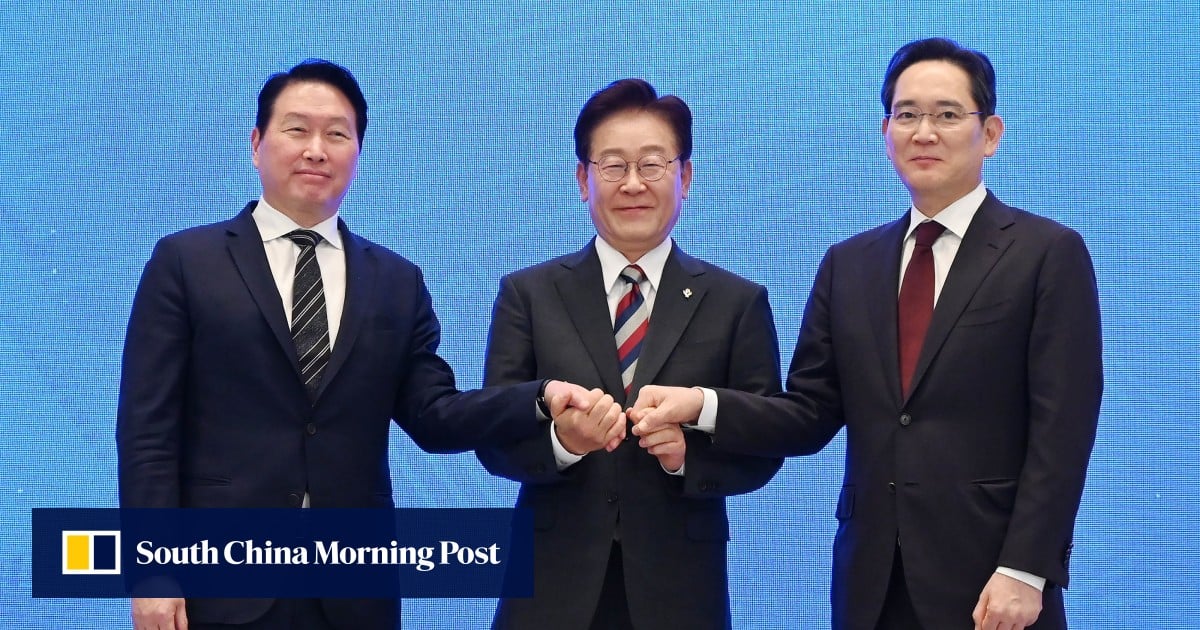
The goal, however, faces potential hurdles including workers’ reluctance to relocate away from Seoul and dispersed supply chains
[South Korea](https://www.scmp.com/topics/south-korea?module=inline&pgtype=article)’s US$518 billion

[semiconductor](https://www.scmp.com/topics/semiconductors?module=inline&pgtype=article)push aims to tap the
artificial intelligenceboom into a durable industrial advantage and keep up with leading rival China, according to observers.
The plan is intended to secure supplies of advanced memory chips needed for AI data centres and computing infrastructure, while easing pressure on the Seoul metropolitan area by creating a second major chipmaking base in the country’s southwest.
Lee Jae Myungon Monday unveiled the government’s “Three Mega Projects” initiative, centred on semiconductors, physical AI and AI data centres, as part of a strategy to turn South Korea into a global technology powerhouse.
Samsung Electronicsand SK Hynix will invest a combined 800 trillion won (US$518 billion) in the southwestern region to establish a second major semiconductor production hub alongside the emerging Yongin semiconductor cluster near Seoul.
Separately, SK Group, GS Group, Naver and other companies will also invest a total of 550 trillion won by 2029 to build large-scale AI data centres nationwide.
The government will support the initiative by providing essential infrastructure, including electricity, water and industrial sites, and plans to offer discounted electricity rates for AI data centres.
“These megaprojects represent South Korea’s efforts to maintain its technological edge in semiconductors over China and other competitors,” said Park Jae-guen, a renowned semiconductor expert at Hanyang University.