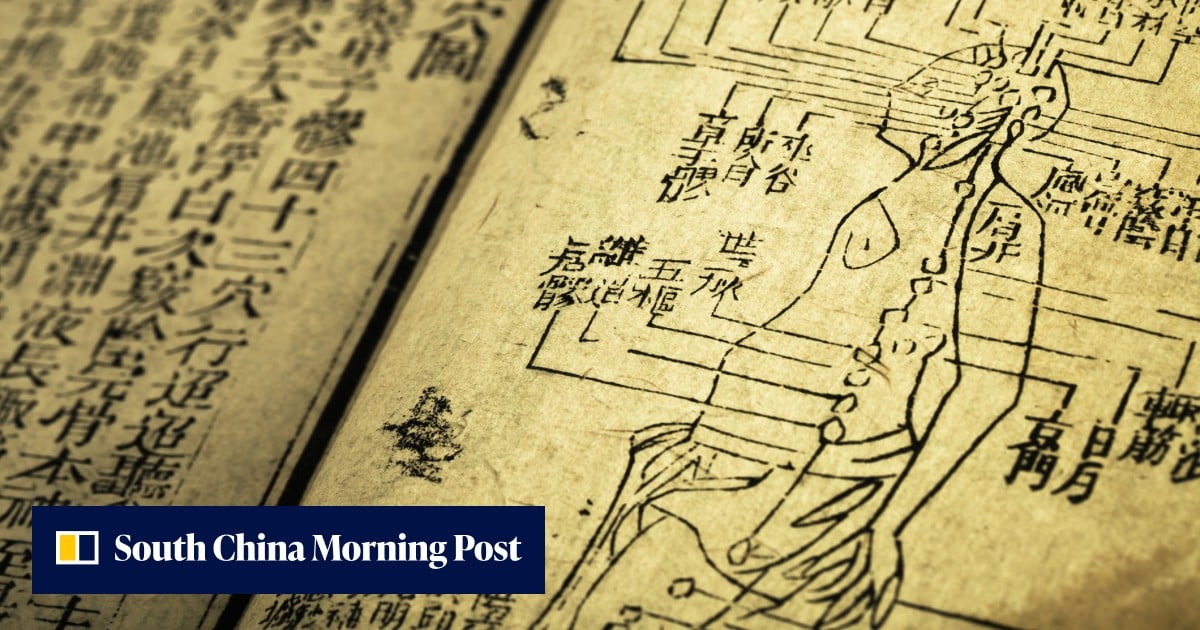
The technology is being used for everything from digitising rare manuscripts to helping break down barriers to understanding classical texts
For generations, working with ancient Chinese texts has been a painstaking task. Specialists would spend years deciphering unfamiliar characters, copying manuscripts by hand, adding punctuation to texts written without it, comparing different editions and tracing references scattered across thousands of years of records. But artificial intelligence is now changing that process, not only by helping to preserve fragile manuscripts but also by transforming how ancient texts are recovered, studied and shared.
As China accelerates its efforts to digitise a vast collection of ancient works, universities, technology companies and volunteers are taking part in a nationwide effort to turn the country’s rich literary heritage – once largely the preserve of specialists – into an open digital resource.
An example of how this works in practice is Shidian Guji, an online database of more than 70,000 ancient works, all of them freely available to the public, that was launched in 2022 and jointly developed by ByteDance and Peking University.
The database provides tools for organising, searching and reading classical works, including modern language versions of classical texts and chatbot-based interactions that help users to explore them.
Last month, it published a collection of almost 2,000 traditional scientific works covering fields such as astronomy, mathematics, agriculture and engineering.
Sun Xianbin, a researcher at the Institute for the History of Natural Sciences at the Chinese Academy of Sciences, told Shangguan News the digital archive contained centuries of accumulated knowledge and formed part of China’s “indigenous knowledge system”.