Become a member of GB MAX to gain exclusive access to the industry and to the most influential global B2B leadership community in the business of gaming, entertainment, and tech.
Join nowand also get a VIP ticket to GamesBeat Next (Nov 2-3, SF).Today’s student laptop is becoming more than just a school device. Nvidia recently commissioned a survey of 1,000 U.S. undergraduate students that examines why so many are choosing and using laptops as AI, gaming, and increasingly demanding coursework reshape their technology needs. The findings show students are looking for one machine that can support all of their needs, be it in their academic studies or leisure time.
Key findings from the NVIDIA survey include:
- 45% of students already use AI tools, with STEM students showing higher adoption of AI, coding, and specialized software.
- 68% of students multitask daily, while 34% regularly use multiple demanding applications.
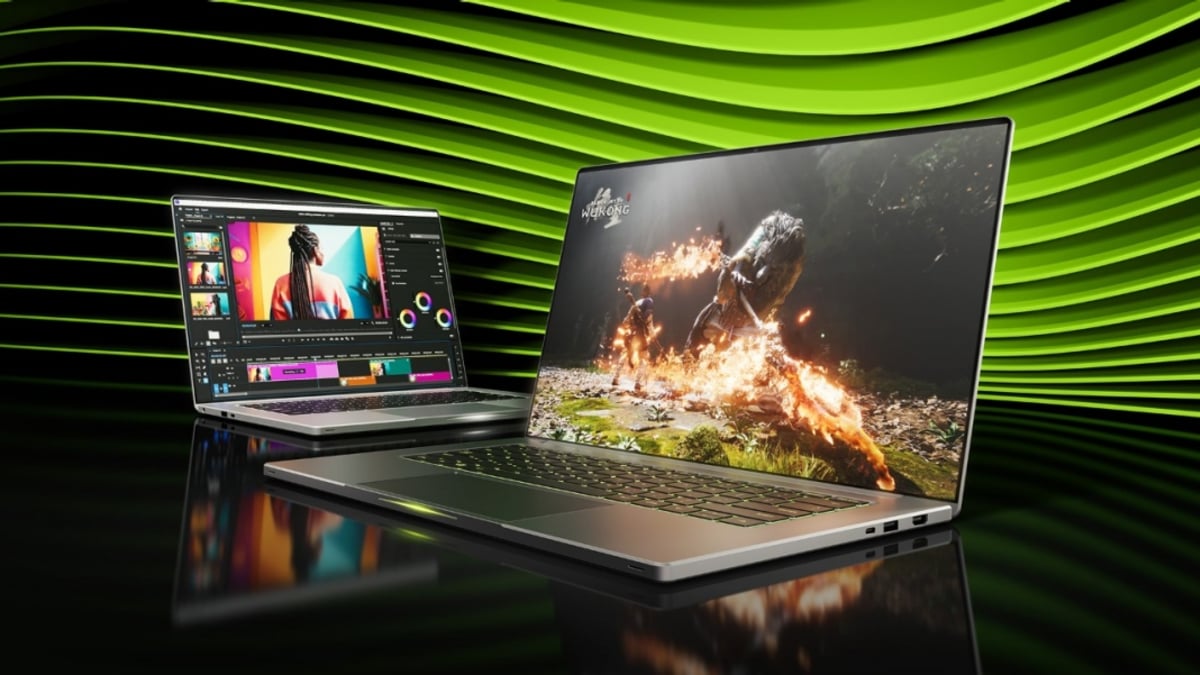
- 39% use their laptops for content creation, highlighting the growing need for devices that can handle creative workloads alongside schoolwork and gaming.
- 78% say their major influenced their laptop choice — including 90% of computer science students and 85% of engineering students — showing that performance needs increasingly vary by field of study.
In a written interview with GamesBeat, Nvidia director of product management Fredrik Hamberger said that 43% of students surveyed had felt disadvantaged because of an older or less capable laptop, with 66% having relied on campus computers as a result. He said this had pushed students to require a device that can support everything they do, but also one that can be carried to and from classes, home, and also serve as an entertainment device, framing this as one of the design principles behind Nvidia’s GeForce RTX laptops.
“Students value versatility. They want one device that can handle both coursework and entertainment, like gaming in their free time,” Hamberger said. “This [survey] suggests that many students are looking for a single device that can handle a wide range of academic, creative, AI, and gaming experiences wherever they are, rather than separate systems for different needs.”
Hamberger explained that a powerful GPU is becoming increasingly necessary for students because more of the applications they use every day, across work and play, can take advantage of GPU acceleration, including STEM applications, creative tools, and other technical software.
“60% use AI for research and information gathering, 47% use it for productivity tasks, 38% for more advanced academic or creative work, 30% for software or app development, 27% use AI for task automation, and 21% are already running AI models locally on their laptops,” Hamberger said. “As those workloads become more common, having a laptop with the right level of performance** **becomes increasingly important. GPU-accelerated computing, including systems with GeForce RTX laptop GPUs, can help improve performance across AI, creative, and technical applications.”
When it comes to the wider gaming industry, Hamberger suggested that gaming is becoming part of a “broader computing experience,” and that this only reinforces the importance of understanding how players use their hardware for both leisure and work.
“Many gamers are also creators, developers, students, and professionals who rely on the same system for multiple demanding tasks,” he said.