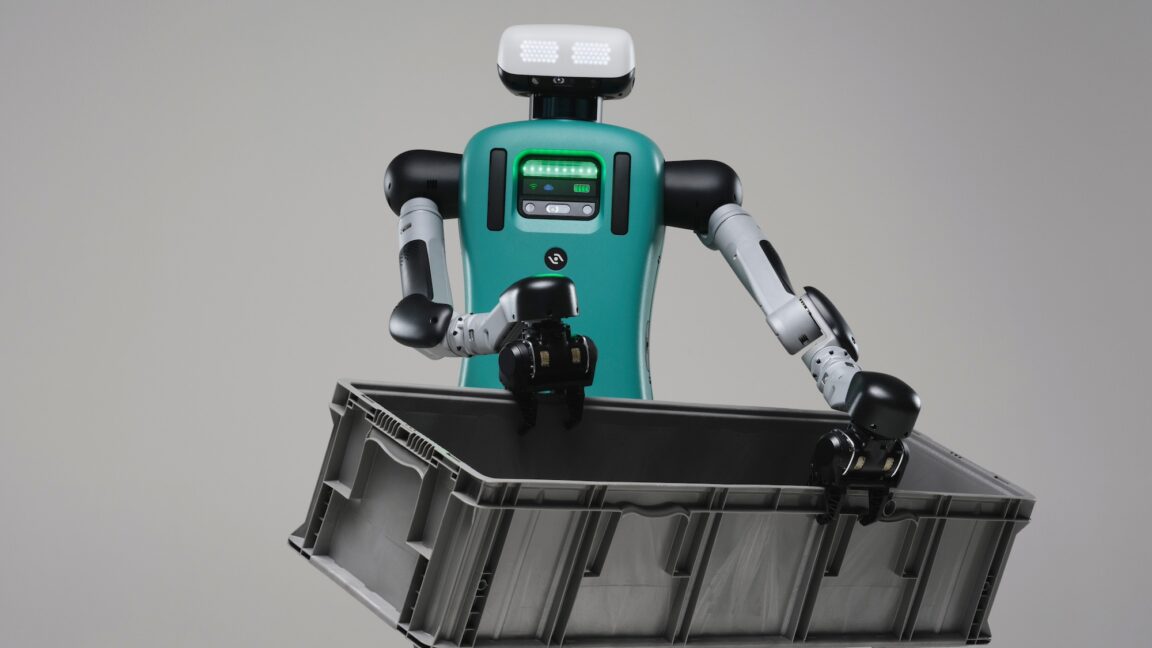
In a world where self-driving robotaxis glide through major city streets without drivers behind the wheel and delivery drones autonomously fly through the skies to drop off orders at customers’ homes, the idea of general-purpose robots helping humans with various tasks in workplaces or even homes may not seem far-fetched.
But that future hinges on developing increasingly autonomous robots powered by modern artificial intelligence—an ambitious vision that has motivated many researchers to become startup founders while also attracting billions of dollars in investment.
“When I started maybe about 15 years ago, I led a project team that was focused on autonomy, but in that era, the goal of that team was to just get a robot to navigate from point A to point B,” said Matt Malchano, vice president of software at the robotics company Boston Dynamics based in Waltham, Massachusetts. “And now, when we think of autonomy, we think of this huge space of tasks and things that we can imagine a robot doing on its own.”
It was previously difficult to imagine a practical path for creating general-purpose, autonomous robots like housekeeper Rosie from The Jetsons or the various droids like C-3PO from Star Wars, especially when robotics labs and companies were still struggling to solve autonomous navigation and even self-balancing, in the case of walking robots. In 1979, the experimental autonomous vehicle known as the Stanford Cart required five hours to successfully move 20 meters through an obstacle-filled room. The first bipedal robot capable of walking on its own without losing its balance was developed in 1996.
But robot autonomy has always been a “moving target,” with the goal of reaching a point where robots can do an increasingly larger subset of things that humans can already do, ideally without direct human supervision, Malchano told Ars. The International Standards Organization defines autonomy in robotics as the “ability to perform intended tasks based on current state and sensing, without human intervention.”