[ Funding
](https://www.unite.ai/series/funding/)


[Add Unite.AI to your preferred sources on Google](https://www.google.com/preferences/source?q=unite.ai)
Cloud observability company groundcover has raised $100 million in Series C funding as it looks to expand a platform designed to help engineering teams and AI agents understand increasingly complex production environments.
The round was led by One Peak, with participation from Morgan Stanley Expansion Capital (MS ) and existing investors Zeev Ventures, Angular Ventures, Heavybit and Jibe. It brings groundcover’s total funding to $160 million.
The financing follows a year in which the company says it tripled annual recurring revenue, doubled its global workforce and surpassed 250 paying customers. Its customer base now ranges from early-stage startups to Fortune 5 enterprises, while the company also reports signing multiple seven-figure contracts over the past 12 months.
Observability Faces an AI-Driven Data Problem #
Observability platforms collect and analyze signals such as logs, metrics and traces to help engineering teams understand how applications and infrastructure behave in production.
That task is becoming more difficult as cloud-native systems expand and companies introduce large language models, autonomous agents and increasingly interconnected application stacks. AI applications can generate telemetry across prompts, model responses, tool calls, databases, APIs and the infrastructure supporting each interaction.
Greater visibility can help engineers identify hallucinations, performance degradation, failed tool calls and security risks. However, collecting that context can also substantially increase the volume and sensitivity of the data flowing into observability systems.
Traditional platforms often manage these costs by sampling or filtering telemetry. This can make the underlying data more manageable, but it may also remove the precise information needed to reconstruct an incident. The limitation becomes especially important when AI agents are expected to investigate problems or recommend changes without continuous human direction.
groundcover is positioning its architecture as an alternative to this model, combining kernel-level data collection with storage inside the customer’s own cloud environment.
How groundcover’s BYOC Architecture Works #
At the center of the platform is a bring-your-own-cloud, or BYOC, architecture. Instead of transferring all observability data into a vendor-operated Software-as-a-Service environment, groundcover deploys its data plane within an isolated account in the customer’s cloud.
Logs, infrastructure metrics, custom metrics, traces and Kubernetes events can therefore remain within the customer’s infrastructure. A separate control plane manages the platform but is isolated from production workloads and telemetry at the network level, according to groundcover’s architectural documentation.
This arrangement is intended to give customers a managed software experience while preserving greater control over data residency, privacy and security. That can be particularly relevant for AI workloads, where observability records may include prompts, model outputs, tool arguments, user information or elements of an agent’s reasoning process.
The company also supports on-premises and air-gapped deployments for organizations with stricter isolation requirements.
Combining eBPF and OpenTelemetry #
groundcover collects much of its telemetry through extended Berkeley Packet Filter, commonly known as eBPF. The technology allows programs to observe activity within the Linux kernel, giving monitoring systems visibility into network communication, application processes and resource usage without requiring developers to manually instrument every service.
The company says its adaptive eBPF sensor can be deployed without code changes and used to capture application and infrastructure telemetry across Kubernetes environments.
That does not mean groundcover is replacing established instrumentation standards. The platform also integrates with OpenTelemetry, an open-source framework that provides common APIs, software development kits and tools for generating, processing and exporting telemetry.
The combination gives organizations two complementary sources of information. eBPF can automatically capture activity at the infrastructure and network layers, while OpenTelemetry can supply application-specific context that is intentionally added by developers.
groundcover consolidates traces, metrics, logs and Kubernetes events into a unified interface. Its product portfolio also covers Application Performance Monitoring, infrastructure monitoring, log management, real-user monitoring and observability for large language model applications.
Expanding Observability for AI Agents #
The company’s ambitions extend beyond providing dashboards for human operators. Its Agent Mode is designed to help engineers investigate incidents, perform root-cause analysis and identify possible remediation steps using the telemetry available inside the platform.
Rather than placing a general-purpose chatbot over a collection of logs, groundcover says it rebuilt its internal APIs around a unified query language called GCQL. Actions taken by the agent can be inspected, and results can be converted into native groundcover assets for engineers to use independently.
The company has also introduced Model Context Protocol support, enabling developers to bring production telemetry into compatible AI agents and development environments. Its AI observability tools are intended to capture the wider execution context of model requests, including prompts, responses, tool usage and session history.
This may help teams determine whether a problem originated with the model itself, an external API, a retrieval system, an infrastructure bottleneck or the sequence of actions taken by an agent. groundcover says its eBPF-based approach can also inspect API request and response content, helping teams detect anomalies or sensitive information being transmitted to external model providers.
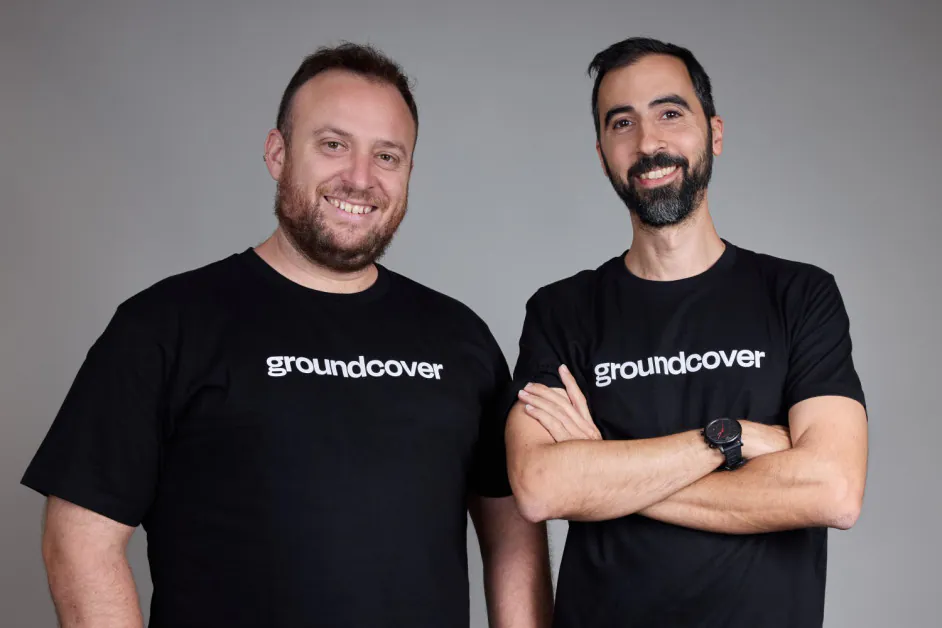
“We are the only platform to harness the potential of eBPF with the endless power of BYOC for observability,” said Shahar Azulay, CEO and co-founder of groundcover. “On top of that unique architecture, groundcover has built Agent Mode, our agentic experience that helps engineers surface, troubleshoot and remediate issues in production.”
Azulay said the new capital will support the company’s effort to change how engineers and agents collaborate in production operations.
Here is a more neutral replacement section:
Future Implications #
The growth of AI agents could change what organizations expect from observability platforms. Monitoring tools have traditionally helped engineers investigate incidents after something goes wrong, but autonomous systems may require continuous access to detailed production data so they can identify problems, trace dependencies and recommend corrective actions in real time.
This creates a tension between visibility, cost and control. AI applications can generate large volumes of logs, traces and metrics, while their telemetry may also contain sensitive prompts, model outputs and customer information. Architectures that keep data within a company’s own cloud environment could therefore become more attractive, particularly in regulated industries or organizations with strict data-residency requirements.
The broader question is whether AI agents can be trusted to act on observability data rather than simply summarize it. Incomplete telemetry, misleading correlations or poorly defined permissions could lead an automated system to misdiagnose an incident or make an unnecessary change. Human oversight, audit trails and clear limits on autonomous actions will remain important as these capabilities mature.
groundcover’s funding reflects growing interest in the infrastructure needed to operate AI systems at scale. The long-term significance will depend less on whether observability platforms can add conversational interfaces and more on whether they can provide sufficiently complete, secure and reliable data for humans and automated agents to make sound decisions in production environments.