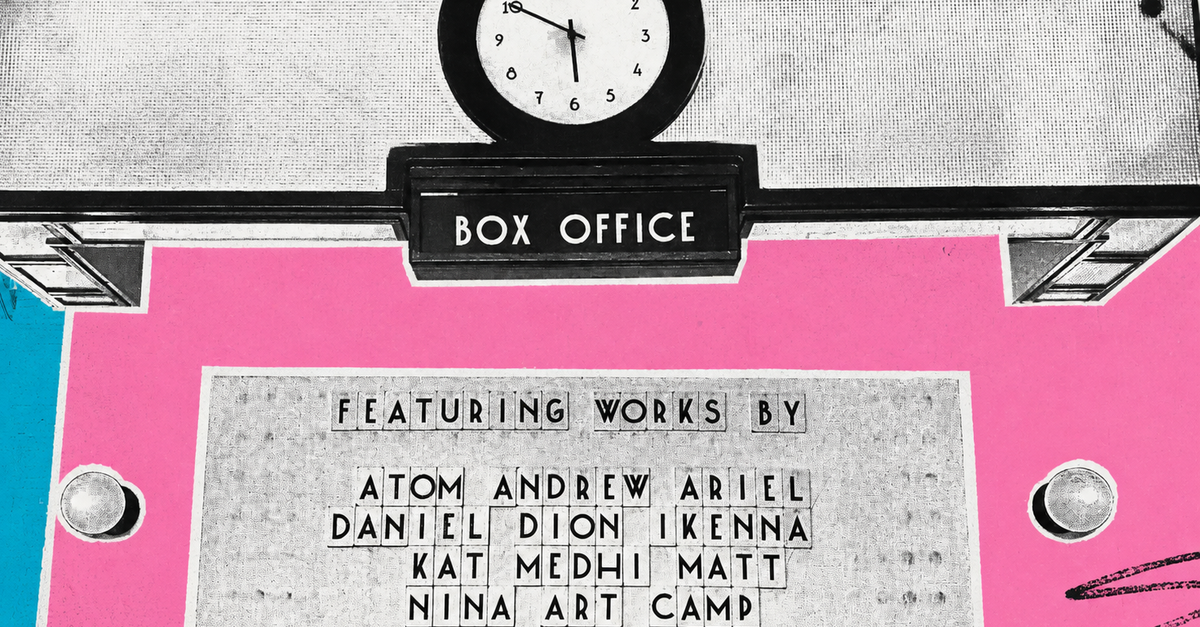
AI slop dominates social feeds, but an invite to a Google Flow film screening in NYC raised a genuine question: could AI actually create meaningful art?
The event featured films from the fourth cohort of the Google Flow Sessions: artists invited by Google to spend six weeks in a creative partner program crafting short films with the company's AI video generator. Some films used Flow for the entire film, while others used practical sets and actors with the AI as a backup. Unsurprisingly, the films that resonated with me most took the latter approach: using AI for characters, graphics, and worlds with no real-world equivalent.
For instance, award-winning filmmaker and creative director Andrew Nethery's film *Nothin' Beats a Cheeseburger *was about an alien on a mission to find the best cheeseburger on Earth, and it brought the chef back to his planet. The film used a real diner as the set and two real actors, including the person who played the alien. This was a purposeful choice, as Nethery explained his hardline stance about always keeping real actors in the story. "I personally believe, you know, theater, filmmaking, storytelling, you're going back to like ancient civilization of like an actor on a stage," said Nethery, "I love working with real actors, love practical production, [and] physical production. So I would love for all that to be the same."
He used AI to add in elements such as a TV and a cow, tasks which would have been time-consuming. He also used it to transform the stand-in actor into an alien, a task he was impressed AI could do so well. He explained that with the traditional process, such as motion capture used in movies like Avatar, it would have taken weeks or months to do.
Not only was it quicker, but it was able to tackle tasks such as maintaining the shape of the face and the reflections on the window, tasks "notoriously difficult for VFX and CGI to do," according to Nethery. He did fall back on using AI to generate an entire alien scene when the original shots with the actor didn't pan out. In total, Nethery's film has 20 live-action shots. 32 hybrid shots with generated elements, and five generated AI shots with no live action.
Of course, there are an overwhelming number of instances where I generated content goes wrong, with the Coca-Cola and McDonald's ad failures being prime examples. When asked why AI campaigns go wrong, Nethery blamed companies and advertising agencies that push AI usage.
"It's a disservice to the ability and the future of what these tools can do. I think everything needs to be done responsibly," he said.
You can watch all the short films, which range from about 1 to 3 minutes.
Our Deeper View #
It's easy to associate AI-generated content with slop, given the sheer volume of it flooding our social feeds and elsewhere right now, but there are ways to use it intentionally to create meaningful work. To do this well, artists need to be mindful not to alienate an audience already tired of AI-generated content, and to steer clear of work that humans can quickly and easily identify as AI-made. For instance, films with what I felt were clearly AI-generated oceans, people, or objects immediately put me off. When monsters, aliens, or animations were AI-generated, though, it didn't seem to matter, since there's no real-world counterpart to compare them to. Beyond the quality of the output, questions remain about the ethical implications of using these models, since they are typically trained on vast amounts of work from non-consenting artists on the open web.