One of the world’s most respected economic institutions has warned that the AI boom powering the Australian and global economies could create an international recession, obliterating middle-class jobs along the way.
In some of the bleakest commentary on the AI rise that has underpinned the resurgence in the US economy and which is on track to surpass the mining boom in importance to Australia, the Bank for International Settlements (BIS) said overnight that there were substantial doubts whether the current tech expansion was sustainable.
The bank, which in the mid-2000s accurately said a build-up in property loans in the US banking system could lead to a financial crisis, used its annual report to highlight how dependent the global economy has become on the AI boom.
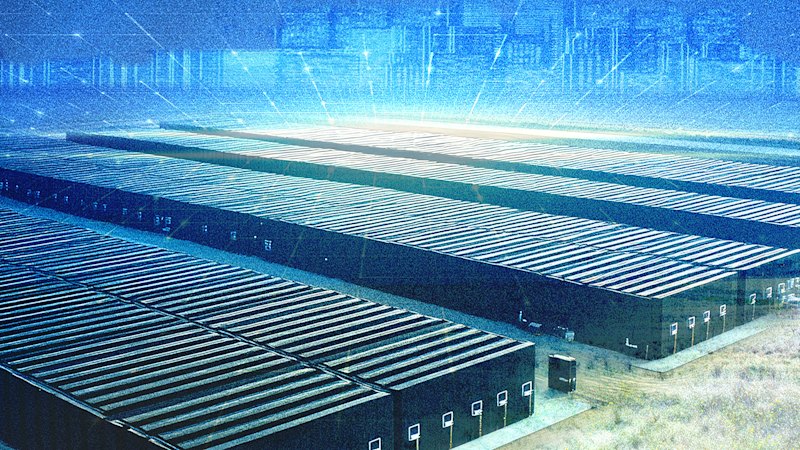
Five US companies, including Microsoft, Meta and Amazon, are forecast to spend $US1 trillion ($1.45 trillion) over the next 12 months on AI-related infrastructure. The increase, coupled with past investments, is expected to lift US productivity, which has outperformed the rest of the world over recent years.
In Australia, spending on data centres and AI-related infrastructure is surging, hitting record levels in Victoria and NSW, which are at the centre of the nation’s tech boom, which is on track to surpass the mid-2010s mining boom in size and scope.
But the BIS said the huge increase in expenditure on AI was similar to previous “manias” dating back to the canal-building surge of the 1830s, the “electrification exuberance” of the 1920s and the dotcom boom of the late 1990s. Each one ended in economic tears.
“These episodes ended with an eventual reversal in investment, inducing economy-wide recessions,” it said.
“The scale and pace of the current AI investment boom accompanied by expectations of large productivity pay-offs bear resemblance to these precedents, highlighting potential downside risks in the near term.”
An ongoing concern around AI is that it will ultimately reduce the need for businesses to employ staff.
Research in Australia has yet to find an “AI job apocalypse”, but there are signs that hiring over recent years has been weaker in those occupations most at risk of being replaced with new technology.
Proponents of AI say that, like previous technological breakthroughs, while some jobs will be lost, they will be more than offset by new occupations, many of which have yet to be invented.
But the BIS says so-called “labour displacement” could intensify, signalling it is not yet convinced that enough jobs will be created to offset the employment loss created by AI.
“Unlike past general purpose technologies, AI competes directly with human cognitive abilities, possibly narrowing the scope for workers to move up the value chain or find new non-disrupted tasks.
“To date, such disruptive labour displacements have yet to occur at scale. But there are signs of possible adjustments to come.”
Analysts’ calls with major businesses over recent months have found a growing number that plan to substitute workers for new automated technology. US businesses with a higher use of AI have enjoyed stronger productivity but lower job growth than sectors that do not use the new tech.
According to the BIS, one substantial risk is that all the money invested in AI will fail to deliver the financial returns necessary to cover the cost of the new infrastructure.
This “AI exuberance”, in an area with high competition, meant there was a real risk of failure by firms that had spent billions on their new technology.
“Disappointment in returns could trigger a sudden pullback in financing and turn the capex boom into a protracted investment bust, with potential knock-on effects on financial conditions,” the bank says.
Over the past week, shares in tech companies have fallen by up to 5 per cent, in part due to concerns over their long-term profitability and signs of inflation caused by their huge expansions.
Apple announced price rises of almost 20 per cent across its computers and tablets due to strong demand for computer chips. Xbox said it would have to significantly lift prices of its gaming consoles as it battled to get its hands on inputs also being used to build new data centres.
The BIS said the increase in demand for chips and semiconductors would put upward pressure on AI construction and that could bring broader financial pressures.
Central banks such as the Reserve Bank may keep interest rates high to deal with AI-induced inflation.
“Should inflation rise significantly or AI-led investment turn to a bust, the macroeconomic consequences could be amplified by existing financial vulnerabilities,” it said.
“A tightening of policy rates needed to contain inflation could precipitate a sharp pullback in asset prices after a prolonged period of exuberant risk-taking.”
Business Briefing delivers exclusive coverage and expert opinion. Sign up to get it every weekday morning.
Shane Wrightis a senior economics correspondent for The Sydney Morning Herald and The Age.Connect via
Xor