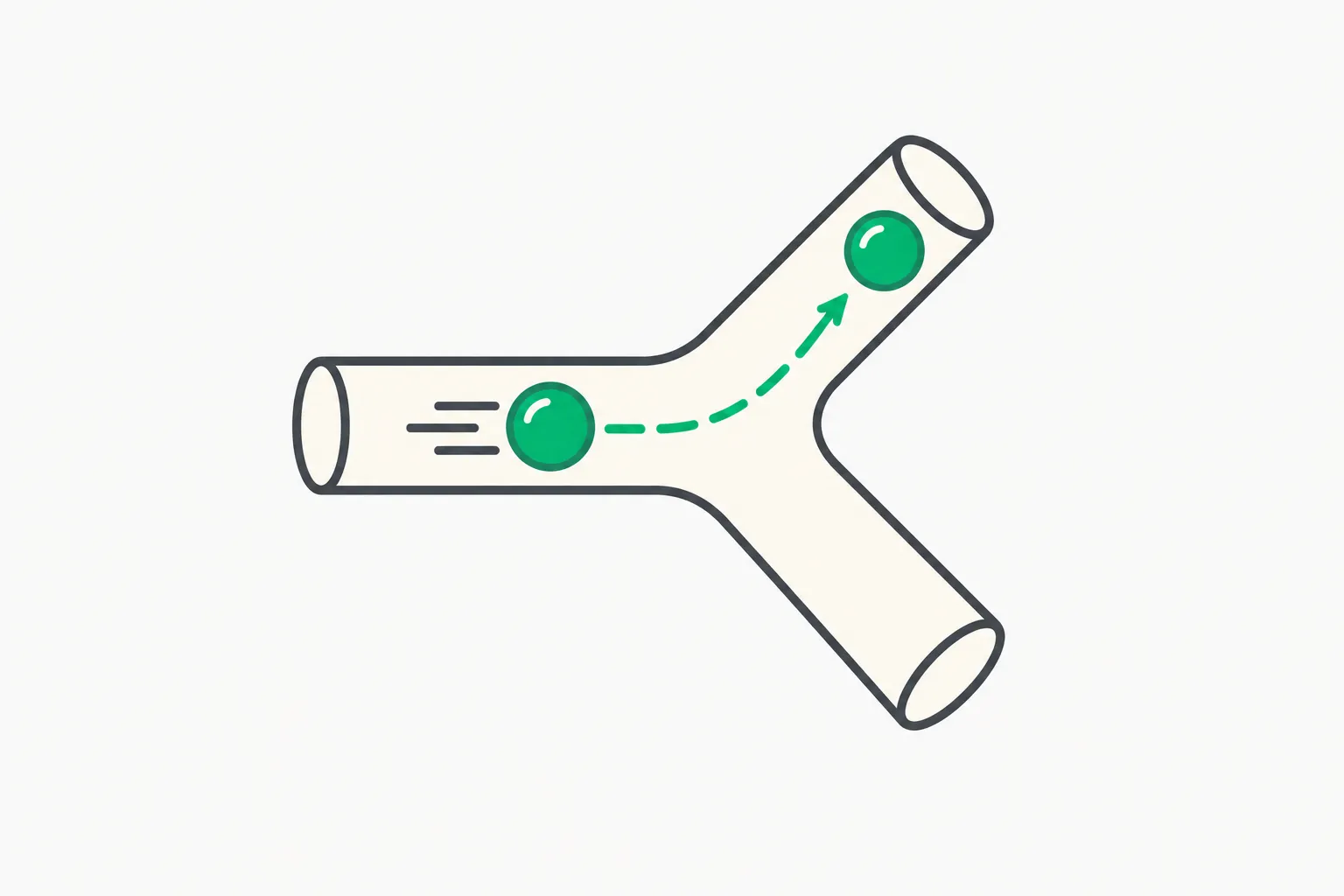
GitHub made Copilot Fusion generally available on October 28, 2026, at its Universe conference. The pitch, in GitHub's changelog: instead of choosing a model for every task, you select Fusion, pick an effort level, and Copilot decides which models to use. It is the production version of the research preview we covered in September as HydraFusion, "model orchestration over model selection".
This post covers what changed from the preview, what the three workflows do, what it costs, and how much weight to put on GitHub's cost-versus-Claude-Code claim.
TL;DR: Copilot Fusion at a glance #
| Question | Answer (per GitHub's changelog) |
|---|---|
| What is it? | A mode that routes and orchestrates models per prompt |
| Effort levels | Standard (everyday coding), High (harder reasoning), Max (most demanding work) |
| Workflows | Single, Cascade, Critique |
| Where? | VS Code, GitHub Copilot app, Copilot CLI, JetBrains IDEs; other clients later |
| Which plans? | All Copilot plans |
| Price | Each used model's standard rate; 30% discount on model costs for paid plans for a limited time |
| Preview users | Auto, HydraFusion, HydraFusion Max map to the new effort levels |
| Admin control | Fusion respects enterprise and organization model policies |
How do the three Fusion workflows work? #
GitHub says Fusion uses one of three patterns as the task demands:
- Single: one model handles the task start to finish. This is the cheap path for small edits.
- Cascade: an efficient model drafts a response, then a quality check either accepts it or escalates to a stronger model. You pay for the expensive model only when the draft fails the check.
- Critique: one model drafts, a second reviews, and the first revises. This costs more tokens but catches mistakes a single pass misses.
The logic is the same one behind model routers generally: most prompts do not need the strongest model, and a few need it badly. If you want the mechanism explained from first principles, our piece on Gemini context caching and agent token costs shows why token volume, not list price, drives an agent's bill.
Effort levels replace the model picker #
The visible change is the picker. You no longer pick between, say, GPT-6 Astra and Claude Opus 5.5 for each task. You pick Standard, High or Max, and Fusion selects from the models your organization has enabled. The preview's Auto choice maps to the new levels, as do HydraFusion and HydraFusion Max.
For builders this moves a decision from you to the harness. That is convenient and also a loss of control: if a specific model matters for a task, for instance a model you have validated for a regulated codebase, Fusion may route around your preference. Admins can disable individual models for Fusion only, which is the escape hatch. The same pattern, a router sitting between you and several frontier models, is also what Anthropic's and OpenAI's own tools do in different forms; see our comparison of Opus 5.5 and Sonnet 5.5 for the tier trade-off Fusion is trying to automate.
Does Copilot Fusion match Claude Code at half the price? #
GitHub's changelog says that on the Artificial Analysis Coding Agent Index, Fusion Max scored 60, within two points of Claude Code with Opus 5.5 Max. On average it cost about half as much per task, used about half the tokens and finished about 40% less time.
Treat that carefully:
- The comparison is Fusion's top setting against one specific competing configuration. A different Claude Code setup would give different numbers.
- GitHub chose which result to highlight in its own announcement. An aggregate score within two points is close, not equal.
- The cost advantage comes mainly from routing easy steps to cheaper models. On a hard, uniform workload that needs the best model every step, the advantage shrinks.
- Third-party coverage of the launch quotes other index numbers (per-task dollar figures and Terminal-Bench scores), but we could not confirm those against a primary page, so we do not repeat them.
Our earlier look at Artificial Analysis's index v5 explains how that organization builds composite scores and why a single-digit gap deserves caution.
What does it cost? #
Fusion has no separate fee. You pay each used model's standard rate, so a critique workflow that calls two models bills for both. On paid plans, GitHub says model costs carry a 30% discount for a limited time, without an end date.
A rough illustration, with invented numbers: if a task would cost $1.00 on your usual model and Fusion's cascade resolves it with a cheaper model costing $0.40, plus a $0.10 check, you pay $0.50 before the discount and $0.35 after. If the check escalates, you pay for both and the task costs more than going straight to the strong model. The saving depends on how often drafts pass.
An AT&T principal software engineer is quoted in the announcement saying "GitHub Copilot Fusion Standard has improved token efficiency across AT&T". That is a customer endorsement without numbers, so read it as direction, not evidence.
Where Fusion fits among coding agents #
Copilot's position has shifted over the year from autocomplete to an agent platform that hosts other labs' models. Fusion extends that: GitHub is betting its edge is orchestration across vendors, not owning the best single model. Related launches we have tracked include the Microsoft MAI-Code-1.1 Flash model inside Copilot and the vscdeck panel for watching several Copilot windows.
Competing harnesses take a different stance: Claude Code and Codex center on their own lab's models. Which is better depends on whether you value one vendor's tuning of model and harness, or the flexibility to mix. Pin your own eval before deciding.
How to try it #
- Update the GitHub Copilot extension or app to the latest version.
- Open the model picker and select Fusion. Start at Standard for everyday edits.
- For one hard task you already know the answer to, run High or Max and compare the result, time and usage with your usual model.
- Check premium usage in your billing view before and after a week of use.
- If you administer an organization, review which models are enabled; Fusion only draws from those.
From research preview to general availability #
The timeline is short. In early September 2026, Microsoft's Satya Nadella described HydraFusion as a shift "from model selection to model orchestration", with a launch claim of up to 67% lower cost on a terminal benchmark. That was a research preview inside Copilot CLI. Six to seven weeks later, the feature has a new name, three effort levels, enterprise policy controls, support in four clients and a pricing model that simply passes through each model's standard rate.
Two things are worth noticing in that move. First, the 67% cost claim from the preview has been replaced in the launch material by a roughly 50% claim against Claude Code, measured on a different benchmark. The numbers are not directly comparable, and GitHub does not explain the difference. Second, the preview's separate HydraFusion Max option did not disappear; it became the Max effort level, which suggests the orchestration logic is largely the same, with better packaging and governance around it.
Questions teams will ask before turning it on #
Will it send my code to a model my company has not approved? According to GitHub, no: Fusion only draws from models enabled in your enterprise and organization policies, and admins can remove individual models from Fusion's pool without touching the rest of Copilot.
Can I see which model answered? The changelog does not describe a per-prompt trace of routing decisions. If auditability matters, ask your GitHub contact whether usage reports break down by model, because you are billed at each model's rate and the invoice is the most reliable record.
Does critique mode double my bill? Not necessarily, but it adds a second model call and a revision pass, so expect higher token use on the tasks where it triggers. That is the trade: more spend per hard task, fewer wrong answers reaching review.
Is High or Max worth it for everyday work? Probably not. Standard exists for ordinary edits; reserve Max for tasks where a failed attempt costs you more than the extra tokens, such as large refactors or debugging across many files.
Limits and open questions #
- The discount end date has not been published.
- Local model selection with Fusion is mentioned in a separate changelog entry we could not read in full, so we do not describe it.
- Router decisions are not fully transparent, so reproducing an exact result later can be hard.
- Benchmarks come from GitHub's selection of Artificial Analysis results.
What this means for what you build or pay #
If your team already pays for Copilot, Fusion at Standard is a low-risk default to trial while the 30% discount lasts. If you run your own agent stack, the design is worth copying: a cheap first pass, a quality gate and escalation. For agents with access to real systems, remember that routing across several models also widens the surface for prompt injection; AgentBeam is the agent security platform from the explainx.ai team that stops AI agents before they take dangerous actions.
Related reading #
Details are accurate as of October 28, 2026; plans, discounts and benchmarks may change.