Affiliate links on Android Authority may earn us a commission. Learn more.
Aug 28, 2026 — 12:29 AM ET
- Google has partnered with authors to make certain paid books available through Gemini Notebook.
- With the new Expert Intelligence option, users can import certain owned titles from Play Books into Gemini Notebook.
- Users can also combine insights from multiple titles for a broader knowledge bank in a single notebook.
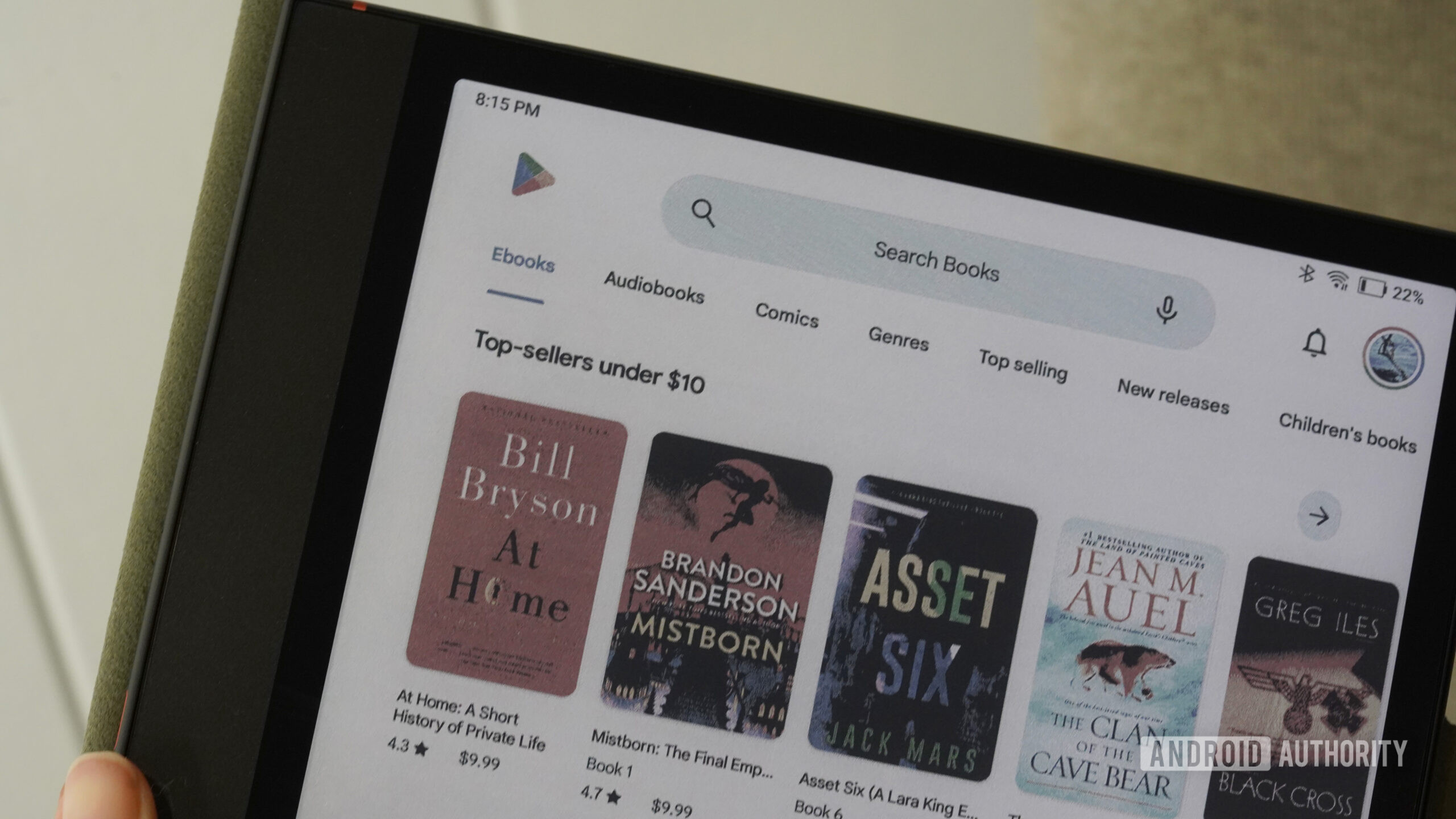
Using copyrighted text for training large language models has been a controversial topic for as long as AI has been a buzzword. That hasn’t stopped frontier labs from gaining access to books, including physical ones, to satisfy the ever-scaling need for pretraining data. The pursuit of high-quality human data has also led to legal troubles for AI companies, including Google, which is now looking to soften the blow by partnering with (and hopefully, rightfully paying) authors — and letting users access and imbibe their wisdom through Gemini Notebook (previously called NotebookLM). Gemini Notebook can be an excellent tool for digesting enormous amounts of information in books, but importing books directly may involve wading through gray swamps of skirting DRM restrictions. Google is now formally opening the gates to use information and insights from copyrighted books in its research or learning pursuits. Under the banner of “Expert Intelligence,” Google is allowing users to import owned titles from Google Play Books into Gemini Notebook and use its features, such as Audio Overviews or Infographics.
The feature may not be available for all titles purchased through Play Books, as Google notes “select ebooks” are currently available. The available library, however, isn’t small by any measure, as Google says Expert Intelligence already offers more than 100,000 titles from leading publishing houses, including Bloomsbury, De Gruyter Brill, Johns Hopkins University Press, Macmillan Publishers, O’Reilly Media, and Penguin Random House.
Google has also partnered with 15 bestselling authors, including Jennifer Wallace, Michael Pollan, and Steven Pinker, to create special notebooks with sources complementing their books. It also says that users will have the option to combine multiple titles into a single notebook for shared insights from multiple experts.
Last year, Google added the option to access copyright-free textbooks from OpenStax as a free learning resource for students, and other curious minds. The recent announcement may not only supplement the knowledge bank further, but likely also show AI labs how they can pacify authors upset about their books being used to train AI by adding a layer of authorization — and hopefully, without destroying books.
Long before AI broke the internet in late 2022, the global community of authors had locked horns with companies operating LLMs, especially frontier models such as ChatGPT and Gemini, over the unauthorized use of original texts. In July, Google is facing a class-action lawsuit from an alliance of authors and publishers for copyright infringement, alleging that titles in Google Play Books were used to train AI models without authorization.
While Google hasn’t formally responded to these allegations, the latest attempt to onboard experts could open up negotiations and help find middle ground for authors open to letting AI be trained on their creative work — with justified royalties, like OpenAI has with some major online publishers, including *Associated Press*, *Axios*, Condé Nast, *Financial Times*, *The Guardian*, and more.

Thank you for being part of our community. Read our [Comment Policy](https://www.androidauthority.com/android-authority-comment-policy/) before posting.