Gaokao Results Trigger Wave of College Admissions Scams
[Fan Yiying](https://www.sixthtone.com/users/21147/fan-yiying?source=normal_article)and

[Li Rongxuan](https://www.sixthtone.com/users/1018620/li-rongxuan?source=normal_article)
A recent investigation has found that high school graduates and their families are increasingly being lured into spending thousands of yuan by Chinese college application consultants who employ fake credentials, AI-generated advice, and predatory marketing.
Published Thursday by state broadcaster CCTV, the report comes amid the release of scores — in most regions, between June 23 and 26, this year — from the country’s highly competitive national college entrance examination, or * gaokao*.
Unlike college applications in many Western countries, which usually combine grades, an application essay, and sometimes proof of extracurricular activities, China’s gaokao uses a “score-first” system. Results and provincial rankings from the exam, taken in early June, are released two weeks later, with college applications due a few days later. Applicants must list multiple schools across different university tiers, ranked by competitiveness. A computerized system then admits students to the first university that accepts their score.
The intense pressure students and families face is in part due to the phenomenon of “sliding down,” or huadang — the “sliding” of a student’s application to lower-tier universities, usually because they overestimated their competitiveness, and failed to be admitted to any of their target schools. This fuels a huge demand for application consultants, who promise to help students secure admission into their desired institution.
The recent investigation discovered that consultants often fabricate their experience to justify higher fees. Pricing tiers are based on claimed seniority, ranging from 4,000 yuan ($590) to over 10,000 yuan ($1,470), but in reality, many consultants are rookie salespeople with less than two months in the business.
During training, staff are often taught to create false personas, such as those of academic experts. “They told me to claim I had 10 years of experience,” an industry insider, surnamed Wang, said. “They said no one usually checks, and they showed me how to Photoshop a ‘senior consultant’ certificate.”
They then run livestreaming sessions to attract parents, with some consultants relying on free AI chatbots to provide “expert” advice during livestreams. According to the investigation, one consultant was caught off guard when they struggled to operate an AI search tool to reply to a parent’s questions.
Consulting companies also infiltrate parent groups on the messaging app WeChat, planting staff who pose as parents and praise the company, asking scripted questions to boost the perceived popularity and trustworthiness of their services.
Consultants also play up tight application deadlines and exaggerate the risk of “sliding down” to scare parents into signing contracts and paying inflated sums.
Zhang, the mother of a student who recently took the gaokao in Shanghai, told Sixth Tone that families face immense pressure partly due to the uncertainty of admission outcomes, adding that she understands why families turn to professional agencies for help.
“As long as the service provider offers genuine and valuable data analysis, as well as personalized advice … then it makes sense to pay for peace of mind,” Zhang said.
However, she added that some firms deliberately inflate families’ expectations about which students are likely to get into during initial consultations, often before gaokao results come out. “When the actual scores are released and the gap between expectations and reality sets in, the agencies hint that they can use special tricks to help students get into a prestigious university,” Zhang said.
A Shanghai high school teacher, surnamed Xu, told Sixth Tone that intense gaokao pressure amplifies parental anxiety over “sliding down.” Xu said that application consultant advertisements capitalize on this anxiety. “Educators feel powerless,” he said, suggesting that universities should provide online application information sessions to expand outreach and disseminate accurate information to families.
Consultants who lack official certification and falsely advertise their services could face legal repercussions, Sichuan-based lawyer Zeng Yu told domestic media. Ads boasting “guaranteed admission,” for example, may be considered consumer fraud, with Zeng urging authorities to strengthen industry regulation.
Editor: Marianne Gunnarsson.
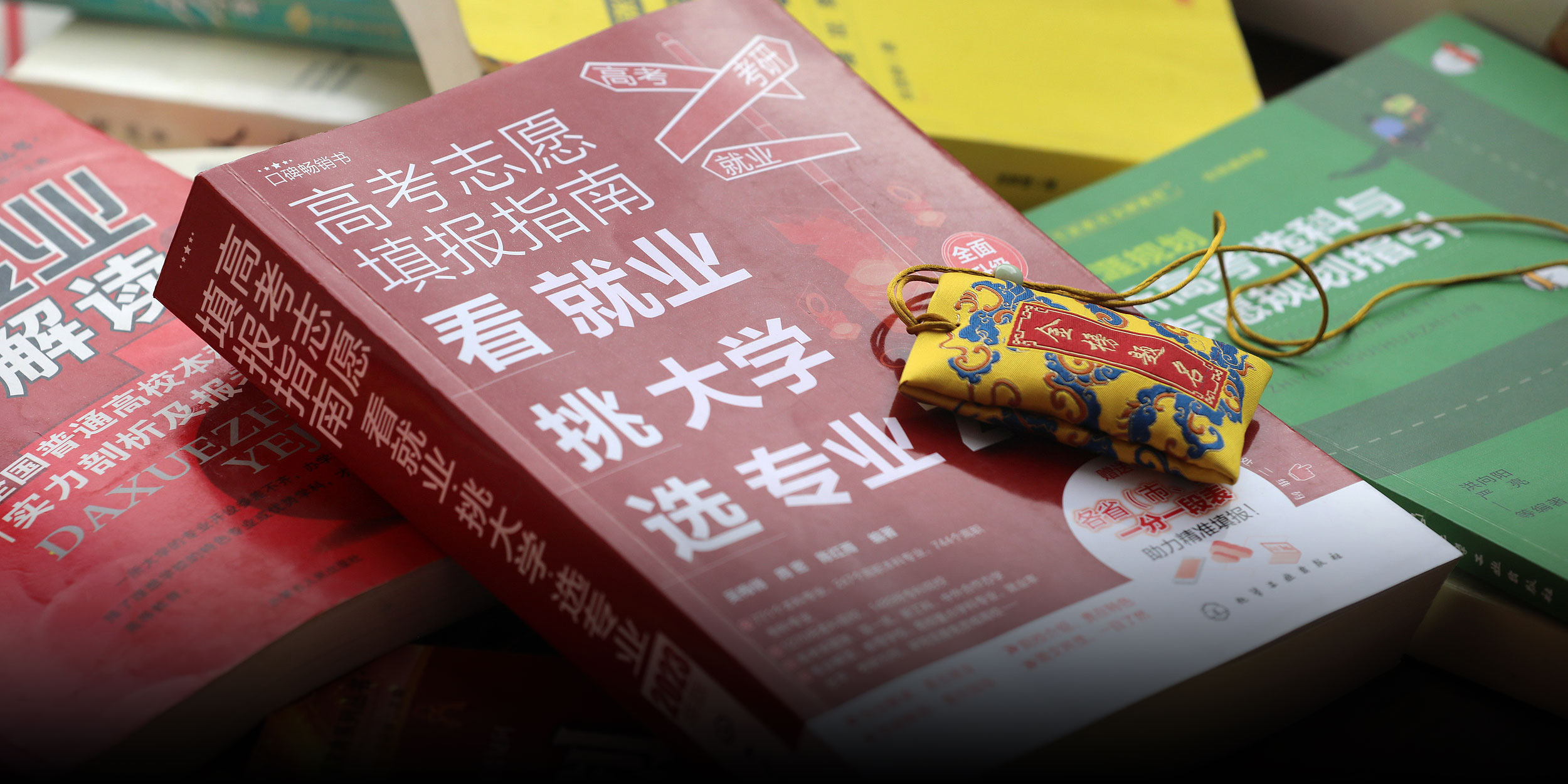
(Header image: College application guidebooks in Beijing, June 11, 2023. VCG)