Building an AI model is only one step toward delivering an AI application. Developers need to determine where intelligence runs, how it interacts with other systems, and how to maintain performance and reliability as applications evolve.
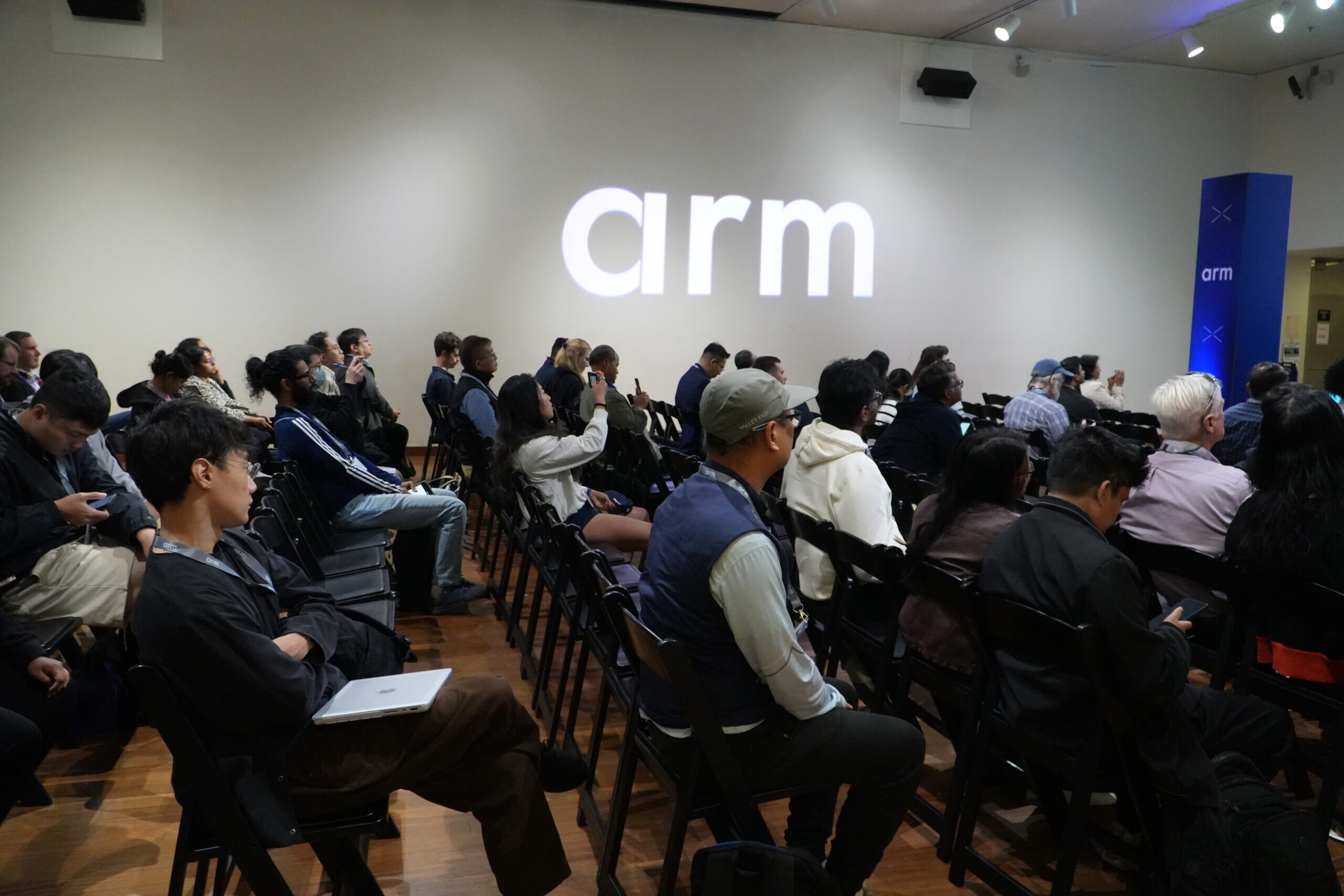
That challenge connected WeAreDevelopers World Congress North America in September with October’s Arm Create event at PyTorch, the PyTorch Conference, AGNTCon + MCPCon, and GitHub Universe events. Together, they traced the developer journey from building and optimizing models to orchestrating intelligent applications, then testing, deploying, and scaling software, through a variety of demos, presentations, partner-led sessions, and hands-on workshops.
Arm’s contributions across all these events focused on connecting the common Arm compute foundation spanning cloud, edge and physical environments with open frameworks, model optimization, device interoperability, and performance analysis. The common goal was to help developers move from individual AI capabilities to applications they could build, evaluate, and deploy.
Here are the five takeaways from the events and what they mean for the future of AI applications.
1. AI optimization starts with the application, not the model #
The largest model is not necessarily the right choice for the application. Developers increasingly need to match models and compute resources to specific applications, balancing accuracy, latency, memory, power consumption, and reliability.
At WeAreDevelopers, Alex Spinelli, SVP of AI and Developer Platforms at Arm, emphasized defining application and deployment requirements before choosing a model or runtime.
The AI Translator experience brought these decisions into practical speech-to-text, translation, and text-to-speech workflows. The private AI camera session also prompted questions about how to start building local AI applications. These conversations showed why model and hardware choices must follow application requirements.
The same emphasis on hardware-aware optimization ran through PyTorch Conference, where Arm addressed CPU inference, streaming speech recognition, and small language models on resource-constrained devices.
Evaluating audio chunk size and numerical precision together revealed trade-offs between transcription accuracy and response latency. Developers need to assess those choices against the intended interaction, rather than rely on whole-recording accuracy alone.
At Arm Create, Arm’s power-aware PyTorch profiling session brought hardware measurement into model development. In Nota AI’s hands-on workshop, developers used Arm AI Model Optimizer, built on NetsPresso® from Nota AI, to optimize the WideResNet-50 image-classification model. The exercise targeted the Arm Ethos-U85 neural processing unit (NPU) in an Alif Ensemble E8 DevKit.
Available in early access through Arm AI Portal, the tool brought graph optimization, INT8 quantization, and evaluation into a command line workflow. Attendees compared accuracy and estimated latency before exporting an ExecuTorch model file. Latency estimates came from Arm MLIA, rather than measurements on a physical board, allowing developers to assess optimization choices before testing on the target device.
2. Open software foundations are connecting AI development from cloud to edge #
Developers increasingly need to move AI applications between cloud environments, edge devices, and embedded hardware without rebuilding their software stack for each deployment target.
The WeAreDevelopers panel highlighted the complexity of supporting different processors, inference runtimes, and hardware configurations. Spinelli described Arm’s work with framework and runtime providers to improve backend optimization and portability, while preserving flexibility as runtimes evolve.
At the PyTorch Conference, Arm’s session “What Do I Do Now? Bridging the ExecuTorch Adoption Gap Through Developer Learning” addressed how developers can move from familiar PyTorch workflows toward on-device deployment. Arm’s ExecuTorch course reinforced this approach with hands-on guidance for exporting, optimizing, and deploying models on Arm CPUs and neural processing units (NPUs).
The PyTorch Foundation’s post-event recap also highlighted ExecuTorch support for Arm Cortex-M processors. Arm’s CMSIS-NN library supplies optimized neural-network kernels, helping developers deploy supported PyTorch models on microcontrollers without converting them into the format of another framework.
At Arm Create, Google DeepMind and Google AI Edge addressed on-device models and local deployment, while Renesas explored moving from PyTorch development to edge products.
Nota AI presented optimization results for Qwen2.5-0.5B-Instruct targeting AWS Graviton4, using ExecuTorch and XNNPACK. The model and hardware differed from the edge exercise, but the workflow remained consistent: create an experiment, run optimization, and compare results.
3. Agentic AI is extending from software tools into the physical world #
AI agents are evolving beyond retrieving information and invoking software tools. They are beginning to interact with sensors, cameras, robots, and other physical devices, introducing new challenges around discovery, interoperability, distributed compute, and control.
The WeAreDevelopers panel, “Building AI for the Physical World,” connected deployment constraints with long-term reliability. Arm’s Alex Spinelli joined fellow panelists Eystein Stenberg, CTO at Northern.tech; Gerardo Pardo-Castellote, CTO at RTI; and Joseph Nelson, Co-founder and CEO of Roboflow. Moderated by Tomislav Tipurić, CTO and CEO of Nephos, the discussion emphasized local processing, model versioning and rollback, evaluation in real operating conditions, and functional safety. Arm’s Raspberry Pi-based Device Connect experiences illustrated another part of that challenge by connecting AI software to physical hardware.
At PyTorch Conference, Arm’s “From Prompt to Physical Action” demonstration showed how perception, reasoning, and physical action could be distributed across multiple systems. ExecuTorch handled local speech processing on a MacBook connected to Reachy Mini, while vLLM served Llama 3.2 3B for reasoning on NVIDIA DGX Spark. Arm Device Connect linked the components through device discovery, action calls, and event feedback.
Speech audio stayed local, while transcripts, commands, and event information moved between systems. The agent used Reachy’s discovered capabilities to request actions such as speaking, nodding, and moving its head and antennas.
Device Connect’s open-source, Model Context Protocol (MCP)-compatible interfaces extend the tool-connectivity conversation into physical systems. Reusable drivers for compatible devices reduce the need for separate integrations between each agent framework and device interface.
Arm’s AGNTCon + MCPCon program extended this focus to device discovery and hardware control. While common interfaces address device discovery and communication, they do not remove the need to configure permissions, validate actions, and engineer for functional safety.
4. Agentic AI performance depends on completed work, not inference alone #
Agents retrieve data, execute code, invoke tools, maintain state, and coordinate services. Model inference is one part of that workflow, not a complete measure of application performance.
These activities place different demands on CPUs, accelerators, networking, and software infrastructure. A coding agent running tests and compiling software, for example, has different requirements from an enterprise agent coordinating database queries or customer-service workflows.
Arm’s “Agentic AI from Cloud to Edge: Building Intelligent Systems on Arm” presentation at AGNTCon + MCPCon examined this broader execution path. CPUs manage much of the orchestration, retrieval, tool execution, security, and monitoring around models, while model serving can span CPUs and accelerators. Scheduling, memory movement, and communication between services therefore become important parts of the performance equation.
A related Arm customer-service demonstration makes these requirements concrete. Built on Arm AGI CPU with LangGraph and LangChain, the application uses a CPU-hosted small language model to classify requests and route them to specialist agents. Those agents combine enterprise data retrieval, external model APIs, and tool execution to complete tasks such as scheduling meetings or initiating refunds.
Developers need to understand where time and resources are spent across retrieval, orchestration, tool execution, and evaluation, and whether the complete workflow produces the intended result.
5. AI-assisted development connects migration, testing, and performance validation #
Agentic AI is changing not only what developers build, but how they build it. AI assistants are progressing beyond code suggestions toward planning tasks, interacting with development tools, analyzing applications, and supporting testing and optimization.
At AGNTCon + MCPCon, Arm’s developer guidance connected MCP-based tool access with coding-agent setup and x86-to-Arm migration workflows. The emphasis was on giving developers a practical starting point using Arm MCP Server, setup guides, and Learning Paths.
At GitHub Universe, Arm’s session underscored that progression. The demonstration followed an existing Linux web application through migration from x86/x64 to Arm-native development, builds, GitHub Actions, and deployment. GitHub Copilot worked with Arm MCP Server and Microsoft Cobalt 200 cloud virtual machines to support the migration workflow.
The workflow then used Arm Performix to identify performance bottlenecks and validate optimizations against data from the running application. Task success, task time, and cost per successful task provided the session’s framework for evaluating the workflow.
This emphasis connected back to WeAreDevelopers, where Performix demonstrations generated practitioner interest in workload optimization and AI-agent profiling. The Builder Zone’s containerized environments and embedded VS Code gave developers a familiar setting for experimentation.
Together with Arm AI Portal, these capabilities reflect a shift toward development tools that serve both human developers and the agents working alongside them.
Turning AI innovation into practical developer workflows #
These events highlighted what developers need to succeed. models suited to their requirements, familiar workflows, connected systems, and practical ways to validate results.
Arm addresses these needs through open frameworks, efficient compute, device interoperability, and tools for migration and optimization. Backed by Arm’s expertise and ecosystem support, developers can move confidently from experimentation to production without navigating that journey alone.
Choose a workflow, run it on a supported Arm target, and measure how it meets your application’s requirements. Continue with Arm’s Learning Paths, courses, and developer resources.
Any re-use permitted for informational and non-commercial or personal use only.