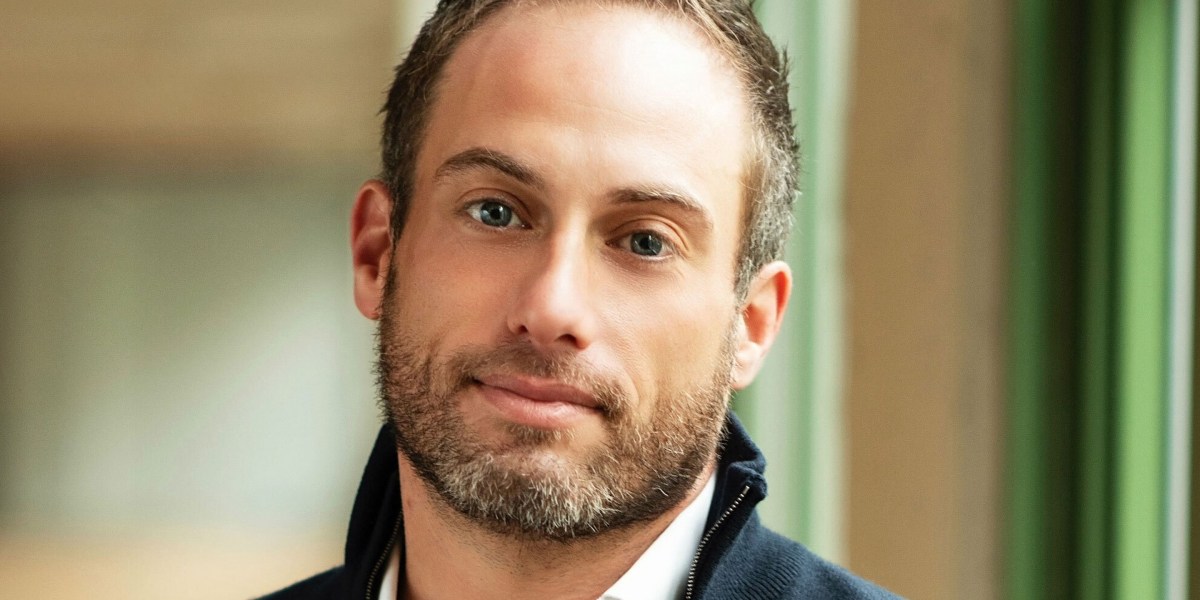
Jonathan Winer thinks the U.S. is fighting the wrong manufacturing war. His startup, Foundational Industries, just raised a $25 million seed round, Fortune learned exclusively, to build factories where AI runs the whole operation rather than bolting automation onto an old assembly line. The round was led by BoxGroup and Zigg Ventures, with Abstract Ventures, Adverb Ventures, Buckley Ventures, and Offline Ventures participating.
Rather than retrofitting a factory with a robot arm here and a vision sensor there, Foundational makes physical products, starting with data-center hardware, using factories designed from scratch to be run by software.
Winer, who spent 25 years at Alphabet’s Sidewalk Infrastructure Partners deploying over $1 billion in capital, told me the seed money isn’t meant to fund a giant factory yet. “What this is allowing us to do is to sort of build a minimum viable product,” he said. “We’ve actually built the entire factory in software already using software emulators.”
Foundational’s first customers are data-center developers, neoclouds, and chipmakers who need custom rack enclosures now that new AI silicon runs at different voltages and cooling requirements. They declined to disclose customer names.
But Winer’s real argument is about China. The common wisdom in Washington is that China’s manufacturing dominance is built on cheap labor and lower-quality copying. Winer says that’s outdated. “Many of their factories are some of the most advanced automated factories in the world, and they are increasingly using not just international industrial automation, but also homegrown and home produced solutions,” he told me. China has poured over $1 trillion into advanced manufacturing over the past decade, backed by state subsidies and what Winer calls “a really dense industrial ecosystem” that lets new products get designed and launched fast.
That density is precisely why he thinks a head-on copy of China’s approach won’t work. “We just don’t have the people or the skill sets to do it,” he said. “And even if we did, it’s probably not economically competitive to China.”
So Winer’s thesis is to skip that fight entirely and build a different kind of factory. His argument rests on two American advantages: sophisticated AI models and researchers (which is now a shrinking talent gap) and far more AI compute. That combination, he says, lets Foundational’s system take a customer’s “product intent” and almost instantly generate a bill of materials and manufacturing process (a step that traditionally took months of manual design work).
There’s also a structural weakness in China’s model that Winer is betting against. He argues China’s factories, however advanced, are still built around older-style automation that needs constant utilization to justify state subsidies. “They kind of need to feed the beast now,” he said. His wager is that AI-native factories—cheaper and faster with each one built—can give the U.S. a much-needed edge.
See you tomorrow,
Lily Mae LazarusX:
@LilyMaeLazarus Email:
lily.lazarus@fortune.com Submit a deal for the Term Sheet newsletter
here. Joey Abrams curated the deals section of today’s newsletter. Subscribe here.
VENTURE DEALS
- CAIS, a New York City-based alternative investment platform for independent financial advisors, raised $170 million in Series D funding.
Vista
Equity
Partners led the round and was joined by
AllianceBernstein and others.
- Eliyan, a Santa Clara, Calif.-based developer of connectivity technologies designed for AI compute, memory, and networking systems, raised $145 million in Series C funding.
Seligman
Ventures led the round and was joined by
Cisco
Investments and
Lumentum.
- Onyx Security, a Tel Aviv, Israel and New York City-based AI control company, raised $113 million in Series B funding.
Bessemer
Venture
Partners led the round and was joined by
Cyberstarts,
TCV,
Conviction,
FirstMark,
Vintage,
QuantumLight, and
G
Squared.
- groundcover, a Tel Aviv, Israel-based observability platform, raised $100 million in Series C funding. One
Peak led the round and was joined by
Morgan
Stanley
Expansion
Capital and existing investors
Zeev
Ventures,
Angular
Ventures,
Heavybit, and
Jibe.
- ChipAgents, a Santa Clara, Calif.-based agentic AI platform for semiconductor design, raised $60 million in Series A2 funding from
B Capital,
Bessemer
Venture
Partners,
Micron, and others.
- P-1 AI, a San Mateo, Calif.-based developer of an AI mechanical and electrical engineer designed for industrial teams, raised $50 million in Series A funding.
New
Enterprise
Associates led the round.
- Terminal, a Toronto, Canada-based provider of a unified telematics-integration platform for insurance, fleet-management, and logistics companies, raised $20 million in Series A funding.
Battery Ventures led the round.
- Centralize, a San Francisco-based relationship intelligence platform for enterprise revenue teams, raised $19 million in funding.
NEA led the round and was joined by
Salesforce
Ventures,
Y Combinator,
20SALES,
Ritual
Capital, and others.
- Henry AI, a New York City-based AI platform automating back-office knowledge work for commercial real estate teams, raised $16.5 million in Series A funding.
FirstMark
Capital led the round and was joined by
Thomson
Reuters
Ventures and existing investors.
- UnitAI, a Boston, Mass.-based physical AI company developing warehouse-automation technology, raised $12 million in seed funding. Prologis
Ventures,
Dynamo
Ventures, and
Ground Up Ventures led the round and were joined by
eGateway
Capital,
Recursive
Ventures,
Think +
Ventures,
ZEP
Fund, and
Crosscourt.
- Pangram Labs, a Brooklyn, N.Y.-based AI detection platform, raised $9 million in funding. Menlo Ventures led the round and was joined by
Haystack,
ScOp
Venture
Capital,
Script
Capital, and
Cadenza.
- Mirae, a New York City-based AI-driven continuous care platform for autoimmune disease and other complex chronic conditions, raised $5.4 million in funding.
Oxford
Science
Enterprises led the round.
- FAST Metals, a Stamford, Conn.-based mining technology company, raised $4.3 million in pre-seed funding. New
Climate
Ventures led the round.
- CopySight, a Los Angeles, Calif.-based AI IP governance company, raised $3 million in seed funding. Mucker
Capital led the round and was joined by
Taisu
VC,
Flint
Capital, and
Yellow Rocks!
- MASAJ, a London, U.K.-based bodywork brand, raised £1.5 million in funding. FIGR
Ventures and
Sorven
Capital led the round.
- Dimension, a Los Angeles, Calif.-based social commerce tech company, raised $1.7 million in seed funding from
Science Inc.,
UpscaleX,
OpenSky, and others.
PRIVATE EQUITY
-
CHAOS Industries, backed by Valor Equity Partners, acquired Atropos Group, a New York City-based defense technology company specializing in autonomous aircraft systems. Financial terms were not disclosed.
-
Lafayette Instrument, backed by Branford Castle, acquired Avisoft Bioacoustics, a Glienicke/Nordbahn-based bioacoustics company. Financial terms were not disclosed.
-
Vista Equity Partners agreed to acquire Quantios, a London, U.K.-based provider of SaaS solutions to the trust and corporate services industry. Financial terms were not disclosed.
FUNDS + FUNDS OF FUNDS
- Jump Capital, a Chicago, Ill.-based venture capital firm, raised $350 million for its eighth fund focused on tech companies.
Subscribe to Fortune Gulf Brief. Every Tuesday, this new newsletter delivers clear-eyed, authoritative intelligence on the deals, decisions, policies, and power shifts shaping one of the world’s most consequential regions, written for the people who need to act on it.