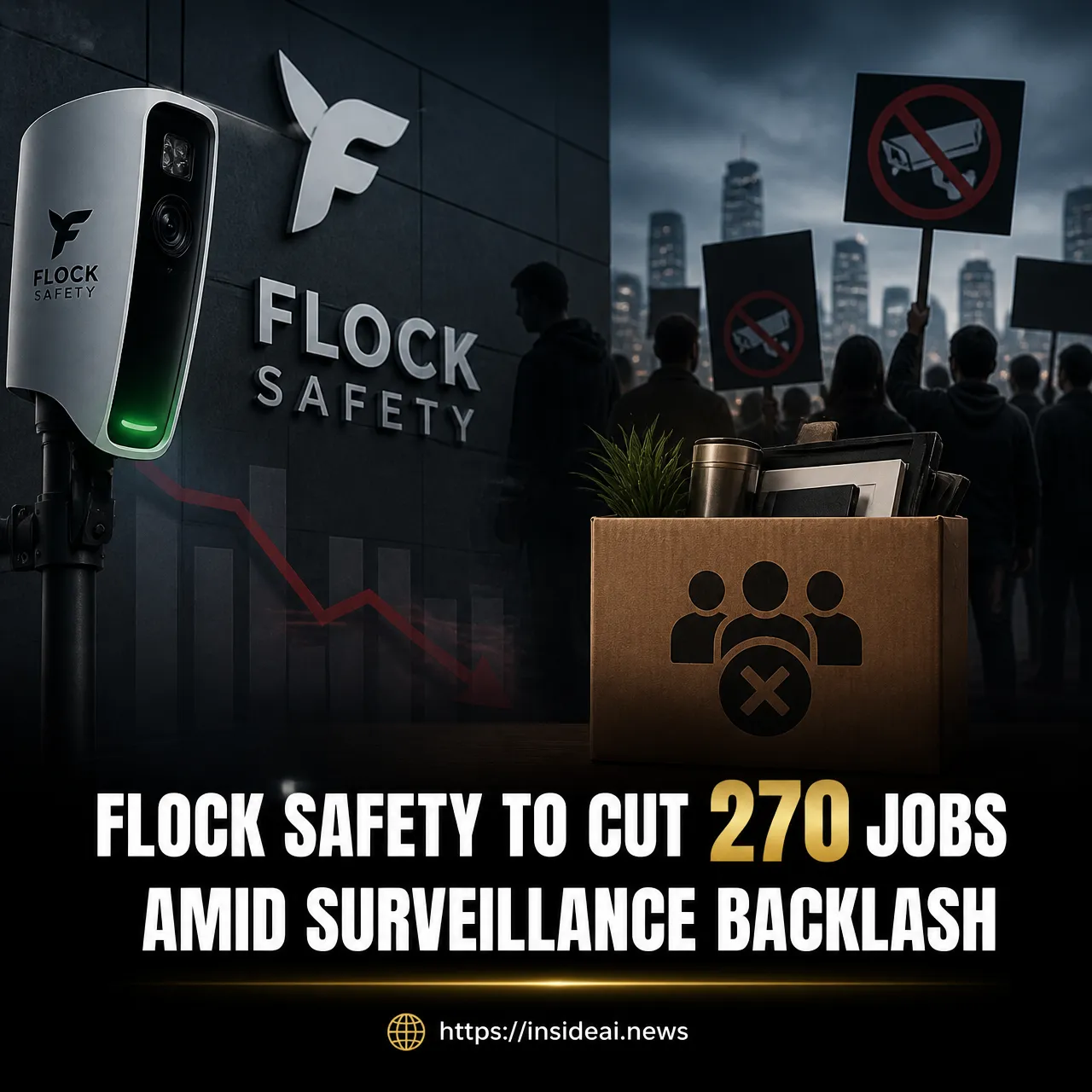
October 9, 2026, (Inside AI) — Flock Safety, the Atlanta-based maker of AI-powered license plate readers, plans to cut roughly 270 jobs, or about 18% of its workforce, according to people with direct knowledge of the plans. The layoffs follow a voluntary buyout program and come as the company faces escalating opposition from lawmakers, regulators, and communities across the country.
The cuts are expected to take effect at the end of the month. Flock declined to comment. The company, founded in 2017, has about 1,500 employees and has raised more than $950 million from venture capital investors. Its most recent round, a $275 million raise in March led by Andreessen Horowitz, valued the company at $7.5 billion.
The layoffs mark a sharp reversal for a startup that had become one of the most richly funded players in public safety technology. Flock operates a network of roughly 120,000 AI-powered cameras across 49 states, automatically reading license plates and recording vehicles as they pass. The company provides cameras and software to more than 4,800 law enforcement agencies and nearly 1,000 businesses.
That scale has made Flock a target. In September, Florida banned automated license plate readers from state highways, citing privacy risks tied to Flock's cameras. Investors in Home Depot recently demanded reviews of the retailer's partnerships with surveillance technology vendors after reports that Flock's data was used in immigration enforcement. A privacy lawsuit in Virginia alleges that the widespread deployment of Flock's AI-powered cameras constitutes warrantless surveillance.
Public opinion is split. A recent Reuters/Ipsos poll found that 38% of Americans support the use of Flock cameras in their community, while 47% oppose their use. The remaining respondents were unsure. The divide reflects a broader unease with AI-driven surveillance that has become a flashpoint in this year's midterm elections, with candidates increasingly attacking opponents over ties to the technology. Flock's job cuts also raise questions about the company's growth trajectory. The funds raised in March were intended to support a new US manufacturing facility and an upcoming push into drone products. It remains unclear whether those initiatives will proceed as planned. The company has not disclosed a timeline for the drone expansion or the manufacturing facility.
The layoffs follow a voluntary separation program announced in September, which asked employees to apply if they wanted to leave. That program did not achieve the necessary reductions, according to sources. The company has not publicly confirmed the total number of employees who accepted the buyout.
Flock's predicament illustrates a widening tension in the AI surveillance sector. Venture capital continues to flow into companies that promise to make cities safer, but public resistance and regulatory scrutiny are mounting. In Florida, the ban on license plate readers from state highways represents the most concrete regulatory action against the technology to date. Other states may follow.
The Virginia lawsuit, if it proceeds, could set a legal precedent for how courts view AI-powered surveillance networks. The case alleges that Flock's cameras collect and store data without a warrant, violating Fourth Amendment protections against unreasonable searches. Flock has argued that its technology helps investigate and solve crimes, and that it complies with all applicable laws.
For now, the company's immediate challenge is managing the fallout from the job cuts. Employees will leave at the end of October. The layoffs affect roughly 18% of the workforce, a significant reduction for a company that has grown rapidly in recent years. Flock has not said whether further cuts are planned. The broader AI industry is watching. Flock's experience could serve as a cautionary tale for other startups that rely on government contracts and public acceptance. As AI surveillance becomes more pervasive, the line between public safety and privacy invasion will only grow more contested. Flock's next moves, including its drone expansion and manufacturing plans, will be closely scrutinized by investors, regulators, and the communities where its cameras are installed.
Read: AI Liability Debate Intensifies as OpenAI Faces Lawsuits and Investigations