[ AI Models & Platforms
](https://www.unite.ai/series/artificial-intelligence/)


[Add Unite.AI to your preferred sources on Google](https://www.google.com/preferences/source?q=unite.ai)
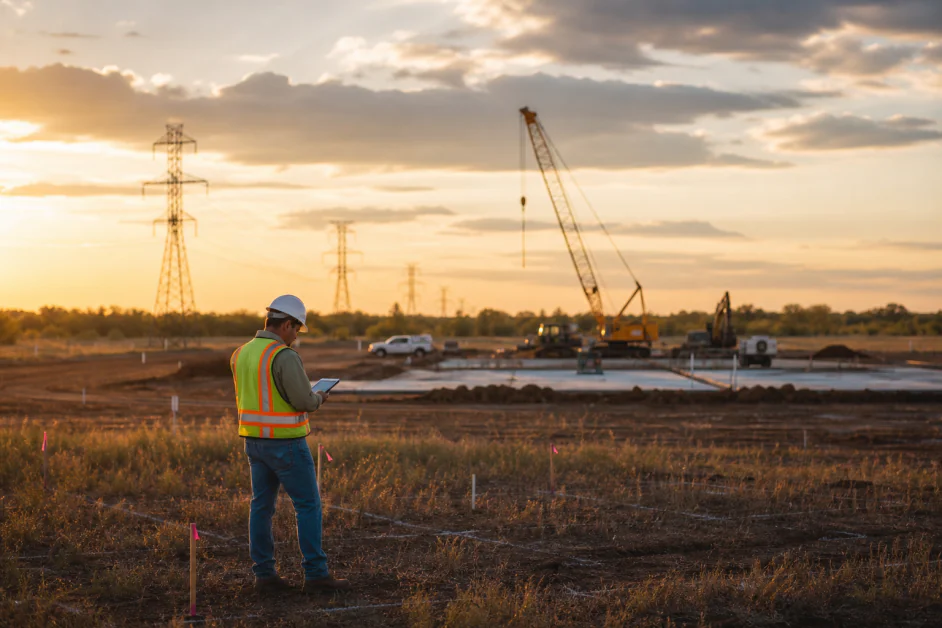
Flexential has purchased 110 acres in Kaufman County, Texas to build the fourth and largest data center in its Dallas-Fort Worth portfolio. The first building, in Talty, southeast of the metro, has power secured for 36 megawatts, and the company expects to open it to customers in late 2028.
That single building will carry more electrical capacity than everything the colocation operator runs in the market today. Its three existing Dallas-area facilities, in downtown Dallas, Plano and Richardson, hold more than 459,000 square feet and 28.4 MW between them.
The campus as Flexential has described it:
Phase 1: 375,000 square feet, 36 MW of secured power, for wholesale and multi-tenant colocationFull build-out: three 36 MW buildings, 108 MW total, added as later phases are developedSchedule: site work in early 2027, first customer availability in late 2028Design: closed-loop cooling and a target water usage effectiveness of zero
Utility service will reach the site through a phased ramp-up that the company says is sized to avoid straining the local grid. Each additional building therefore arrives with its own increment of power rather than depending on one large interconnection secured up front.
Why 36 megawatts is the unit of construction #
In Dallas, the binding constraint on a new data center is the date the power turns on. Matt Baumann, Flexential’s vice president of real estate, said the company went looking specifically for a parcel where utility power and fiber access were already confirmed, and described the purchase as buying enough room to serve customers eight to 10 years out.
“Companies are planning two and three years out and still struggle to secure the infrastructure they need,” said Ryan Mallory, the company’s chief executive. He said the development pipeline in the metro cannot keep pace with demand.
A 36 MW hall is small next to the gigawatt campuses hyperscalers announce, which is the shape of the segment Flexential works in. Its buyers are enterprises and AI companies taking single-digit to low-double-digit megawatt blocks, who cannot lease an entire building and cannot sit in an interconnection queue on their own account. Aggregating that demand behind one secured power position is the business.
The zero water-usage target in the design means effectively no water consumed for heat rejection, which shifts the thermal work onto electricity and equipment. That is the same trade-off pulling money into advanced cooling systems across the sector, and it is what makes a high-density hall possible on a site where water rights would otherwise be a planning problem.
Dallas builds fast and stays full #
CBRE’s Global Data Center Trends 2026 report, published June 17, 2026, put Dallas-Fort Worth inventory at 1,249.4 MW at the end of the first quarter, up 43.7% year over year and enough to make it North America’s third-largest colocation market. Vacancy fell to a record low of 1.8%. Of the 716.7 MW under construction, 88% was already leased.
One comparison in that report explains the Kaufman County purchase better than any of the growth figures. Over the same year, DFW added 379.9 MW of new inventory and finished with 1.4 MW more available space than it started with. Asking rents in the market were flat, while Chicago’s rose 14.7%.
CBRE also reported that grid interconnection timelines in the metro had not improved materially over the preceding six to 12 months, with Oncor Electric running load-cluster studies to work out how new data center demand reaches the grid.
The Texas queue behind the megawatts #
ERCOT, which operates the Texas grid, told a state Senate committee in April 2026 that it was tracking roughly 410 gigawatts of large industrial loads seeking interconnection as of late March 2026, about 87% of it data centers. Of that total, 5,778 MW was energized and actually drawing power. Requests in the service territory of Oncor, the state’s largest transmission provider, accounted for 259 GW on their own.
The grid operator is replacing its project-by-project study method with a batch process that clusters applications roughly every six months and reserves the capacity each project is allocated. Under the older approach, a new request in the same transmission zone could invalidate studies already completed for earlier projects, pulling them into restudies that pushed approvals out by years.
That backlog is why a secured 36 MW block is worth building a campus around, and Texas keeps drawing large projects regardless: land, gas and transmission are available at a scale the older hubs cannot match. Recent examples include the 600 MW campus Idemitsu agreed to fuel and Meta’s El Paso campus, where BlackRock took a majority stake (BLK ).
Flexential says it operates more than 40 data centers with over 380 MW online or under development across 18 US markets, and the Kaufman County purchase follows land acquisitions near Denver, in Hillsboro, Oregon, and in Norcross, Georgia. Site work in Talty starts in early 2027, the first 36 MW comes available in late 2028, and the second and third buildings follow as their power does.