cd /news/artificial-intelligence/first-response-from-the-project-sunc… · home › topics › artificial-intelligence › article
[ARTICLE · art-161351] src=blog.google ↗ pub= topic=artificial-intelligence verified=true sentiment=↑ positive

First response from the Project Suncatcher prototype satellite

Google received the first AI response from a data center-class TPU in orbit, downlinked from its Project Suncatcher prototype satellite during a ground-station pass over Svalbard, Norway, the company said. The satellite, launched October 1, ran the onboard Gemma 4 open model to generate a haiku about being in space, following weeks of commissioning that included powering up the host and TPU trays and early machine learning tests. Google next plans tests of TPU performance under thermal stress and radiation exposure, with a milestone of twin interconnected satellites targeted for 2027.

by read1 min views1 publishedOct 31, 2026
First response from the Project Suncatcher prototype satellite
Image: Google AI Blog

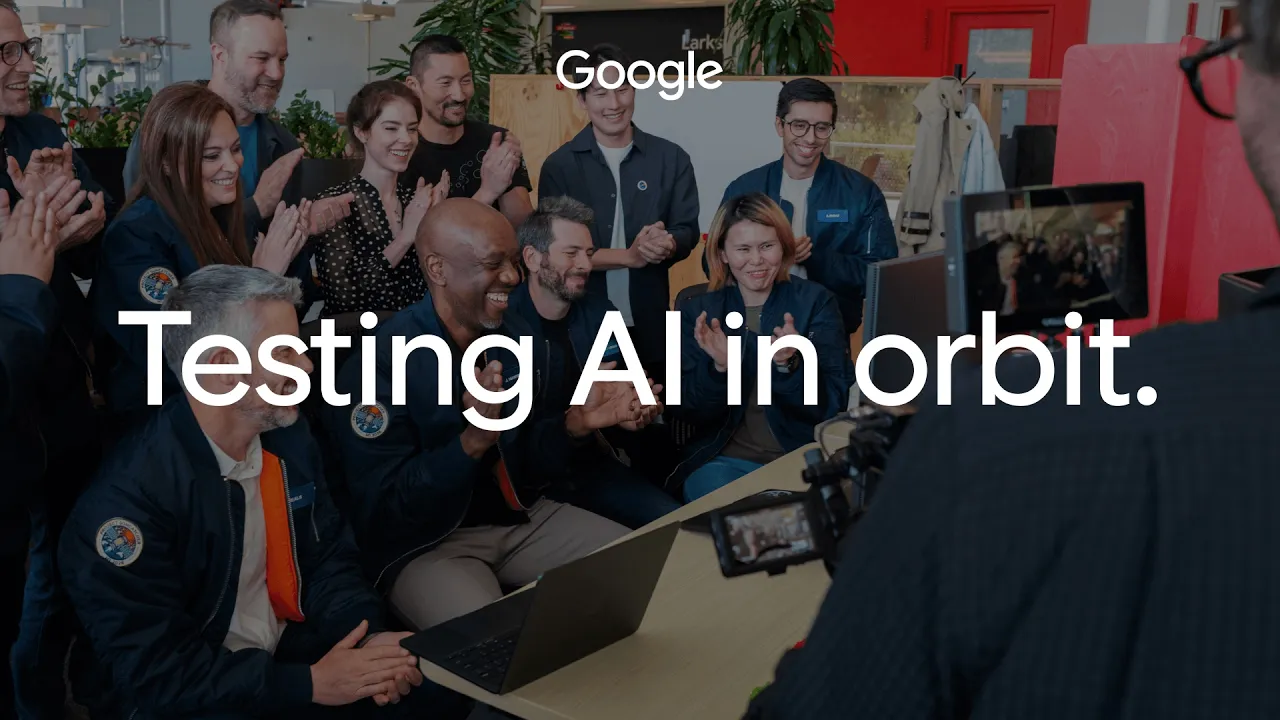
On October 1, we launched our prototype satellite for Project Suncatcher. The launch marked the first step in our long-term research moonshot to explore powering AI compute in space. Since then, we've spent the last few weeks completing our commissioning checklist, which included powering up the host and TPU trays and successfully running early machine learning tests. This week, we reached our "Hello World" milestone: the first-ever AI response from a data center class TPU in orbit.

During a ground-station pass, we uplinked our first prompt to our onboard Gemma 4 open model, asking it to generate a haiku about being in space. As the satellite passed by Svalbard, Norway, the downlinked poem confirmed success:

Blue marble below Data streams in silent graceStarlight feeds my core. ✨

Following this initial output, we tested space-themed limericks and telemetry prompts reporting the technical status of the payload systems. Next, we will continue with a series of tests to evaluate how TPUs perform under thermal stress and radiation exposure in orbit. Verifying our TPUs can reliably execute workloads in space paves the way for our next milestone of twin interconnected satellites in 2027.

Our chips have officially earned their space wings — an important achievement on the long road ahead for this cosmic moonshot.

── more in #artificial-intelligence 4 stories · sorted by recency
── more on @google 3 stories trending now
sponsored brought to you by zahid.host 4,200+ EU-deployed projects
reading about agents? ship yours in a single git push.

Run your AI side-project on zahid.host

EU-based hosting, git-push deploys, automatic HTTPS, no cold starts. Free tier with a custom domain — perfect for shipping the agent you just read about.

$git push zahid main
→ Live at https://your-agent.zahid.host ✓
Get free account → Pricing
from €0/mo · no card required
LIVE [news/first-response-from-…] indexed:0 read:1min 2026-10-31 · —