Member-only story
How search progressed from exact-term matching to systems that decide how to gather evidence. #
Motivation #
A search box can create the impression that a computer understands a question. For much of the history of information retrieval, that impression was misleading. A system could locate the words a person typed, rank the documents containing them, and return a long list without fully understanding what the person actually meant. The familiar experience of receiving many results but no useful answer begins with this gap between matching language and understanding intent.
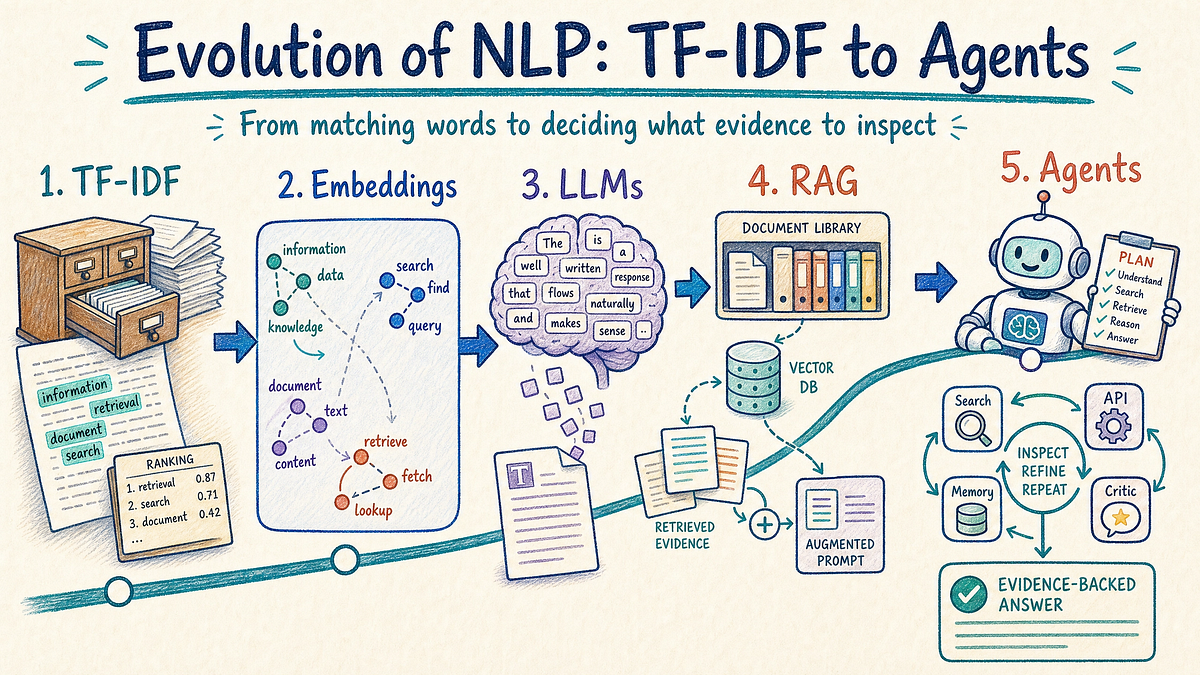
The progression from early keyword retrieval to modern agentic systems matters because each stage changes the work assigned to the machine.
- Early systems asked users to choose the right vocabulary.
- Semantic retrieval learned to connect different expressions of the same idea.
- Large language models made fluent answers possible, but exposed a new problem: a model cannot rely on information that falls outside its training material.
- Retrieval-Augmented Generation (RAG) connected generation to external evidence, while agentic systems made the search process itself adaptive.
source & further reading
pub.towardsai.net — original article
Introducing Microsoft-Decision-1: Fast AI for Real-Time Decisions
Stop Prompting. Start Orchestrating: The Architecture Behind Reliable Autonomous AI Agents
Vibe Coding Security Checklist: 12 Checks You Should Actually Run (2026)