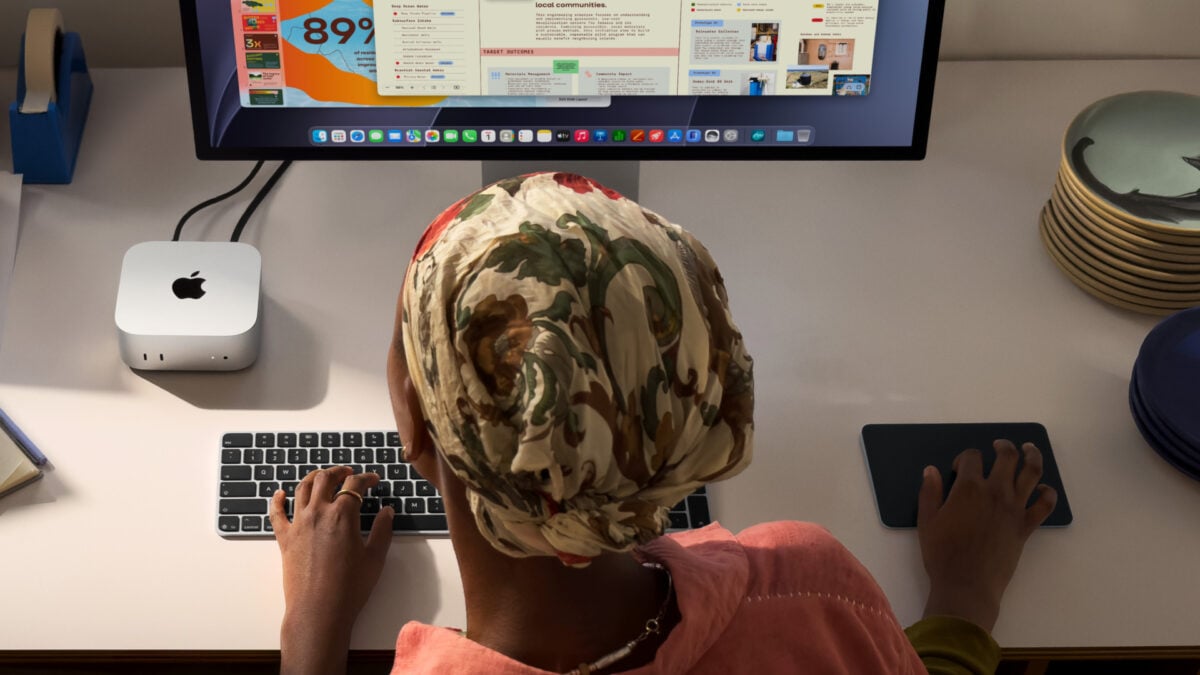
Just like the M6 Mac mini set to launch Sept. 22, the next generation of small-scale computers isn’t promising to be mere pint-sized PCs for your desk; they want to convince you they’re built to run all that ultra-hyped agentic AI locally.
For instance, Asus calls its newly revealed Ascent QN10 box the “world’s first” mini PC built for agentic AI. That kind of puffery seems like an incredible misnomer, considering just how many of this same kind of device have come over the last two years. Gizmodo just reviewed a Geekom A9 Max sporting a lower-end 12-core AMD chip inside. However, Asus wants to make this claim thanks to its 18-core Qualcomm Snapdragon X2 Elite chip inside. It’s a 2025 CPU boasting a larger, 80 TOPS (trillions of operations per second) NPU for faster background AI tasks. And here’s the bigger consideration. This will not be a cheap machine. Asus plans to sell a version with 16GB of RAM for $1,350. A version with 32GB of memory will cost $1,700. There are even more of these tiny AI boxes incoming. Lenovo wants to sell you one or more ThinkCentre X Ultra workstations with a more powerful AMD Ryzen AI Max+ PRO 495 chip and up to a whopping 128GB of unified memory. It will also cost you $3,700 for the base model at launch in November.
It’s clear companies want to compete with Apple, but their options are currently limited. Earlier this month at IFA, Acer revealed its SFF RTX Spark, another extra-tall mini PC that contains Nvidia’s upcoming high-powered chip. That’s going to run a 20-core Grace CPU co-developed with MediaTek and a 6,144-core Blackwell GPU. Nvidia has kept a tight lid on performance details, but we can assume this box will be extra expensive. Acer told Gizmodo that the SFF RTX Spark is a “second wave” PC that may not come until very late this year or, more likely, early 2027.
Apple’s M4 Mac mini was already a playful and powerful computer at launch in 2024, and just two years later it turned into the most popular, cheapest way to attempt local AI. Homebrew AI aficionados bought up all the stock, leading to Mac mini shortages that lasted all the way until June’s price hikes.
Apple’s next move was to reconfigure its tiniest Mac into an AI-forward computer with the M6 version. The M6 features new neural accelerators built into every GPU core, with Apple promising upwards of five times better AI processing on the new model versus the old one. Apple is measuring that with “time to first token,” a measure of how long it takes after sending an AI prompt before you receive a response. All attempts to benchmark AI—whether with derived metrics like TOPS (trillions of operations per second) or by timing how long it takes an AI to create a bogus generated image of sexy Sonic the Hedgehog—are very vibes-based.
We’ll see for ourselves how well the 12-core M6 stacks up against other mini PCs. The bigger issue for everyone is cost. You see, the M6 Mac mini starts at $900 ($300 more than the M4 Mac mini did at launch two years ago). However, that model only supports three Thunderbolt 4 USB-C ports. If you want three Thunderbolt 5 ports for much faster data transfer speeds, you need to pay at least $1,700 for a version with the M5 Pro. And here’s the biggest issue at play: if you want to cluster multiple Mac minis together to combine the processing and memory pool, you do need the M5 Pro version.
Tethering may be the only way to get true on-device AI performance from any of these tiny PCs. The M6 Mac mini now has an improved 170GB/s memory bandwidth, but it still may be limited to smaller 7 billion- or 8 billion-parameter models by itself, even with 32GB of unified memory. So, again, actually running on-device AI requires spending more. Ask yourself how much money you are willing to drop to live the agentic lifestyle.