According to the Congressional Budget Office, federal net interest costs are projected to reach $1.0 trillion in 2026 and climb to $2.1 trillion by 2036 #
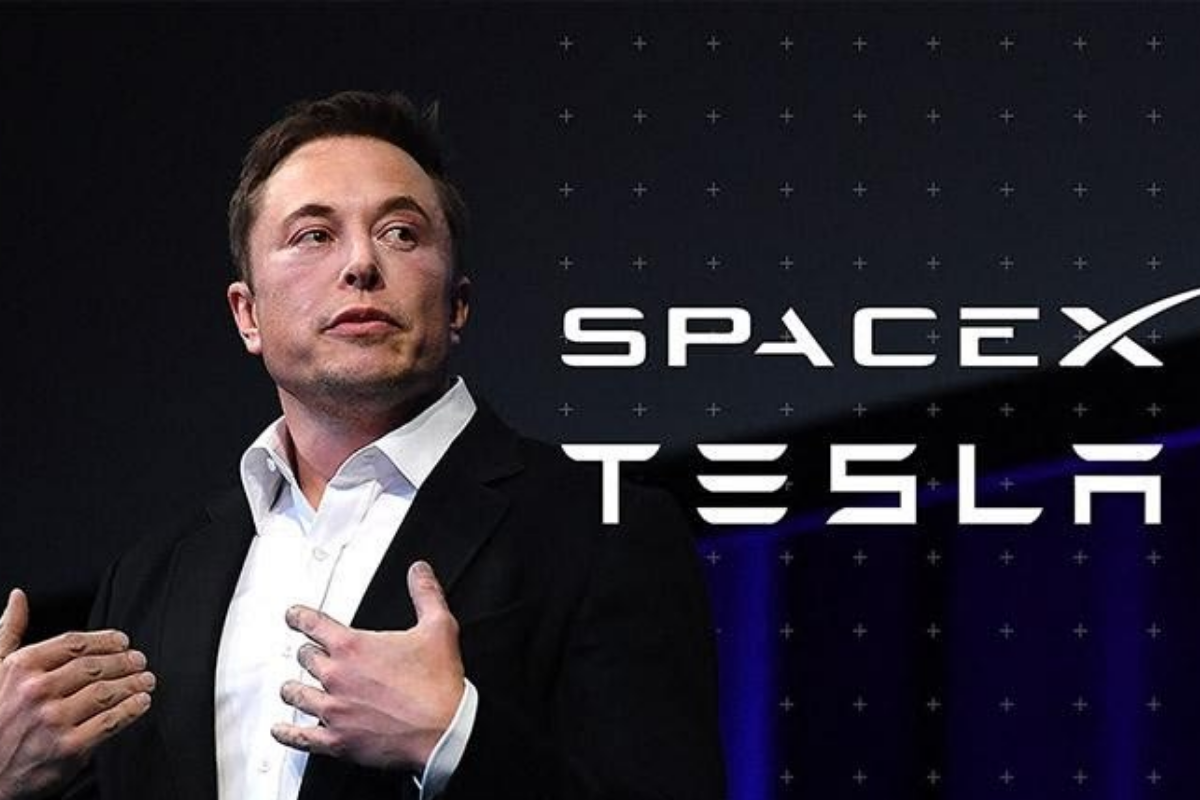
Elon Musk has warned that the United States is '1,000%' heading for bankruptcy as a country, a stark prediction delivered from California earlier this year and now resurfacing after the US national debt smashed through the $40 trillion mark in 2026.
The Tesla and SpaceX chief made the remark in an interview with podcaster Dwarkesh Patel, arguing that only rapid advances in artificial intelligence and robotics can keep America from a fiscal crack-up.
Musk said the national debt is 'piling up like crazy' and predicted the US will 'fail as a country' without a dramatic productivity boost from new technology. Pertinently, America's debt burden has been building for years, but the latest milestone is still eye-watering.
According to official Treasury figures cited in the discussion, total US national debt has more than doubled since the start of 2017 and now exceeds $40 trillion. Roughly $32.3 trillion of that is held by the public; the rest is owed internally between different arms of the federal government.
Crossing a round number does not mean Washington is about to declare bankruptcy in the corporate sense. The US Treasury can still issue bonds, and global demand for dollar assets has not suddenly evaporated. Yet the speed and scale of the borrowing, layered on top of higher interest rates, give Musk's apocalyptic vibe a little more bite than some in politics might like to admit.
The federal government has already run an estimated $1.8 trillion deficit so far in the 2026 fiscal year, fuelled by pandemic-era commitments, structurally higher spending, and the simple fact that servicing existing debt is becoming more expensive.
Every extra dollar borrowed today begets more interest tomorrow, and as old cheap debt matures, it is being refinanced at much steeper rates.
According to the Congressional Budget Office, federal net interest costs are projected to reach $1.0 trillion in 2026 and climb to $2.1 trillion by 2036.
Over the same period, debt held by the public is forecast to rise from around 101% of U.S. gross domestic product to 120%, breaking the record set just after the Second World War. That is the sort of chart that keeps central bankers awake at night, even if they will not say so quite as bluntly as Musk.
Elon Musk, Debt Doom and the 'Death Spiral' Fear #
Musk's warning slots into a wider chorus of alarm from investors and economists who worry about what they call a debt 'doom loop.'
Ray Dalio, founder of hedge fund giant Bridgewater Associates, has said the US is moving toward a 'debt death spiral,' in which the government must borrow simply to pay interest, creating a self-reinforcing cycle.
Dalio's take diverges from Musk on one key point. He does not expect a legal default or a formal bankruptcy event. Instead, he has argued that the US Federal Reserve would eventually print money and buy government debt to keep the system functioning, with the cost landing on savers through a slow, or not so slow, destruction of purchasing power.
'There won't be a default, the central bank will come in and we'll print the money and buy it,' Dalio said. 'And that's where there's the depreciation of money.' Musk has echoed that fear in cruder terms, warning that if current trends continue, 'the dollar's going to be worth nothing.'
The erosion of the dollar's value is not just a theoretical future. The Federal Reserve Bank of Minneapolis estimates that $100 in 2025 has the same purchasing power as about $11.61 did in 1970. Layer those figures on a chart and you do not need to be Musk to see why households feel poorer even when their wages rise on paper.
How Ordinary Americans Fit Into Musk's Worst-Case Scenario #
None of this means a $40 trillion invoice will land in Americans' post boxes. The pressure is subtler and, in many ways, more corrosive. Higher public borrowing can crowd out other spending, keep interest rates uncomfortably high and, if the central bank leans on the printing press, hollow out savings.
Investors have been trying to work around that risk for decades. Dalio, for one, has long pushed diversification and argues that most portfolios do not hold 'an adequate amount of gold.'
The yellow metal is finite, cannot be conjured out of thin air and is not tied to a single country's promises. In bad times, when trust in governments and currencies wavers, investors often rush into gold, driving its price higher.
Over the past five years, as inflation eroded the dollar's value, gold prices have climbed about 144%. JPMorgan chief executive Jamie Dimon has reportedly suggested that, in this environment, gold could 'easily' reach $10,000 an ounce, although that remains a prediction rather than a timetable.
Others have turned to bricks and mortar as an inflation shield. The S&P CoreLogic Case-Shiller US National Home Price Index rose 87% over the past decade, underpinned by strong demand and tight housing supply.
Property does not come without headaches, from high mortgage rates to leaky sinks, but rising rents and values have historically been one way to stay ahead of inflation.
The boom has also spawned a wave of platforms that promise to make real estate and other hard assets more accessible through fractional ownership or private deals. Some, like niche gold retirement accounts and online real estate vehicles, pitch themselves squarely at Americans who look at charts of the national debt and quietly panic about their pensions.
The US Treasury, the Federal Reserve and the White House have all argued that, handled carefully, current debt levels remain manageable for a rich, growing country with the world's reserve currency. Critics counter that this is precisely what every complacent empire has told itself on the way down. On that point, Musk, of all people, seems determined not to be subtle.
© Copyright IBTimes 2026. All rights reserved.