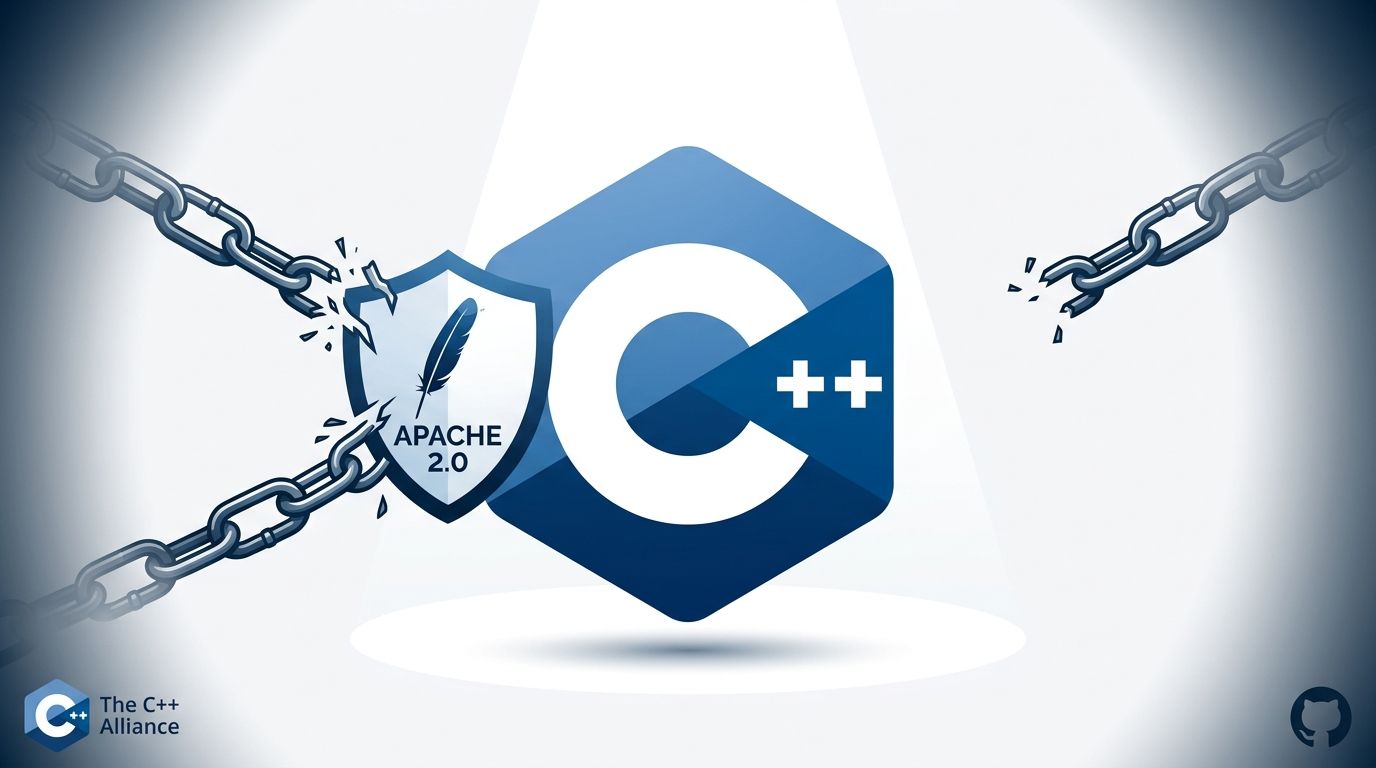
Yesterday, Edison Design Group dropped the source code for its C++ compiler front-end on GitHub under Apache 2.0. Most developers will scroll past this. That would be a mistake. If you’ve written CUDA code in the last twenty years, used IntelliSense in Visual Studio, or compiled with Intel’s classic icc, your code has run through this EDG C++ front-end parser — you just didn’t know it.
What EDG Is — And Why You’ve Already Used It #
Edison Design Group is a six-person company founded in 1988 that has done exactly one thing for three decades: build the parsing layer of C++ compilers. Not the part that generates machine code — the part that reads your C++, parses it, and understands the structure of what you wrote. For most of its history, it was the only commercially available, production-grade C++ front-end of its kind.
Three major toolchains licensed it:
- NVIDIA CUDA (NVCC) : EDG’s front-end is the only parser that can translate CUDA source code to LLVM IR. Every CUDA kernel you’ve ever compiled ran through EDG.
- Microsoft Visual Studio IntelliSense : The autocomplete and error highlighting in Visual Studio uses EDG’s C++ parser — separate from MSVC’s own compiler, but quietly present in every C++ session.
- Intel C++ Compiler Classic (
icc) : Used EDG for parsing. Intel deprecatediccin oneAPI 2024, so this dependency is fading — but if you’ve ever tuned HPC code with Intel’s classic toolchain, EDG was parsing it.
This is not a niche compiler project. It is infrastructure. And as of September 30, 2026, anyone can read it, fork it, and contribute to it.
Why It’s Open Source Now #
Edison Design Group announced in 2025 that it would wind down in 2026. Founder J. Stephen Adamczyk is retiring, and John Spicer — the engineer who drove EDG’s C++ standards implementation for decades — confirmed the company’s closure at the November 2025 ISO C++ standards meeting, with committee chair Herb Sutter acknowledging the transition publicly.
This isn’t a product launch. It’s infrastructure preservation. Thirty years of compiler work — the correctness, the dialect emulation, the rigorous standards conformance — was about to disappear behind a closed door when the company shut its doors. The C++ Alliance stepped in as the new nonprofit steward. The source went public on September 30, exactly as promised.
John Spicer framed the transition plainly: “A change of steward, not a change of course.”
How the Open Source Model Works #
The EDG front-end is now at github.com/edgcpp/compiler under Apache 2.0 — a license that commercial tool vendors can work with. The C++ Alliance, which also fiscally sponsors the Boost C++ Libraries since 2024, becomes the professional maintainer. John Spicer chairs the Fiscal Sponsorship Committee.
Development runs on three tracks: community pull requests, ongoing Alliance maintenance, and collectively funded larger features. The core principle is strict: one codebase, for everyone. No proprietary fork is retained — whatever ships, ships to all users simultaneously. If this resembles LLVM’s funding model, the parallel is intentional. It is the closest viable structure for sustaining compiler infrastructure that commercial vendors depend on but no single company wants to own alone.
What Actually Changes for Developers #
If you use NVCC or Visual Studio IntelliSense today: nothing changes immediately. Those tools ship their own compiled binaries; the open-source release doesn’t trigger a rebuild of your toolchain. Your workflow is untouched for now. The meaningful shift is for tool builders. You can now build on top of the most standards-conformant C++ parser in existence — the one that handles dialect emulation for GCC, Clang, and MSVC simultaneously, and has 30 years of correctness work baked in. Previously, that required a commercial license. Now it requires a pull request.
There’s also a transparency gain worth noting. The C++ front-end that parsed CUDA code for two decades is now auditable by anyone. For security researchers, compiler engineers, and developers with subtle CUDA parsing questions, that access matters more than it might first appear. Community discussions are already active in the Hacker News thread and the CppLang Slack #edgcpp channel.
The harder question is sustainability. The C++ Alliance has a private endowment and LLVM-experienced engineers on staff — this isn’t a volunteer project. But the open question is whether NVIDIA and other major commercial users will contribute meaningfully, or treat the release as a maintenance outsource and stay on the sidelines. Intel’s open-source retrenchment in 2025 — it archived key projects and shut down its evangelism program — suggests that kind of corporate investment is less reliable than it was five years ago. NVIDIA’s CUDA dependency is the strongest ongoing incentive for real contribution. The community will find out soon enough.
For now: thirty years of C++ compiler work is preserved, open, and available under Apache 2.0. In a year when AI agents are generating more C++ than most human developers write, having auditable, community-owned compiler infrastructure is not a footnote. It’s load-bearing.