It’s become a trope in Silicon Valley to liken the rise of AI to the Industrial Revolution.
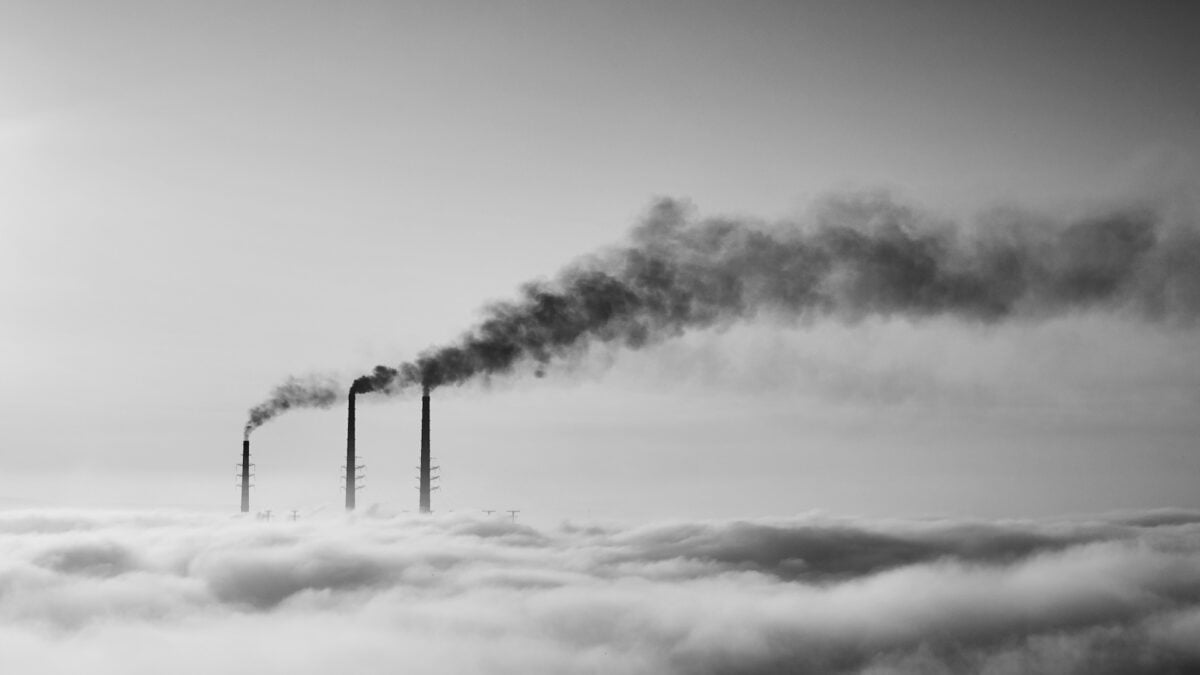
Hardcore AI true-believers often say that the rise of intelligent machines will not only make humanity more productive than ever before—far surpassing the productivity gains caused by the invention of the steam engine—but also allow us to solve our most existentially challenging problems. That rosy view of the future usually neglects to mention, however, that the Industrial Revolution metaphor has a dark side. For while the locomotive and the factory did usher in a new age of material wealth, they also led to the rise of new problems that plague us to this day: sharpening wealth disparities, mechanized warfare, and an atmosphere choked with carbon, just to name a few.
In an open letter published on Monday, a group of high-profile economists and AI experts are warning that society needs to learn this historical lesson, or suffer the consequences.
Radical change, quickly
Unambiguously titled “We Must Act Now,” the letter as of Monday morning had received close to two hundred signatures, including those of former Google CEO Eric Schmidt, Anthropic cofounder Jack Clark, OpenAI cofounder Wojciech Zaremba, and Yoshua Bengio, a Turing Award winner and one of the so-called “Godfathers of AI.” It’s meant to be a brief and direct warning (it clocks in at fewer than one hundred words) that the economic and social impacts of AI may indeed mark a major historical shift, but that the danger lies in the fact that these will unfold at a speed unlike anything ever seen before in history.
“AI may become radically more powerful over the next 10 years,” the letter reads. “This could drive an unprecedented transformation of our economy, larger than the Industrial Revolution, but unfolding over a vastly shorter time frame.”
While humanity had the luxury of decades to adjust to some of the more destabilizing side effects of industrialization, in other words, the letters’ signatories warn that there will be no such time buffer for the economic repercussions of the AI Revolution. A chorus of caution
The letter follows on the heels of spate of other high-profile warnings that have been published in recent months. Last week, the Secretary General of the United Nations called upon the international community to ban what he called “killer robots,” i.e. AI-powered weapons. In June, an international group of cyber security agencies, including the NSA, issued a statement warning that AI will be “fundamentally transforming” cybersecurity not over the next few years, but in the coming months. From the Vatican, Pope Leo XIV warned in an encyclical called Magnifa Humanitas published in May that AI, if allowed to continue evolving unchecked, could usher in a new age of social alienation, political division, and environmental exploitation.
The language used in the open letter, evoking a picture of humanity that’s asleep at the wheel as it speeds towards a cliff, has also become increasingly common within Silicon Valley and tech policy circles.
One of the great promises of AI research has long been the concept of algorithms that can train new and more advanced versions of themselves, a process technically known as recursive-self-improvement. But the danger posed by such self-improving machines is that they could quickly escape human control, becoming even more opaque in their decision-making processes than they already are and reshaping the economy, the political arena, and the information ecosystem in ways that we can neither comprehend nor reverse. The spectre of recursive self-improvement was at the heart of recent statements from Anthropic and OpenAI calling for the formation of a global committee to oversee the development of advanced new AI systems—and forcibly slow it down, if necessary.
Recent breakthroughs in algorithms’ ability to detect vulnerabilities in even the most airtight cybersecurity software have also sent shockwaves of anxiety throughout the public and private sector, so much so that even the Trump administration—which has historically taken a distinctly hands-off approach to AI development—has begun to apparently implement a system of checks and balances around how powerful new AI models are deployed. OpenAI, for example, publicly launched its new GPT-5.6 model after receiving a “green light” from the federal government, although the latter has denied that such official approval was given, or even needed in the first place.