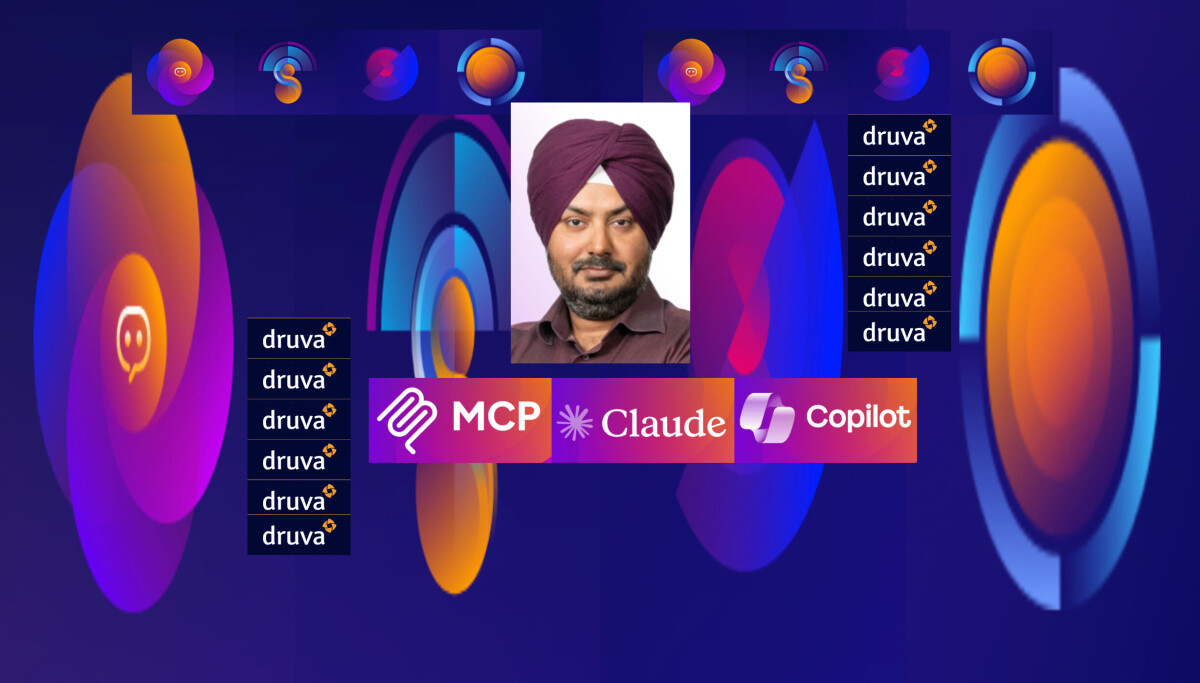
Druva is developing protection for AI agents, backup data access for AI agents, protection against AI agents, and better cyber-resilience investigations with AI agents; a 4-way AI agent street.
It’s extending its SaaS data protection to include Claude and Copilot, letting them access Druva assets via MCP, adding a root cause diagnostic agent and having backups auto-lock when an AI attack is detected.
Data protection and cyber resilience have to respond to AI agent activity, backing up agent data traces and history so as to provide rewind when agent activity needs rolling back. AI-mounted attacks need a fast reaction as they threaten to do enormous damage in a short time, meaning backups need to be secured the instant an attack is detected. AI agents also need controlled access to Druva assets so they can do their job better. And specialized agents can help cyber-resilience admins do their work better. The latest AI Resilience announcement from Druva covers all these bases.
Jaspreet Singh, CEO and co-founder of Druva, said: “Every enterprise is racing to put AI to work, but few can answer two simple questions: when AI changes something, breaks something, or loses critical context, can you reverse it? And when AI risk moves at machine speed, are your backups still safe? AI Resilience has to protect both the work AI creates and the recovery systems businesses rely on. Anything less leaves organizations betting the business on AI they can’t fully recover or trust.”
AI model and agent prompts, response histories, workflow configurations, and agent context are becoming business-critical information. They need backing up so that they can be reinspected and restored when needed. Restoration is becoming a multi-faceted programme with sequentially determined actions across a data estate rather than simple file or object restoration. A state across many parts of a data estate needs reinstating and not just a virtual machine reinstallation. AI models and agents are making the cyber-resilience world more complex.
Druva’s AI Resilience features include Claude and first-to-market backup for Microsoft Copilot;
Microsoft Copilot Protection & Governance: Captures prompts, responses, conversations, generated files, cited sources, and metadata as an independent, recoverable record, with legal hold, compliance, eDiscovery, and governance controls built in.
Claude Code Protection & Governance: Preserves project state, conversation history, code artifacts, and workflow context. Provides instant recovery and granular rollback when AI-assisted changes create risk or critical context is lost.
Druva MCP Server: Customers with MCP-compatible assistants, copilots, and agents, such as Microsoft Copilot, Claude, and Cursor, can access Druva insights and workflows while maintaining enterprise authentication, role-based access controls, and governance policies.
Dru SRE: A new DruAI agent, with more MetaGraph functionality, that surfaces root causes, prioritizes recommendations, and guides actions from operational and resilience signals helping “IT teams spend less time in dashboards and more time resolving issues.”
The governance aspect recognizes that AI systems can create, summarize, replicate, and move business content across AI systems and third-party tools. As a result, business records, sensitive analysis, and institutional knowledge can now sit outside retention, discovery, audit, and legal hold. Responding to this, Druva backs up and governs the data created in AI tools like Microsoft Copilot and Claude Code, including prompts, responses, generated files, cited sources, project context, and code artifacts. This gives organizations a protected record of AI work that can be retained, searched, investigated, and recovered.
Druva says it has a fully managed, self-defending platform that autonomously detects and instantly locks down environments at the earliest signal of AI-driven exploits.
Dru SRE uses Druva’s MetaGraph facility to turn scattered signals across data, identities and AI activity into connected intelligence, so organizations can recover to a trusted state across multiple applications.
You can read more about all this in a Copilot blog, a Claude blog, a Dru SRE blog and a Druva MCP blog.