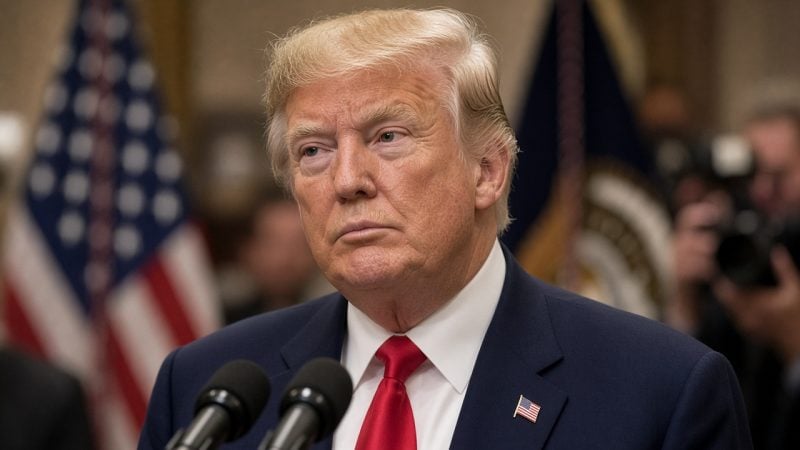
The voluntary agreement brings together every major AI player under a self-regulation framework that Trump calls 'morally binding'
President Donald Trump sat down for lunch with the most powerful names in artificial intelligence on September 29, 2026, and walked away with their signatures on a voluntary safety pact. The document, formally titled the “Joint Commitment on Frontier Responsibilities,” establishes a framework for independent auditing of AI systems, marking the clearest signal yet that the White House views industry self-regulation, not federal legislation, as the path forward for governing increasingly powerful AI models.
The agreement creates a four-layered oversight structure: robust internal controls at each company, dedicated internal oversight teams, independent external auditors, and independent board committees tasked with reviewing audit reports.
Who was at the table #
The guest list read like a who’s-who of the AI arms race. Dario Amodei represented Anthropic. Greg Brockman showed up for OpenAI. Sundar Pichai came from Google, Mark Zuckerberg from Meta, Elon Musk from xAI, and Jensen Huang from Nvidia. That last name matters because Nvidia doesn’t build AI models, it builds the chips that make them possible, and its presence signals that the hardware supply chain is now part of the safety conversation too.
Trump described the commitment as “morally binding.” That phrase does a lot of heavy lifting. It communicates seriousness without creating legal liability, which is precisely the kind of arrangement Silicon Valley tends to prefer.
What the framework actually requires #
The accord focuses on risks in two specific domains: cybersecurity and biosecurity. These are the categories where frontier AI models pose the most immediate and measurable dangers.
AI, tech, and the markets they move—in one daily briefing.
Daily. Free. Join 34,000+ readers across crypto, finance, and policy.
Under the agreement, signatory companies commit to building internal controls designed to catch dangerous capabilities before models are deployed. They then submit to review by independent external auditors, though the accord does not name specific auditing firms or prescribe a methodology.
The signatories also committed to regular meetings aimed at setting industry-wide standards and best practices.
The executive order nobody expected #
Alongside the accord, Trump signed an executive order mandating that all federal documentation replace the term “artificial intelligence” with “super intelligence.”
What this means for the AI industry #
The accord represents a significant evolution in the relationship between the Trump administration and Silicon Valley on the question of AI governance. Earlier in his term, Trump expressed skepticism toward the independence of certain AI evaluators, raising concerns about bias in how safety assessments were conducted. The new framework appears to address those concerns by letting companies choose their own auditors while committing to board-level review of the results.
Language in the framework suggests that future codification into law could become necessary if voluntary compliance proves insufficient.
Disclosure: This article was edited by Diego Almada Lopez. For more information on how we create and review content, see our