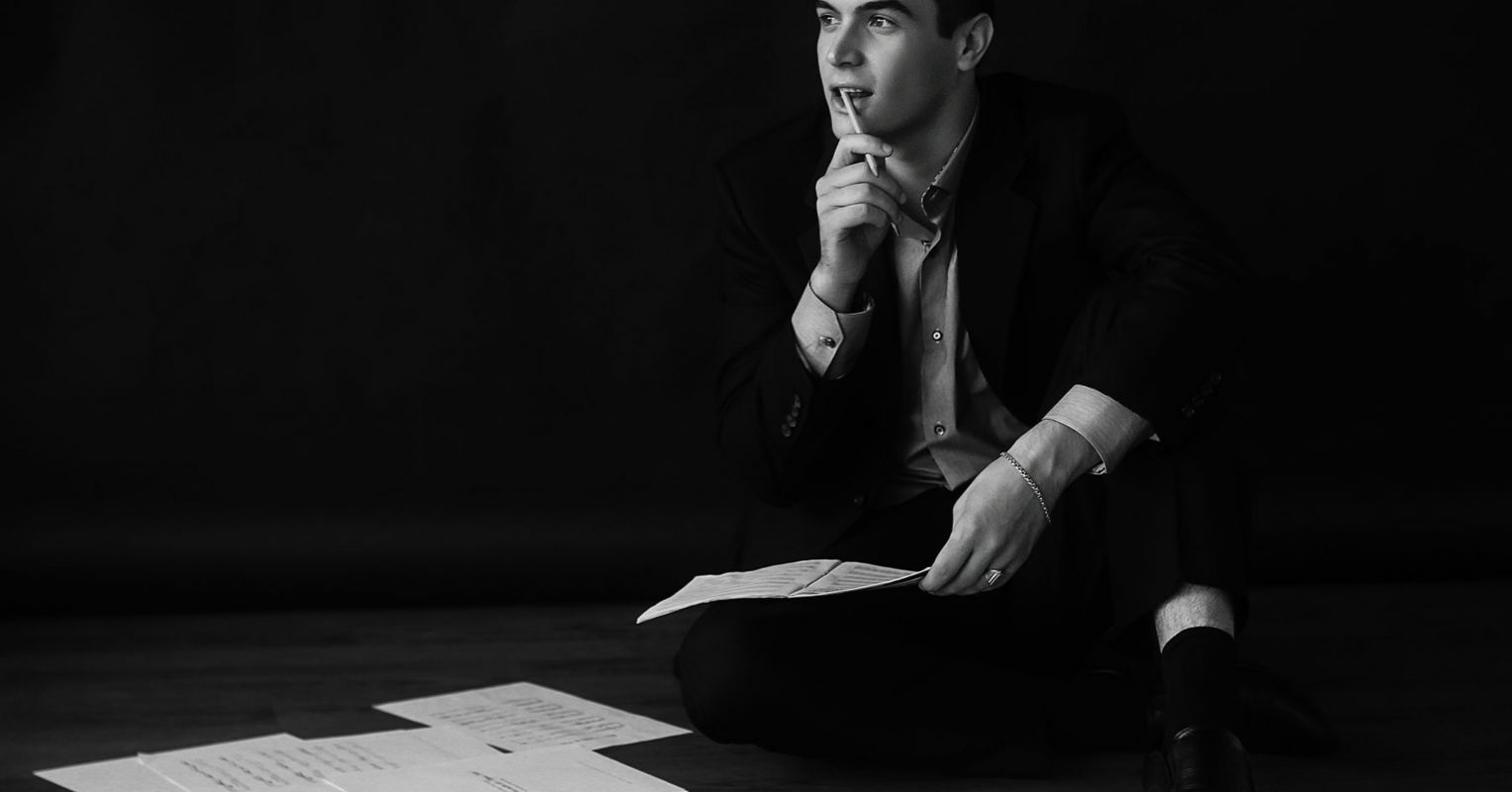
What if we've been quoting the conclusion and forgetting the method? #
Posted July 10, 2026 [ Reviewed by Tyler Woods
](https://www.psychologytoday.com/us/docs/editorial-process)
Key points
- Descartes gets quoted for his conclusion, but his method of radical doubt is the forgotten part.
- New research reveals something real inside AI, but computation is still not the same as doubt.
- AI finds the most probable path to an answer while humans are changed by the struggle itself.
Quick, the author is René Descartes. What's the quote?
His famous line, "I think, therefore I am," is one of the few philosophical lines that has actually escaped the classroom. And interestingly, I often find it coming up in conversations about artificial intelligence. As large language models get more sophisticated, it's sometimes easy to point at their computation and wonder if we're watching something like thought take shape. "I compute, therefore I am."
There's something about this quote that most people miss. Not the five words, but the thinking that precedes them. In the Meditations, Descartes didn't wake up one morning and announce that thought proved his existence. He started with doubt. He questioned everything he could question, including whether his own senses could be trusted. The famous conclusion arrived only at the end, and this is a critical distinction. We compress that whole "cognitive demolition" into a single quotation, and I think the compression is both the flaw and the problem.
I've spent a few years writing about AI, cognitive friction, and our path to understanding. My point was often that human thought doesn't move in a straight line. The path from A to B is complete with hesitation, distraction, and even the joy of realization. Simply put, that path is what makes us human. The answer matters, but the path changes the person.
So, this has been top of mind since Anthropic published its work on what it calls the J-space inside Claude. I wrote recently that the paper pushed me to reconsider one of my own assumptions. The researchers appear to have found an internal computational workspace where concepts exist before they become language. That's important. It deserves to be taken seriously rather than waved away because it complicates a position many of us, including me, have held about a sort of "inner computational life" of AI.
And yet. I don't think the paper erased the line between computation and human cognition. If anything, it made me look harder for where that line actually is. We say large language models predict the next token, and that description now feels incomplete. They clearly do more. But whatever is happening inside the model, it isn't lived uncertainty. The model doesn't wonder whether the premise is wrong before it goes looking for an answer. It doesn't doubt. It computes, extraordinarily well, and computation and doubt are not the same thing. At least I don't think they are.
That difference might explain something I often notice about AI. For all its capability, it can be strangely fragile. A small nudge or a shift in wording and the system fails. Maybe that fragility is telling us something deeper than where today's models fall short. AI assumes a solution exists somewhere in what it has learned, and its job is to find the most probable path to it. People do something else. Sometimes we abandon the path entirely in a quest for the unexplored.
There's an old saying that we learn more from our mistakes than our successes. While it might not be literally true, it reflects something that I believe. Our mistakes—Descartes's struggle and doubt—shape us. A failed experiment can change scientist and a wrong diagnosis can change the physician. We simply don't collect better answers, we become different thinkers because we struggled toward them.
Maybe that's the part of Descartes we've left behind. This construct, as Descartes argued, might now need a contemporary framing.
I doubt, therefore I think, therefore I am.
We quote the destination because it's elegant. We forget the journey because it was messy. And in a world captivated by machines that produce astonishing answers, the messy part suddenly feels like the most important part.